


Page 39 - Journal of Special Operations Medicine - Fall 2017
P. 39
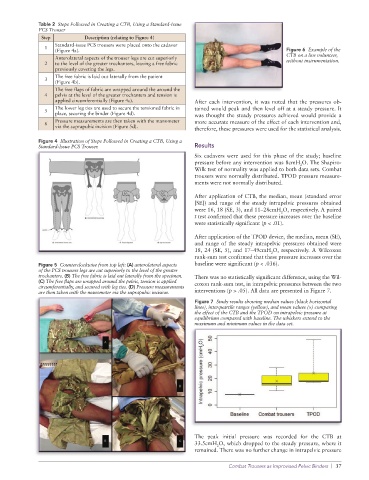
Table 2  Steps Followed in Creating a CTB, Using a Standard-Issue
              PCS Trouser
               Step          Description (relating to Figure 4)
                   Standard-issue PCS trousers were placed onto the cadaver
                1  (Figure 4a).                                                                Figure 6  Example of the
                   Anterolateral aspects of the trouser legs are cut superiorly                CTB on a live volunteer,
                                                                                               without instrumentation.
                2  to the level of the greater trochanters, leaving a free fabric
                   previously covering the legs.
                   The free fabric is laid out laterally from the patient
                3
                   (Figure 4b).
                   The free flaps of fabric are wrapped around the around the
                4  pelvis at the level of the greater trochanters and tension is
                   applied circumferentially (Figure 4c).        After each intervention, it was noted that the pressures ob-
                   The lower leg ties are used to secure the tensioned fabric in   tained would peak and then level off at a steady pressure. It
                5
                   place, securing the binder (Figure 4d).       was thought the steady pressures achieved would provide a
                   Pressure measurements are then taken with the manometer   more accurate measure of the effect of each intervention and,
                6
                   via the suprapubic incision (Figure 5d).      therefore, these pressures were used for the statistical analysis.
              Figure 4  Illustration of Steps Followed in Creating a CTB, Using a
              Standard-Issue PCS Trouser.                        Results
                                                                 Six cadavers were used for this phase of the study; baseline
                                                                 pressure before any intervention was 8cmH O. The Shapiro-
                                                                                                   2
                                                                 Wilk test of normality was applied to both data sets. Combat
                                                                 trousers were normally distributed. TPOD pressure measure-
                                                                 ments were not normally distributed.

                                                                 After application of CTB, the median, mean (standard error
                                                                 [SE]) and range of the steady intrapelvic pressures obtained
                                                                 were 16, 18 (SE, 3), and 11–28cmH O, respectively. A paired
                                                                                             2
                                                                 t test confirmed that these pressure increases over the baseline
                                                                 were statistically significant (p < .01).

                                                                 After application of the TPOD device, the median, mean (SE),
                                                                 and range of the steady intrapelvic pressures obtained were
                                                                 18, 24 (SE, 5), and 17–49cmH O, respectively. A Wilcoxon
                                                                                          2
                                                                 rank-sum test confirmed that these pressure increases over the
              Figure 5  Counterclockwise from top left: (A) anterolateral aspects   baseline were significant (p < .036).
              of the PCS trousers legs are cut superiorly to the level of the greater
              trochanters. (B) The free fabric is laid out laterally from the specimen.   There was no statistically significant difference, using the Wil-
              (C) The free flaps are wrapped around the pelvis, tension is applied   coxon rank-sum test, in intrapelvic pressures between the two
              circumferentially, and secured with leg ties. (D) Pressure measurements
              are then taken with the manometer via the suprapubic incision.  interventions (p > .05). All data are presented in Figure 7.
                                                                 Figure 7  Study results showing median values (black horizontal
                                                                 lines), interquartile ranges (yellow), and mean values (×) comparing
                                                                 the effect of the CTB and the TPOD on intrapelvic pressure at
                                                                 equilibrium compared with baseline. The whiskers extend to the
                                                                 maximum and minimum values in the data set.


                                                                 The peak initial pressure was recorded for the CTB at
                                                                 33.5cmH O, which dropped to the steady pressure, where it
                                                                        2
                                                                 remained. There was no further change in intrapelvic pressure
                                                                            Combat Trousers as Improvised Pelvic Binders  |  37

