


Page 74 - Journal of Special Operations Medicine - Spring 2017
P. 74
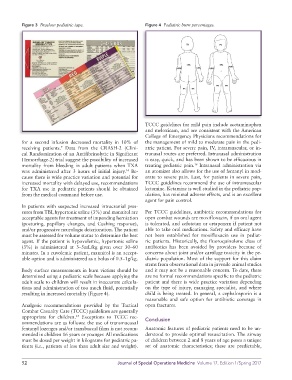
Figure 3  Braslow pediatric tape.                  Figure 4  Pediatric burn percentages.


                                                             TCCC guidelines for mild pain include acetaminophen
                                                             and meloxicam, and are consistent with the American
                                                             College of Emergency Physicians recommendations for
          for a second infusion decreased mortality in 10% of   the management of mild to moderate pain in the pedi-
                          9
          receiving patients.  Data from the CRASH-2 (Clini-  atric patient. For severe pain, IV, intramuscular, or in-
          cal Randomization of an Antifibrinolytic in Significant   tranasal routes are preferred. Intranasal administration
          Hemorrhage-2) trial suggest the possibility of increased   is easy, quick, and has been shown to be efficacious in
                                                                                 16
          mortality from bleeding in adult patients when TXA   treating pediatric pain.  Intranasal administration via
          was administered after 3 hours of initial injury.  Be-  an atomizer also allows for the use of fentanyl in mod-
                                                     14
          cause there is wide practice variation and potential for   erate to severe pain. Last, for patients in severe pain,
          increased mortality with delayed use, recommendations   TCCC guidelines recommend the use of intramuscular
          for TXA use in pediatric patients should be obtained   ketamine. Ketamine is well studied in the pediatric pop-
          from the medical command before use.               ulation, has minimal adverse effects, and is an excellent
                                                             agent for pain control.
          In patients with suspected increased intracranial pres-
          sures from TBI, hypertonic saline (3%) and mannitol are   Per  TCCC  guidelines,  antibiotic  recommendations  for
          acceptable agents for treatment of impending herniation   open combat wounds are moxifloxacin, if an oral agent
          (posturing, papillary changes, and Cushing response),   is tolerated, and cefotetan or ertapenem if patient not
          and/or progressive neurologic deterioration. The patient   able to take oral medications. Safety and efficacy have
          must be assessed for volume status to determine the best   not  been  established  for  moxifloxacin  use  in  pediat-
          agent. If the patient is hypovolemic, hypertonic saline   ric patients. Historically, the fluoroquinolone class of
          (3%) is administered at 3–5mL/kg given over 30–60   antibiotics has been  avoided by providers because  of
          minutes. In a euvolemic patient, mannitol is an accept-  concerns about joint and/or cartilage toxicity in the pe-
          able option and is administered as a bolus of 0.5–1g/kg.  diatric population. Most of the support for this claim
                                                             stems from observational data in juvenile animal studies
          Body surface measurements in burn victims should be   and it may not be a reasonable concern. To date, there
          determined using a pediatric scale because applying the   are no formal recommendations specific to the pediatric
          adult scale to children will result in inaccurate calcula-  patient and there is wide practice variation depending
          tions and administration of too much fluid, potentially   on the type of injury, managing specialist, and where
          resulting in increased mortality (Figure 4).       child is being treated. In general, a cephalosporin is a
                                                             reasonable and safe option for antibiotic coverage in
          Analgesic recommendations provided by the Tactical   open fractures.
          Combat Casualty Care (TCCC) guidelines are generally
          appropriate for children.  Exceptions to TCCC rec-  Conclusion
                                15
          ommendations are as follows: the use of transmucosal
          fentanyl lozenges and/or transbuccal films is not recom-  Anatomic features of pediatric patients need to be un-
          mended in children 16 years or younger. All medications   derstood to provide optimal resuscitation. The airway
          must be dosed per weight in kilograms for pediatric pa-  of children between 2 and 8 years of age poses a unique
          tients (i.e., patients of less than adult size and weight).   set  of anatomic characteristics;  these  are  predictable,


          52                                      Journal of Special Operations Medicine  Volume 17, Edition 1/Spring 2017

