


Page 72 - Journal of Special Operations Medicine - Spring 2017
P. 72
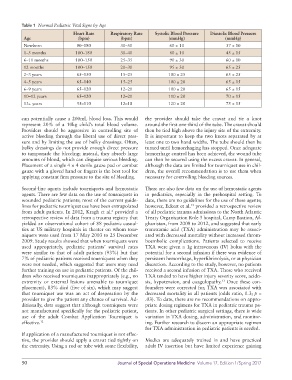
Table 1  Normal Pediatric Vital Signs by Age
                               Heart Rate      Respiratory Rate    Systolic Blood Pressure   Diastolic Blood Pressure
           Age                   (bpm)             (bpm)               (mmHg)                 (mmHg)
           Newborn               90–180            30–50               60 ± 10                37 ± 10
           1–5 months           100–180            30–40               80 ± 10                45 ± 15
           6–11 months          100–150            25–35               90 ± 30                60 ± 10
           12 months            100–150            20–30               95 ± 30                65 ± 25
           2–3 years             65–150            15–25               100 ± 25               65 ± 25
           4–5 years             65–140            15–25               100 ± 20               65 ± 15
           6–9 years             65–120            12–20               100 ± 20               65 ± 15
           10–12 years           65–120            12–20               110 ± 20               70 ± 15
           13+ years             55–110            12–18               120 ± 20               75 ± 15


          can potentially cause a 200mL blood loss. This would   the provider  should take  the cravat  and tie a knot
          represent 20% of a 10kg child’s total blood volume.   around the first one-third of the tube. The cravat should
          Providers should be aggressive in controlling site of   then be tied high above the injury site of the extremity.
          active bleeding through the liberal use of direct pres-  It is important to keep the two knots separated by at
          sure and by limiting the use of bulky dressings. Often,   least one to two hand widths. The tube should then be
          bulky dressings do not provide enough direct pressure   turned until hemorrhaging has stopped. Once adequate
          to tamponade the bleeding; instead, they absorb large   hemorrhage control has been achieved, the wound tube
          amounts of blood, which can disguise serious bleeding.   can then be secured using the excess cravat. In general,
          Placement of a single 4 × 4 sterile gauze pad or combat   although the data are limited for tourniquet use in chil-
          gauze with a gloved hand or fingers is the best tool for   dren, the overall recommendation is to use them when
          applying constant firm pressure to the site of bleeding.  necessary for controlling bleeding sources.

          Second-line agents include tourniquets and hemostatic   There are also few data on the use of hemostatic agents
          agents. There are few data on the use of tourniquets in   in pediatrics, especially in the prehospital setting. To
          wounded pediatric patients; most of the current guide-  date, there are no guidelines for the use of these agents;
          lines for pediatric tourniquet use have been extrapolated   however, Eckert et al.  provided a retrospective review
                                                                                13
          from adult patients. In 2012, Kragh et al.  provided a   of all pediatric trauma admissions to the North Atlantic
                                               6
          retrospective review of data from a trauma registry that   Treaty Organization Role 3 hospital, Camp Bastion, Af-
          yielded an observational cohort of 88 pediatric casual-  ghanistan, from 2008 to 2012, and suggested that early
          ties at US military hospitals in theater on whom tour-  tranexamic acid (TXA) administration may be associ-
          niquets were used from 17 May 2003 to 25 December   ated with decreased mortality without increased throm-
          2009. Study results showed that when tourniquets were   boembolic complications. Patients selected to receive
          used appropriately, pediatric patients’ survival rates   TXA were given a 1g intravenous (IV) bolus with the
          were similar to that of adult patients (93%) but that   potential for a second infusion if there was evidence of
          7% of pediatric patients received tourniquets when they   persistent hemorrhage, hyperfibrinolysis, or at physician
          were not needed, which suggested that users may need   discretion. According to the study, however, no patients
          further training on use in pediatric patients. Of the chil-  received a second infusion of TXA. Those who received
          dren who received tourniquets inappropriately (e.g., no   TXA tended to have higher injury severity score, acido-
          extremity or external lesions amenable to tourniquet   sis, hypotension, and coagulopathy.  Once these con-
                                                                                             13
          placement), 83% died (five of six), which may suggest   founders were corrected for, TXA was associated with
          that tourniquet use was an act of desperation by the   decreased mortality in all patients (odds ratio, 0.3; p =
          provider to give the patient any chance of survival. Ad-  .03). To date, there are no recommendations on appro-
          ditionally, data suggest that although tourniquets were   priate dosing regimens for TXA in pediatric trauma pa-
          not manufactured specifically for the pediatric patient,   tients. In other pediatric surgical settings, there is wide
          use of the adult Combat Application Tourniquet is   variation in TXA dosing, administration, and monitor-
          effective. 12                                      ing. Further research to discern an appropriate regimen
                                                             for TXA administration in pediatric patients is needed.
          If application of a manufactured tourniquet is not effec-
          tive, the provider should apply a cravat tied tightly on   Medics are adequately trained in and have practiced
          the extremity. Using a rod or tube with some  flexibility,   adult IV insertion but have limited experience gaining


          50                                      Journal of Special Operations Medicine  Volume 17, Edition 1/Spring 2017

