


Page 53 - Journal of Special Operations Medicine - Spring 2017
P. 53
Results of time to stop bleeding by model of tourniquet     seconds), and the SOFTT-W was slow (mean, 18 sec-
              were three tiered, with each model in its own tier. The   onds). The order of after-time results was the same as
              C-A-T was fast, with a mean time of 21 seconds; the   time to stop bleeding except the RMT was first instead
              SOFTT-W was intermediate (mean, 29 seconds); and   of last. Each pairwise comparison differed significantly
              the RMT was slow (mean, 34 seconds). Each pairwise   (p <  .001, all three  pairs; Figure  2). The  0.08-second
              comparison differed significantly (p < .001, all three   difference in mean after-time between users was not sig-
              pairs).                                            nificant (p = .80).
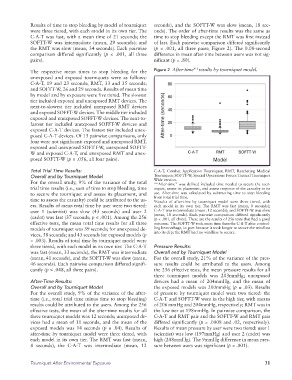
                                                                 Figure 2  After-time* results by tourniquet model.
                                                                                  †
              The respective mean times to stop bleeding for the
              unexposed and exposed tourniquets were as follows:
              C-A-T, 19 and 23 seconds; RMT, 33 and 35 seconds;
              and SOFTT-W, 26 and 29 seconds. Results of mean time
              by model and by exposure were five tiered. The slowest
              tier included exposed and unexposed RMT devices. The
              next-to-slowest tier included unexposed RMT devices
              and exposed SOFFT-W devices. The middle tier included
              exposed and unexposed SOFFT-W devices. The next-to-
              fastest tier included unexposed SOFFT-W devices and
              exposed C-A-T devices. The fastest tier included unex-
              posed C-A-T devices. Of 15 pairwise comparisons, only
              four were not significant: exposed and unexposed RMT,
              exposed and unexposed SOFTT-W, unexposed SOFTT-
              W and exposed C-A-T, and unexposed RMT and unex-
              posed SOFTT-W (p ≥ .056, all four pairs).

              Total Trial Time Results:                          C-A-T, Combat Application Tourniquet; RMT, Ratcheting Medical
              Overall and by Tourniquet Model                    Tourniquet; SOFTT-W, Special Operations Forces Tactical Tourniquet
              For the overall study, 9% of the variance of the total   Wide version.
                                                                 *“After-time” was defined included time needed to secure the tour-
              trial time results (i.e., sum of time to stop bleeding, time   niquet, assess its placement, and assess response of the casualty to its
              to secure the tourniquet and assess its placement, and   use. After-time was calculated by subtracting time to stop bleeding
              time to assess the casualty) could be attributed to the us-  from total trial time.
                                                                 Results of after-time by tourniquet model were three tiered, with
                                                                 †
              ers. Results of mean total time by user were two tiered:   each model in its own  tier. The  RMT was fast  (mean, 8 seconds);
              user 1 (scientist) was slow (43 seconds) and user 2    C-A-T was intermediate (mean, 12 seconds); and SOFTT-W was slow
              (cadet) was fast (37 seconds; p ≤ .001). Among the 256   (mean, 18 seconds). Each pairwise comparison differed significantly
                                                                 (p < .001, all three). These are the results of 256 tests that had a good
              effective tests, the mean total time results for all three   outcome. The SOFTT-W took more time than the C-A-T after control-
              models of tourniquet was 39 seconds; for unexposed de-  ling hemorrhage, in part because it took longer to secure the windlass
              vices, 38 seconds; and 43 seconds for exposed models (p   into its clip; the RMT had no windlass to secure.
              = .003). Results of total time by tourniquet model were
              three tiered, with each model in its own tier. The C-A-T   Pressure Results:
              was fast (mean, 33 seconds), the RMT was intermediate   Overall and by Tourniquet Model
              (mean, 41 seconds), and the SOFTT-W was slow (mean,   For the overall study, 21% of the variance of the pres-
              46 seconds). Each pairwise comparison differed signifi-  sure results could be attributed to the users. Among
              cantly (p ≤ .048, all three pairs).                the 256 effective tests, the mean pressure results for all
                                                                 three tourniquet models was 203mmHg; unexposed
              After-Time Results:                                devices had a mean of 204mmHg, and the mean of
              Overall and by Tourniquet Model                    the exposed models was 200mmHg (p = .03). Results
              For the overall study, 9% of the variance of the after-  of pressure by tourniquet model were two tiered: the
              time (i.e., total trial time minus time to stop bleeding)   C-A-T and SOFTT-W were in the high tier, with means
              results could be attributed to the users. Among the 256   of 206 mmHg and 204mmHg, respectively; RMT was in
              effective tests, the mean of the after-time results for all   the low tier at 198mmHg. In pairwise comparison, the
              three tourniquet models was 12 seconds; unexposed de-  C-A-T and RMT pair and the SOFTT-W and RMT pair
              vices had a mean of 11 seconds, and the mean of the   differed significantly (p = .0008 and .02, respectively).
              exposed models was 14 seconds (p = .04). Results of   Results of mean pressure by user were two tiered: user 1
              after-time by tourniquet model were three tiered, with   (scientist) was low (197mmHg) and user 2 (cadet) was
              each model in its own tier. The RMT was fast (mean,   high (208mmHg). The 9mmHg difference in mean pres-
              8 seconds), the C-A-T was intermediate (mean, 12   sure between users was significant (p < .001).


              Tourniquet After Environmental Exposure                                                         31

