


Page 120 - Journal of Special Operations Medicine - Spring 2017
P. 120
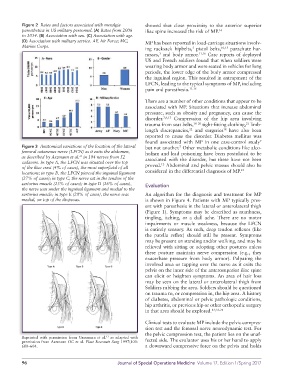
Figure 2  Rates and factors associated with meralgia   showed that close proximity to the anterior superior
          paresthetica in US military personnel. (A) Rates from 2006    iliac spine increased the risk of MP. 14
          to 2014. (B) Association with sex. (C) Association with age.
          (D) Association with military service. AF, Air Force; MC,   MP has been reported in load-carriage situations involv-
          Marine Corps.
                                                             ing rucksack hipbelts,  pistol belts, 10,15  parachute har-
                                                                                5
                                                             nesses,  and body armor. 11,16  Case reports of deployed
                                                                   3
                                                             US and French soldiers found that when soldiers were
                                                             wearing body armor and were seated in vehicles for long
                                                             periods, the lower edge of the body armor compressed
                                                             the inguinal region. This resulted in entrapment of the
                                                             LFCN, leading to the typical symptoms of MP, including
                                                             pain and paresthesia. 11,16

                                                             There are a number of other conditions that appear to be
                                                             associated with MP. Situations that increase  abdominal
                                                             pressure, such as obesity and pregnancy, can cause the
                                                             disorder. 7,9,17  Compression of the hip area involving
                                                             trauma from seat belts, 18–20  tight-fitting clothing,  limb-
                                                                                                       21
                                                             length discrepancies,  and surgeries  have also been
                                                                               22
                                                                                             18
                                                             reported to cause the disorder. Diabetes mellitus was
                                                             found associated with MP in one case-control study
                                                                                                            7
          Figure 3  Anatomical variations of the location of the lateral   but not another.  Other metabolic conditions like alco-
                                                                           7
          femoral cutaneous nerve (LFCN) as it exits the abdomen,   holism and lead poisoning have been postulated to be
          as described by Aszmann et al.  in 104 nerves from 52   associated with the disorder, but these have not been
                                  13
          cadavers. In type A, the LFCN was situated over the top   12
          of the iliac crest (4% of cases), the most superficial of all   proved.  Abdominal and pelvic masses should also be
                                                                                                     23
          locations; in type B, the LFCN pierced the inguinal ligament   considered in the differential diagnosis of MP.
          (27% of cases); in type C, the nerve sat in the tendon of the
          sartorius muscle (23% of cases); in type D (26% of cases),   Evaluation
          the nerve was under the inguinal ligament and medial to the
          sartorius muscle; in type E (20% of cases), the nerve was   An algorithm for the diagnosis and treatment for MP
          medial, on top of the iliopsoas.                   is shown in Figure 4. Patients with MP typically pres-
                                                             ent with paresthesia in the lateral or anterolateral thigh
                                                             (Figure 1). Symptoms may be described as numbness,
                                                             tingling, itching, or a dull ache. There are no motor
                                                             impairments or muscle weakness, because the LFCN
                                                             is entirely sensory. As such, deep tendon reflexes (like
                                                             the patella reflex) should still be present. Symptoms
                                                             may be present on standing and/or walking, and may be
                                                             relieved with sitting or adopting other postures  unless
                                                             these   posture maintain nerve compression (e.g., they
                                                             exacerbate  pressure  from body  armor).  Palpating  the
                                                             involved area or tapping over the nerve as it exits the
                                                             pelvis on the inner side of the anterosuperior iliac spine
                                                             can elicit or heighten symptoms. An area of hair loss
                                                             may be seen on the lateral or anterolateral thigh from
                                                             Soldiers rubbing the area. Soldiers should be questioned
                                                             on trauma to, or compression in, the hip area. A history
                                                             of diabetes, abdominal or pelvic pathologic conditions,
                                                             hip arthritis, or previous hip or other orthopedic surgery
                                                             in that area should be explored. 12,23–25

                                                             Clinical tests to evaluate MP include the pelvic compres-
                                                             sion test and the femoral nerve neurodynamic test. For
                                                             the pelvic compression test, the patient lies on the unaf-
          Reprinted with permission from Grossman et al.  as adapted with
                                             13
          permission from Aszmann OC et al. Plast Reconstr Surg 1997;100:   fected side. The evaluator uses his or her hand to apply
          600–604.                                           a downward compressive force on the pelvis and holds


          96                                      Journal of Special Operations Medicine  Volume 17, Edition 1/Spring 2017

