


Page 127 - Journal of Special Operations Medicine - Winter 2016
P. 127
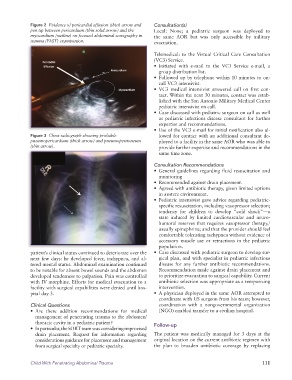
Figure 2  Evidence of pericardial effusion (thick arrow and   Consultation(s)
              pen tip between pericardium (thin solid arrow) and the   Local: None; a pediatric surgeon was deployed to
              myocardium (outline) on focused abdominal sonography in   the same AOR but was only accessible by military
              trauma (FAST) examination.                         evacuation.

                                                                 Telemedical: to the Virtual Critical Care Consultation
                                                                 (VC3) Service.
                                                                 •  Initiated with e-mail to the VC3 Service e-mail, a
                                                                   group distribution list.
                                                                 •  Followed up by telephone within 10 minutes to on-
                                                                   call VC3 intensivist.
                                                                 •  VC3 medical intensivist answered call on first con-
                                                                   tact. Within the next 30 minutes, contact was estab-
                                                                   lished with the San Antonio Military Medical Center
                                                                   pediatric intensivist on call.
                                                                 •  Case discussed with pediatric surgeon on call as well
                                                                   as pediatric infectious disease consultant for further
                                                                   expertise and recommendations.
                                                                 •  Use of the VC3 e-mail for initial notification also al-
              Figure 3  Chest radiograph showing probable          lowed for contact with an additional consultant de-
              pneumopericardium (thick arrow) and pneumoperitoneum   ployed to a facility in the same AOR who was able to
              (thin arrow).                                        provide further expertise and recommendations in the
                                                                   same time zone.

                                                                 Consultation Recommendations
                                                                 •  General guidelines regarding fluid resuscitation and
                                                                   monitoring
                                                                 •  Recommended against drain placement.
                                                                 •  Agreed with antibiotic therapy, given limited options
                                                                   in austere environment.
                                                                 •  Pediatric intensivist gave advice regarding pediatric-
                                                                   specific resuscitation, including vasopressor selection;
                                                                   tendency for children to develop “cold shock”—a
                                                                   state induced by limited cardiovascular and neuro-
                                                                                                                1
                                                                   humoral reserves that requires vasopressor therapy,
                                                                   usually epinephrine; and that the provider should feel
                                                                   comfortable tolerating tachypnea without evidence of
                                                                   accessory  muscle use or retractions in the pediatric
                                                                   population.
              patient’s clinical status continued to deteriorate over the   •  Case discussed with pediatric surgeon to develop sur-
              next few days: he developed fever, tachypnea, and al-  gical plan, and with specialist in pediatric infectious
              tered mental status. Abdominal examination continued   disease for any further antibiotic recommendations.
              to be notable for absent bowel sounds and the abdomen   Recommendation made against drain placement and
              developed tenderness to palpation. Pain was controlled   to prioritize evacuation to surgical capability. Current
              with IV morphine. Efforts for medical evacuation to a   antibiotic selection was appropriate as a temporizing
              facility with surgical capabilities were denied until hos-  intervention.
              pital day 3.                                       •  A physician deployed in the same AOR attempted to
                                                                   coordinate with US surgeon from his team; however,
              Clinical Questions                                   coordination with a nongovernmental organization
              •  Are  there  addition  recommendations  for  medical   (NGO) enabled transfer to a civilian hospital.
                management of penetrating trauma to the abdomen/
                thoracic cavity in a pediatric patient?          Follow-up
              •  In particular, the SORT team was considering improvised
                drain placement. Request for information regarding   The patient was medically managed for 3 days at the
                considerations guidance for placement and management   original location on the current antibiotic regimen with
                from surgical specialty or pediatric specialty.  the plan to broaden  antibiotic coverage  by replacing


              Child With Penetrating Abdominal Trauma                                                        111

