


Page 94 - Journal of Special Operations Medicine - Summer 2016
P. 94
patch that steadily releases 20μg/h for 72 hours has been   Adjunct Medication
          developed. The patch must be put on 8–12 hours before   The most frequently cited side effect of medication used
          exposure to allow a steady state of drug to be reached.   to prevent motion sickness is sedation. A variety of
          This may limit its operational effectiveness because the   medications have been used to combat these sedating ef-
          user or medical provider has to predict the need for pro-  fects, including ephedrine, amphetamines, and caffeine.
          phylaxis. Alternatively, an oral or intramuscular loading   Amphetamines are controlled substances, with addic-
          dose can be used in conjunction with the patch to reach   tive properties and concerning side effects that may not
          a quicker steady state.  Significant research has been di-  be suitable for operations. It should be noted that they
                             1
          rected toward the intranasal administration of an aque-  have been used and studied, and form the basis of many
          ous form of scopolamine, referred to as INSCOP. Much   Air Force airsickness regimens.  Co-administration of
                                                                                        12
          of this research has been conducted by NASA and the   5mg of dextroamphetamine does appear to counteract
          Naval Medical Research Unit. Although the reports are   the side effect of sleepiness and drowsiness associated
          very promising, to the author’s knowledge, no publically   with scopolamine. Whether this is an option for the Spe-
          published trial results are available. 10
                                                             cial Operations Soldier is disputed and is probably left
                                                             up to individual unit or military regulations.
          Side effects of scopolamine include sedation, blurred vi-
          sion, and dry mouth. It can also precipitate acute-angle   Ephedrine is readily available and commonly used with
          closure glaucoma in those susceptible. In higher doses, it   decongestants. It is stimulating and can increase heart
          may also cause some confusion.  From an operational   rate and blood pressure, and cause tremors. Ephedrine
                                      1,2
          perspective, the sedation and blurred vision may be a   has been studied in combination with promethazine at
          significant issue. Special care must be made not to touch   a dose of 25mg of ephedrine and was found to decrease
          the eyes after applying the transdermal patch, because   side effects of sleepiness and drowsiness. 1,13
          significant blurred vision can occur.
                                                             Caffeine may be a useful adjunct in the Special Opera-
          Antidopaminergics                                  tions setting. In one study, when 200mg of caffeine was
          This class of drugs has been frequently used in the medi-  combined with promethazine, it significantly decreased
          cal setting for the treatment of nausea. Promethazine   symptoms and improved reaction times.  The benefit of
                                                                                               14
          and metoclopramide have been used and studied for   caffeine is that it is readily available and socially accept-
          motion sickness. 1,2
                                                             able. Most individuals have been exposed to it and, in
                                                             pill form at a 200mg dose, it is not a significant diuretic.
          Antiemetics such as prochlorperazine and ondansetron
          are both very effective antinausea medications and can
          help alleviate vomiting in motion sickness. However, in   Performance
          very small studies, they have not demonstrated a benefit   The key issue from an operational perspective is what
          in preventing motion sickness. 11
                                                             works and what is going to allow the operator to do
                                                             their job. There is very little research comparing the
          Benzodiazepines have demonstrated some benefit in pre-  various medications in an appropriate head-to-head
          venting motion sickness but are limited by the sedating   fashion. In one small study of 67 patients, meclizine had
          effects.  One theory is that this type of medication is   the least impact on cognitive effects. It was followed in
                1,2
          most effective for those who suffer anticipatory motion   order by scopolamine, promethazine, and lorazepam. 15
          sickness.


                                                               1
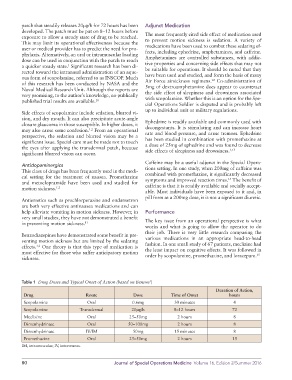
          Table 1  Drug Doses and Typical Onset of Action (based on Benson )
                                                                                          Duration of Action,
           Drug                     Route               Dose            Time of Onset           hours
           Scopolamine               Oral               0.6mg            30 minutes              4
           Scopolamine            Transdermal          20μg/h            8–12 hours              72
           Meclizine                 Oral             25–50mg             2 hours                8
           Dimenhydrinate            Oral             50–100mg            2 hours                8
           Dimenhydrinate           IV/IM               50mg             15 minutes              8
           Promethazine              Oral             25–50mg             2 hours                15
          IM, intramuscular; IV, intravenous.


          80                                    Journal of Special Operations Medicine  Volume 16, Edition 2/Summer 2016

