


Page 133 - Journal of Special Operations Medicine - Winter 2015
P. 133
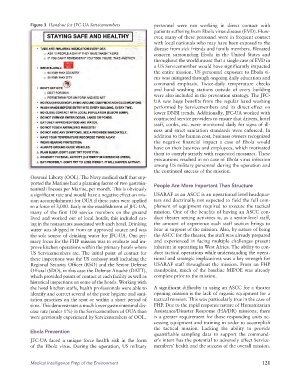
Figure 3  Handout for JFC-UA Servicemembers          personnel were not working in direct  contact with
                                                                   patients suffering from Ebola virus disease (EVD). How-
                                                                 ever, many of these personnel were in frequent contact
                                                                 with local nationals who may have been exposed to the
                                                                 disease from sick friends and family members. Elevated
                                                                 concern surrounding Ebola in the United States and
                                                                 throughout the world meant that a single case of EVD in
                                                                 a US Servicemember would have significantly impacted
                                                                 the entire mission. US personnel exposure to Ebola vi-
                                                                 rus was mitigated through ongoing daily education and
                                                                 command emphasis. Twice-daily temperature checks
                                                                 and hand washing stations outside of every building
                                                                 were also included in the prevention strategy. The JFC-
                                                                 UA saw huge benefits from the regular hand washing
                                                                 performed by Servicemembers and its direct effect on
                                                                 lower DNBI trends. Additionally, JFC-UA worked with
                                                                 contracted service providers to ensure that drivers, hotel
                                                                 staff, cooks, etc. were monitored daily for signs of ill-
                                                                 ness and strict sanitation standards were enforced. In
                                                                 addition to the human cost, business owners recognized
                                                                 the negative financial impact a case of Ebola would
                                                                 have on their business and employees, which motivated
                                                                 them to comply strictly with requested measures. These
                                                                 precautions resulted in no case of Ebola virus infection
                                                                 among US military personnel during the operation and
                                                                 the continued success of the mission.
              Onward Liberty (OOL). The Navy medical staff that sup-
              ported the Marines had a planning factor of two gastroin-  People Are More Important Than Structure
              testinal illnesses per Marine, per month. This is obviously
              a significant rate and would have a negative effect on mis-  USARAF as an ASCC is an operational level headquar-
              sion accomplishment for OUA if these rates were applied   ters and doctrinally not expected to field the full com-
              to a force of 3,000. Early in the establishment of JFC-UA,   plement of equipment required to execute the tactical
              many of the first 100 service members on the ground   mission. One of the benefits of having an ASCC con-
              lived and worked out of local hotels; this included eat-  duct theater setting activities is, as a senior-level staff,
              ing in the restaurants associated with each hotel. Drinking   the amount of experience each staff section brings to
              water was shipped in from an approved source and was   bear in support of the mission. Also, by nature of being
              the sole source of drinking water for JFC-UA. One pri-  the ASCC for the theater, the staff was already prepared
              mary focus for the FHP mission was to evaluate and im-  and experienced in facing multiple challenges present
              prove kitchen operations within the primary hotels where   inherent in operating in West Africa. The ability to con-
              US Servicemembers ate. The initial point of contact for   duct tactical operations while understanding the opera-
              these inspections was the US embassy staff including the   tional and strategic implications was a key strength for
              Regional Security Officer (RSO) and the Senior Defense   USARAF staff throughout the mission. From an FHP
              Official (SDO), in this case the Defense Attaché (DATT),   standpoint, much of the baseline MIPOE was already
              which provided points of contact at each facility as well as   complete prior to the mission.
              historical inspections on some of the hotels. Working with
              the hotel kitchen staffs, health professionals were able to   A significant difficulty in using an ASCC for a theater
              identify and correct several of the poor hygiene and sani-  opening mission is the lack of organic equipment for a
              tation practices on the spot or within a short period of   tactical mission. This was particularly true in the case of
              time. This demonstrates a much lower gastrointestinal dis-  FHP. Due to the rapid response nature of Humanitarian
              ease rate (under 1%) in the Servicemembers of OUA than   Assistance/Disaster Response (HA/DR) missions, there
              were previously experienced by Servicemembers of OOL.  is a greater requirement for those responding units ac-
                                                                 cessing equipment and training in order to  accomplish
                                                                 the tactical mission. Lacking the ability to provide
              Ebola Prevention                                   quantifiable sampling data to support the command-
              JFC-UA faced a unique force health risk in the form   er’s intent has the potential to adversely affect Service-
              of the Ebola virus. During the operation, US military   members’ health and the success of the overall mission.


              Medical Intelligence Prep of the Environment                                                   121

