


Page 55 - Journal of Special Operations Medicine - Fall 2014
P. 55
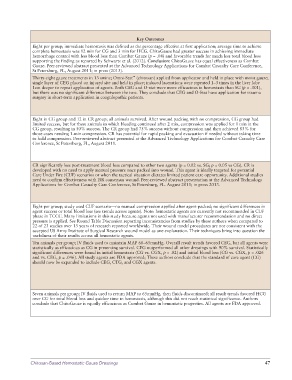
Table 3  Animal Studies Using Third-Generation Chitosan-Based Hemostatic Dressings
 Immediate   Final   Total
 Author/Year  Dressing  Wound Model  Hemostasis   Hemostasis  Blood Loss   Survival  Key Outcomes
 Xie/2010  CG  6.0mm femoral punch;   25%   1180 ± 1370mL  63% (5/8)  Eight per group; immediate hemostasis was defined as the percentage effective at first application; average time to achieve
 45-sec free bleed; 3-min   complete hemostasis was 12 min for CG and 3 min for HCG. ChitoGauze had greater success in achieving immediate
 HCG  direct compression;   63%  430 ± 1100mL  88% (7/8)  hemorrhage control with less blood loss than Combat Gauze (p = .04) and favorable trends for much less total blood loss
 180-min observation   (p = .04)  (p = .26)  (p = .25)  supporting the finding as reported by Schwartz et al. (2012). Conclusion: ChitoGauze has equal effectiveness as Combat
              Gauze. Peer-reviewed abstract presented at the Advanced Technology Applications for Combat Casualty Care Conference,
              St Petersburg, FL, August 2011; in press (2013).
                                                        ™
 Millner/2010  CEG  Liver laceration;   83% (5/6)   100% (6/6)   Thirty-eight gauze treatments in 13 swine; Omni-Stat  (chitosan) applied from applicator and held in place with moist gauze;
 coagulopathic swine   with 2 min   single layer of CEG placed on injured site and held in place; induced lacerations were repeated 1–3 times in the liver lobe
 OS  model; all agents were   100% (18/18)  additional   1cm deeper to repeat application of agents. Both CEG and O-stat were more efficacious in hemostasis than SG (p < .001),
 applied to injured    pressure; SG   but there was no significant difference between the two. They conclude that CEG and O-Stat have application for trauma
 SG  site held firmly for    7% (1/14)  was not able   surgery in short-term application in coagulopathic patients.
 5 min; additional 2 min   to provide
 applied if needed.  hemostasis with
 added pressure.
 Hoggarth/2011  6mm formal artery   38% (3/8)   50%  100%  Eight in CG group and 12 in CR group; all animals survived. After wound packing with no compression, CG group had
 punch; 45-sec free   limited success, but for these animals in which bleeding continued after 2 min, compression was applied for 1 min in the
 bleed; no compression   75% (9/12)   83%  100%  CG group, resulting in 50% success. The CR group had 75% success without compression and then achieved 83% for
 or after 2-min bleeding   those cases needing 1-min compression. CR has potential for rapid packing and evacuation if needed without taking time
 occurred then 1-min   to hold compression. Peer-reviewed abstract presented at the Advanced Technology Applications for Combat Casualty Care
 compression; adductor   Conference, St Petersburg, FL, August 2011.
 muscle was removed
 over vessels; 120-min
 observation period
 Kunio/2011  6mm formal artery   83% (10/12)  31.9mL  100%  CR significantly less post-treatment blood loss compared to other two agents (p = 0.02 vs. SG; p = 0.05 vs CG). CR is
 punch; 60-sec free   developed with no need to apply manual pressure once packed into wound. This agent is ideally targeted for potential
 bleed; CUF scenario   100% (12/12)  12.8mL  100%  Care Under Fire (CUF) scenarios or when the tactical situation dictates limited patient care opportunity. Additional studies
 with no manual agent   need to confirm effectiveness with ISR consensus wound. Peer-reviewed abstract presentation at the Advanced Technology
 compression; adductor   83% (10/12)  44.7mL  100%  Applications for Combat Casualty Care Conference, St Petersburg, FL. August 2011; in press 2013.
 muscle not removed
 over vessels; 120-min
 observation period
 Watters/2011  6mm femoral side-wall   50% (4/8)  374mL  100%  Eight per group; study used CUF scenario—no manual compression applied after agent packed; no significant differences in
 punch injury; 30-sec   agent success or total blood loss (see trends across agents). Note: hemostatic agents are currently not recommended in CUF
 free bleed; no adductor   75% (6/8)  205mL  100%  phase in TCCC. Many limitations in this study because agents not used with manufacturer recommendation and no direct
 muscle removed over   pressure is applied. See Round Table Discussion reporting inconsistencies from studies by these authors when compared to
 vessels; no direct   100% (8/8)  260mL  100%  22 of 23 studies over 15 years of research reported worldwide. Their wound model procedures are not consistent with the
 pressure     accepted US Army Institute of Surgical Research wound model as one explanation. Their techniques bring into question the
              usefulness of their results across all hemostatic agents.
 Rall et al./2013  CG   6.0mm femoral punch;   30%  60%  62 ± 65  60%  Ten animals per group; IV fluids used to maintain MAP 60–65mmHg. Overall result trends favored CEG, but all agents were
 45-sec free bleed; 3-min   statistically as efficacious as CG in preserving survival. CEG outperformed all other dressings with 90% survival. Statistically
 CGX  manual pressure; 2.5-hr   80%  80%  32 ± 52  70%  significant differences were found in initial hemostasis (CG vs. CGX, p = .02) and initial blood loss (CG vs. CGX, p = .026
 max observation; mean   and vs. CEG, p = .046). All study agents are FDA approved; These authors conclude that the standard of care agent (CG)
 CTG  arterial pressure kept at   30%  50%  65 ± 59  UKN  should now be expanded to include CEG, CTG, and CGX agents.
 60–65mmHg
 CEG   70%  90%  29 ± 64  90%

 HCG  60%  80%  40 ± 60    70%
 (≈ mL/k)
 Schwartz et   CG  6.0mm femoral punch;   57% (4/7)   90%  1225 ± 1280mL  100%  Seven animals per group; IV fluids used to return MAP to 65mmHg, then fluids discontinued; all result trends favored HCG
 al./2012  45-sec free bleed; 2-min   32 ± 47 min  over CG for total blood loss and quicker time to hemostasis, although this did not reach statistical significance. Authors
 compression with   conclude that ChitoGauze is equally efficacious as Combat Gauze in hemostatic properties. All agents are FDA approved.
 HCG  75-lb plate; 180-min   71% (5/7)   100%  775 ± 714mL  100%
 observation.  13 ± 28 min
 Notes: Celox Gauze is significantly different from Celox Trauma Gauze. While Celox Trauma Gauze is made entirely from chitosan, Celox Gauze
 is made of surgical gauze with chitosan coating. Celox Trauma Gauze is no longer manufactured.
 CG, Combat Gauze; Combat Gauze XL, CGX; CEG, Celox Gauze; CR, Celox RAPID; CTG, Celox Trauma Gauze; HCG, HemCon  ChitoGauze;
 MAP, mean arterial pressure; FDA, US Food and Drug Administration; MR, manufacturer recommended; SG, standard gauze; OS, OmniStat.


              Chitosan-Based Hemostatic Gauze Dressings                                                       47

