


Page 57 - Journal of Special Operations Medicine - Fall 2014
P. 57
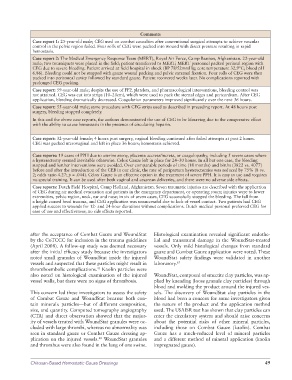
Table 4  Clinical Case Reports With Muscoadhesive Hemostatic Dressings
 Author/Year  Dressing  Injury  Blood Loss  Survive  Fluid Resuscitation  Comments
 Arul et al./2012  CEG  GSW to   Patient in shock,   Yes; 3 weeks   30U RBCs; 30U plasma  Case report 1: 25-year-old male; CEG used on combat casualties after conventional surgical attempts to achieve vascular
 transpelvic   93/37mmHg  discharged  control in the pelvic region failed. Four rolls of CEG were packed into wound with direct pressure resulting in rapid
              hemostasis.
 Arul et al./2012   CEG  IED blast   Yes; discharged  Case report 2: The Medical Emergency Response Team (MERT), Royal Air Force, Camp Bastion, Afghanistan. 22-year-old
              male; two tourniquets were placed in the field; patient transferred to MERT; MERT personnel packed perineal region with
              CEG due to severe bleeding. Patient arrived at field hospital in shock (BP 78/52mmHg; core temperature 32.9°C; blood pH
              6.86). Bleeding could not be stopped with gauze wound packing and pelvic external fixation. Four rolls of CEG were then
              packed into peritoneal cavity followed by standard gauze. Patient recovered weeks later. No complications reported with
              prolonged CEG packing.
 Muzzi et al./2012  CEG  Acute aortic   Coagulopathic on   Yes; discharged  Blood products administered   Case report: 59-year-old male; despite the use of FFP, platelets, and pharmacological interventions, bleeding control was
 dissection   admission  to control excessive bleeding  not attained. CEG was cut into strips (10–20cm), which were used to pack the sternal edges and pericardium. After CEG
              application, bleeding dramatically decreased. Coagulation parameters improved significantly over the next 36 hours.
 Muzzi et al./2012   CEG  Acute prosthetic   Preoperative   Yes; discharged  Thromboelastography and   Case report: 55-year-old male; same procedure with CEG strips used as described in preceding report. At 48 hours post
 endocarditis;   IV heparin   coagulation profile tests   surgery, bleeding stopped completely.
 4 months post   with impaired   confirmed severe coagulation
 aortic dissection   coagulation state.  system impairment,   In this and the above case reports, the authors demonstrated the use of CEG to be lifesaving due to the compressive effect
 surgery   which precluded surgical   with the ability to cause hemostasis in the presence of circulating heparin.
 homeostasis.
 Schmid et al./   CEG  Cesarean section   Yes; discharged  10U PRBCs, 7U plasma,    Case report: 32-year-old female; 4 hours post surgery, vaginal bleeding continued after failed attempts at post 2 hours.
 2012  at 37 weeks for   2g fibrinogen  CEG was packed uterovaginal and left in place 36 hours; hemostasis achieved.
 placenta previa
 Schmid et al./   CEG  PPH; 8 vaginal   Yes; discharged  Patients received ≥10U PRBCs   Case reports: 19 cases of PPH due to uterine atony, placenta accreta/increta, or coagulopathy, including 5 severe cases where
 2013  and 11 cesarean   in five cases and less (2–4U) in   a hysterectomy seemed inevitable otherwise. Celox Gauze left in place for 24–30 hours. In all but one case, the bleeding
 deliveries  seven cases. In the other cases,   stopped and further interventions were avoided. Over comparable periods of time (18 months) and births (3822 vs. 4077)
 no blood transfusions were   before and after the introduction of the CEB in our clinic, the rate of peripartum hysterectomies was reduced by 75% (8 vs.
 necessary.   2; odds ratio 4.27; p = .044). Celox Gauze is an effective option in the treatment of severe PPH. It is easy to use and requires
              no special training. It can be used after both vaginal and cesarean deliveries, and there were no adverse side effects.
 Tan/2011  CEG  GSW, IED, crush,   Yes; discharged  Case reports: Dutch Field Hospital, Camp Holland, Afghanistan. Seven traumatic injuries are described with the application
 fall from height  of CEG during air medical evacuation and patients in the emergency department, or operating room; injuries were to lower
              extremities, pelvic region, neck, ear and nose; in six of seven cases, CEG successfully stopped the bleeding. The fall from
              a height caused head trauma, and CEG application was unsuccessful due to lack of vessel contact. Two patients had CEG
              applied success to wounds for 12- and 24-hour durations without complications. Dutch medical personal preferred CEG for
              ease of use and effectiveness; no side effects reported.
 Note: CEG, Celox Gauze; PPH, postpartum hemorrhage; PRBC, packed red blood cell.


              after the acceptance of Combat Gauze and WoundStat   Histological examination revealed significant endothe-
              by the CoTCCC for inclusion in the trauma guidelines   lial  and transmural  damage  in  the  WoundStat-treated
              (April 2008). A follow-up study was deemed necessary   vessels. Only mild histological changes from standard
              after the initial efficacy study because the investigators   gauze and Combat Gauze application were noted. These
              noted small granules of WoundStat inside the injured   WoundStat safety findings were validated in another
              vessels and suspected that these particles might result in   laboratory. 67
              thromboembolic complications.  Kaolin particles were
                                         43
              also noted on histological examination of the injured   WoundStat, composed of smectite clay particles, was ap-
              vessel walls, but there were no signs of thrombosis.  plied by kneading (loose granule clay particles) through
                                                                 blood and molding the product around the injured ves-
              This concern led these investigators to assess the safety   sels. The discovery of WoundStat clay particles in the
              of  Combat  Gauze  and  WoundStat  because  both  con-  blood had been a concern for some investigators given
              tain mineralx particles—but of different composition,   the nature of the product and the application method
              size, and quantity. Computed tomography angiography   used. The USAISR test has shown that clay particles can
              (CTA) and direct observation showed that the major-  enter the circulatory system and should raise concerns
              ity of vessels treated with WoundStat granules were oc-  about the potential risks of other mineral particles,
              cluded with large thrombi, whereas no abnormality was   including those on Combat Gauze (kaolin). Combat
              seen in standard gauze or Combat Gauze dressing ap-  Gauze has a much-reduced level of mineral particles
              plication on the injured vessels.  WoundStat granules   and a different method of mineral application (kaolin
                                          48
              and thrombus were also found in the lung of one swine.   impregnated gauze).


              Chitosan-Based Hemostatic Gauze Dressings                                                       49

