


Page 68 - Journal of Special Operations Medicine - Spring 2014
P. 68
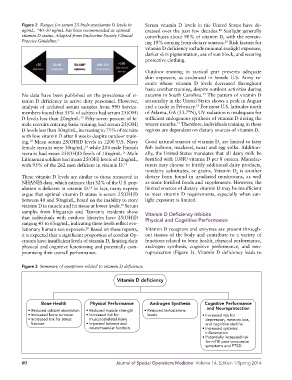
Figure 2  Ranges for serum 25-hydroxyvitamin D levels in   Serum vitamin D levels in the United States have de-
          ng/mL. *40–50 ng/mL has been recommended as optimal   creased over the past few decades.  Sunlight generally
                                                                                           18
          vitamin D status. Adapted from Endocrine Society Clinical   contributes about 90% of vitamin D, with the remain-
          Practice Guideline. 5                              ing 10% coming from dietary sources.  Risk factors for
                                                                                              20
                                                             vitamin D deficiency include minimal sunlight exposure,
                                                             darker skin pigmentation, use of sun block, and wearing
                                                             protective clothing.

                                                             Outdoor training in tactical gear prevents adequate
                                                             skin exposure, as evidenced in female U.S. Army re-
                                                             cruits whose vitamin D levels decreased throughout
                                                             basic combat training, despite outdoor activities during
                                                                                     14
          No data have been published on the prevalence of vi-  autumn in South Carolina.  The pattern of vitamin D
          tamin D deficiency in active duty personnel. However,   seasonality in the United States shows a peak in August
          analysis of archived serum samples from 990 Service-  and a nadir in February.  For most U.S. latitudes north
                                                                                  21
          members found that 35% of subjects had serum 25(OH)  of Atlanta, GA (33.7°N), UV radiation is inadequate for
          D levels less than 20ng/mL.  Fifty-seven percent of fe-  sufficient endogenous synthesis of vitamin D during the
                                  13
          male recruits entering basic training had serum 25(OH)  winter months.  Therefore, individuals training in these
                                                                          11
          D levels less than 30ng/mL, increasing to 75% of recruits   regions are dependent on dietary sources of vitamin D.
          with low vitamin D after 8 weeks despite outdoor train-
          ing.  Mean serum 25(OH)D levels in 1200 U.S. Navy   Good natural sources of vitamin D  are limited to fatty
             14
                                                                                           3
          female recruits were 30ng/mL,  while 204 male Finnish   fish (salmon, mackerel, tuna) and egg yolks. Addition-
                                    15
          recruits had mean 25(OH)D levels of 18ng/mL.  Male   ally, the United States mandates that all dairy milk be
                                                    16
          Lith uanian soldiers had mean 25(OH) levels of 12ng/mL,    fortified with 100IU vitamin D per 8 ounces. Manufac-
          with 95% of the 262 men deficient in vitamin D. 17   turers may choose to fortify additional dairy products,
                                                             nondairy substitutes, or grains. Vitamin D  is another
                                                                                                   2
          These vitamin D levels are similar to those measured in   dietary form found in irradiated mushrooms, as well
          NHANES data, which estimate that 32% of the U.S. pop-  as some fortified foods and supplements. However, the
          ulation is deficient in vitamin D.  In fact, many experts   limited sources of dietary vitamin D may be insufficient
                                      18
          argue that optimal vitamin D status is serum 25(OH)D   to meet vitamin D requirements, especially when sun-
          between 40 and 50ng/mL, based on the inability to store   light exposure is limited.
          vitamin D in muscle and fat tissue at lower levels.  Serum
                                                   19
          samples from lifeguards and Tanzania residents show
          that individuals with outdoor lifestyles have 25(OH)D   Vitamin D Deficiency Inhibits
          ranging 45 to 65ng/mL, indicating these levels reflect evo-  Physical and Cognitive Performance
          lutionary human sun exposure.  Based on these reports,   Vitamin D receptors and enzymes are present through-
                                    20
          it is expected that a significant proportion of combat Op-  out tissues of the body and contribute to a variety of
          erators have insufficient levels of vitamin D, limiting their   functions related to bone health, physical performance,
          physical and cognitive functioning and potentially com-  androgen synthesis, cognitive performance, and neu-
          promising their overall performance.               roprotection (Figure 3). Vitamin D deficiency leads to


          Figure 3  Summary of symptoms related to vitamin D deficiency.


                                                 Vitamin D deficiency


                  Bone Health         Physical Performance     Androgen Synthesis     Cognitive Performance
                                                                                      and Neuroprotection
             •  Reduced calcium absorption  •  Reduced muscle strength  •  Reduced testosterone
             •  Increased bone turnover  •  Increased risk for   levels              •  Increased risk for
             •  Increased risk for stress   musculoskeletal injury                    depression, memory loss,
              fracture               •  Impaired balance and                          and cognitive decline
                                      neuromuscular function                         •  Increased systemic
                                                                                      inflammation
                                                                                     •  Potentially increased risk
                                                                                      for mTBI post-concussive
                                                                                      symptoms and PTSD


          60                                     Journal of Special Operations Medicine  Volume 14, Edition 1/Spring 2014

