


Page 203 - 2023 SMOG Digital
P. 203
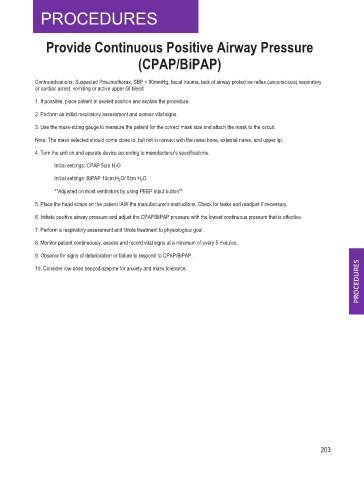
Provide Continuous Positive Airway Pressure
                               (CPAP/BiPAP)

         Contraindications: Suspected Pneumothorax, SBP < 90mmHg, facial trauma, lack of airway protective reflex (unconscious) respiratory
         or cardiac arrest, vomiting or active upper GI bleed
         1. If possible, place patient in seated position and explain the procedure.
         2. Perform an initial respiratory assessment and assess vital signs.
         3. Use the mask-sizing gauge to measure the patient for the correct mask size and attach the mask to the circuit.
         Note: The mask selected should come close to, but not in contact with the nasal bone, external nares, and upper lip.
         4. Turn the unit on and operate device according to manufacturer's specifications.
             Initial settings: CPAP 5cm H 2 O
             Initial settings: BiPAP 10cm H 2 O/ 5cm H 2 O
             **Adjusted on most ventilators by using PEEP input button**
         5. Place the head straps on the patient IAW the manufacturer's instructions. Check for leaks and readjust if necessary.
         6. Initiate positive airway pressure and adjust the CPAP/BiPAP pressure with the lowest continuous pressure that is effective.
         7. Perform a respiratory assessment and titrate treatment to physiological goal.
         8. Monitor patient continuously, assess and record vital signs at a minimum of every 5 minutes.
         9. Observe for signs of deterioration or failure to respond to CPAP/BiPAP.
         10. Consider low-dose benzodiazepine for anxiety and mask tolerance.


                                                                       203

