


Page 185 - 2022 Ranger Medic Handbook
P. 185
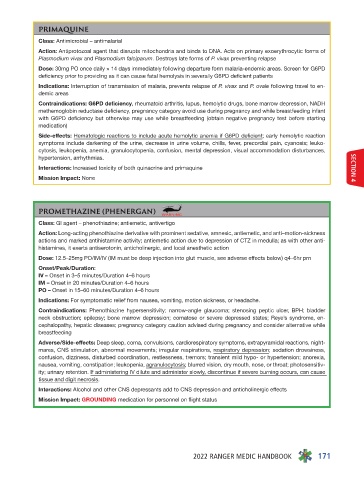
PRIMAQUINE
         Class: Antimicrobial – antimalarial
         Action: Antiprotozoal agent that disrupts mitochondria and binds to DNA. Acts on primary exoerythrocytic forms of
         Plasmodium vivax and Plasmodium falciparum. Destroys late forms of P. vivax preventing relapse
         Dose: 30mg PO once daily × 14 days immediately following departure form malaria-endemic areas. Screen for G6PD
         deficiency prior to providing as it can cause fatal hemolysis in severally G6PD deficient patients
         Indications: Interruption of transmission of malaria, prevents relapse of P. vivax and P. ovale following travel to en-
         demic areas
         Contraindications: G6PD deficiency, rheumatoid arthritis, lupus, hemolytic drugs, bone marrow depression, NADH
         methemoglobin reductase deficiency, pregnancy category avoid use during pregnancy and while breastfeeding infant
         with G6PD deficiency but otherwise may use while breastfeeding (obtain negative pregnancy test before starting
         medication)
         Side-effects: Hematologic reactions to include acute hemolytic anemia if G6PD deficient; early hemolytic reaction
         symptoms include darkening of the urine, decrease in urine volume, chills, fever, precordial pain, cyanosis; leuko-
         cytosis, leukopenia, anemia, granulocytopenia, confusion, mental depression, visual accommodation disturbances,
         hypertension, arrhythmias.
         Interactions: Increased toxicity of both quinacrine and primaquine  SECTION 4
         Mission Impact: None


         PROMETHAZINE (PHENERGAN)
         Class: GI agent – phenothiazine; antiemetic, antivertigo
         Action: Long-acting phenothiazine derivative with prominent sedative, amnesic, antiemetic, and anti–motion-sickness
         actions and marked antihistamine activity; antiemetic action due to depression of CTZ in medulla; as with other anti-
         histamines, it exerts antiserotonin, anticholinergic, and local anesthetic action
         Dose: 12.5–25mg PO/IM/IV (IM must be deep injection into glut muscle, see adverse effects below) q4–6hr prn
         Onset/Peak/Duration:
         IV – Onset in 3–5 minutes/Duration 4–6 hours
         IM – Onset in 20 minutes/Duration 4–6 hours
         PO – Onset in 15–60 minutes/Duration 4–6 hours
         Indications: For symptomatic relief from nausea, vomiting, motion sickness, or headache.
         Contraindications:  Phenothiazine hypersensitivity; narrow-angle glaucoma; stenosing peptic  ulcer,  BPH;  bladder
         neck obstruction; epilepsy; bone marrow depression; comatose or severe depressed states; Reye’s syndrome, en-
         cephalopathy, hepatic diseases; pregnancy category caution advised during pregnancy and consider alternative while
         breastfeeding
         Adverse/Side-effects: Deep sleep, coma, convulsions, cardiorespiratory symptoms, extrapyramidal reactions, night-
         mares, CNS stimulation, abnormal movements; irregular respirations, respiratory depression; sedation drowsiness,
         confusion, dizziness, disturbed coordination, restlessness, tremors; transient mild hypo- or hypertension; anorexia,
         nausea, vomiting, constipation; leukopenia, agranulocytosis; blurred vision, dry mouth, nose, or throat; photosensitiv-
         ity; urinary retention. If administering IV dilute and administer slowly, discontinue if severe burning occurs, can cause
         tissue and digit necrosis.
         Interactions: Alcohol and other CNS depressants add to CNS depression and anticholinergic effects
         Mission Impact: GROUNDING medication for personnel on flight status


                                           2022 RANGER MEDIC HANDBOOK  171

