


Page 37 - JSOM Winter 2023
P. 37
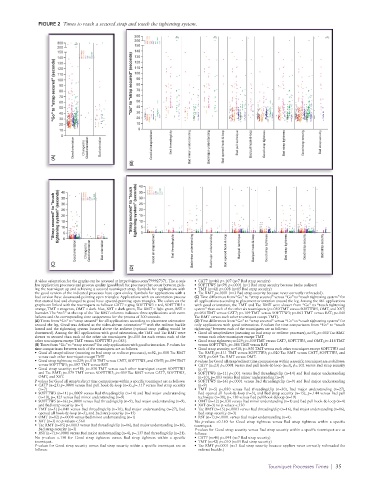
FIGURE 2  Times to reach a secured strap and touch the tightening system.

                                             300          n=3          n=3                                 n=3
                                             200  SOFTTW3  SOFTTW5
                    300  n=3                     CAT7  TMT  OMT  X8T  Tac RMT  RST
                    200                      150
                    150                      140
                    140    CAT7  SOFTTW3  SOFTTW5  TMT  OMT  X8T  Tac RMT  RST  130
                   "Go" to "strap secured" (seconds)  110  "Go" to "strap secured" (seconds)  90
                                             120
                    130
                                             110
                    120
                                             100
                    100
                                              80
                    90
                                              70
                    80
                                              60
                    70
                                              50
                    60
                                              40
                    50
                    40
                                              20
                    30
                                              10
                    20                        30
                    10                        0
                     0
                         Good orientation  Changed to  Good orientation  Bad orientation  Good all strap/redirect  Bad threading/clip  Bad minor understanding  Bad major understanding  Bad opened hook-&-loop  Bad pull technique  Bad pull hook-&-loop  Good strap tightness  Bad strap tightness  Good strap security  Bad strap security
                   (A)
                                            (B)  40
                   "Strap secured" to "touch tightening system" (seconds)  40 5  CAT7  SOFTTW3  SOFTTW5  TMT  OMT  X8T  Tac RMT  RST  "Strap secured" to "touch tightening system" (seconds)  35 5 0  CAT7  SOFTTW3  SOFTTW5  TMT  OMT  X8T  Tac RMT  RST
                                              30
                     35
                                              25
                     30
                     25
                                              20
                                              15
                     20
                     15
                                              10
                     10
                      0
                          Good orientation  Changed to  Good orientation  Bad orientation  Good all strap/redirect  Bad threading/clip  Bad minor understanding  Bad major understanding  Bad opened hook-&-loop  Bad pull technique  Bad pull hook-&-loop  Good strap tightness  Bad strap tightness  Good strap security  Bad strap security
                   (C)
                                            (D)
            A video orientation for the graphs can be accessed at https://vimeo.com/799927371. The x-axis   •  CAT7 (n=46) p=.107 (n=7 Bad strap security)
            has application processes and process quality (good/bad) for processes that occur between pick-  •  SOFTTW5 (n=59) p<.0001 (n=1 Bad strap security because broke redirect)
            ing the tourniquet up and achieving a secured tourniquet strap. Symbols for applications with   •  TMT (n=42) p=.008 (n=15 Bad strap security)
            the good version of the indicated processes have open circles. Symbols for applications with a   •  Tac RMT p<.0001 (n=3 Bad strap security because never correctly rethreaded).
            bad version have downward-pointing open triangles. Applications with an orientation process   (C) Time differences from “Go” to “strap secured” versus “Go” to “touch tightening system” for
            that started bad and changed to good have upward-pointing open triangles. The colors on the   all applications according to placement orientation around the leg. Among the 461 applications
            graphs are linked with the tourniquets as follows: CAT7 = gray, SOFTTW3 = red, SOFTTW5 =   with good orientation, the TMT and Tac RMT were slower from “Go” to “touch tightening
            orange, TMT = magenta, OMT = dark blue, X8T = dark green, Tac RMT = light green, RST =   system” than each of the other six tourniquets (p<.050 TMT versus SOFTTW5, OMT, and X8T;
            lavender. The “n=3” at the top of the Tac RMT columns indicates three applications with event   p=.054 TMT versus CAT7; p=.109 TMT versus SOFTTW3; p=.063 TMT versus RST; p<.040
            failures and the corresponding time assignments for the process of 300 seconds.  Tac RMT versus each other tourniquet except TMT).
            (A) Times from “Go” to “strap secured” for all applications according to placement orientation   (D) Time differences from “Go” to “strap secured” versus “Go” to “touch tightening system” for
            around the leg. Good was defined as the video-shown orientation 2-10  with the redirect buckle   only applications with good orientation. P-values for time comparisons from “Go” to “touch
            lateral and the tightening system located above the redirect (optimal strap pulling would be   tightening” between each of the tourniquets are as follows:
            downward). Among the 461 applications with good orientation, the TMT and Tac RMT were   •  Good all strap/redirect (meaning no bad strap or redirect processes), n=92, p<.030 Tac RMT
            slower to secured than each of the other six tourniquets (p<.050 for each versus each of the   versus each other tourniquet except TMT
            other tourniquets except TMT versus SOFTTW3 p=.085).  •  Good strap tightness; n=229; p<.030 TMT versus CAT7, SOFTTW5, and OMT; p=.118 TMT
            (B) Times from “Go” to “strap secured” for only applications with good orientation. P-values for   versus SOFTTW3; p=.088 TMT versus RST
            time comparisons between each of the tourniquets are as follows:  •  Good strap security; n=418; p<.050 TMT versus each other tourniquet except SOFTTW3 and
            •  Good all strap/redirect (meaning no bad strap or redirect processes), n=92, p<.008 Tac RMT   Tac RMT; p=.111 TMT versus SOFTTW3; p<.020 Tac RMT versus CAT7, SOFTTW5, and
              versus each other tourniquet except TMT             X8T; p=.064 Tac RMT versus OMT.
            •  Good strap tightness; n=229; p<.010 TMT versus CAT7, SOFTTW5, and OMT; p=.094 TMT   P-values for Good all strap/redirect time comparisons within a specific tourniquet are as follows:
              versus SOFTTW3; p=.097 TMT versus RST              •  CAT7 (n=23) p=.0001 versus Bad pull hook-&-loop (n=3), p=.102 versus Bad strap security
            •  Good strap security; n=418; p<.030 TMT versus each other tourniquet except SOFTTW3   (n=7)
              and Tac RMT; p=.079 TMT versus SOFTTW3; p<.009 Tac RMT versus CAT7, SOFTTW5,   •  SOFTTW3 (n=11) p<.001 versus Bad threading/clip (n=14) and Bad major understanding
              OMT, and X8T.                                       (n=10), p=.103 versus Bad minor understanding (n=9)
            P-values for Good all strap/redirect time comparisons within a specific tourniquet are as follows:  •  SOFTTW5 (n=16) p<.0001 versus Bad threading/clip (n=9) and Bad major understanding
            •  CAT7 (n=23) p=.0001 versus Bad pull hook-&-loop (n=3), p=.117 versus Bad strap security   (n=9)
              (n=7)                                              •  TMT (n=5) p<.030 versus Bad threading/clip (n=30), Bad major understanding (n=27),
            •  SOFTTW3 (n=11) p<.0009 versus Bad threading/clip (n=14) and Bad major understanding   Bad opened all hook-&-loop (n=3), and Bad strap security (n=15); p=.144 versus Bad pull
              (n=10), p=.125 versus Bad minor understanding (n=9)  technique (n=38); p=.130 versus Bad pull hook-&loop (n=19)
            •  SOFTTW5 (n=16) p<.0001 versus Bad threading/clip (n=9), Bad major understanding (n=9),   •  OMT (n=12) p<.030 versus Bad minor understanding (n=1) and Bad pull hook-&-loop (n=4)
              and Bad strap security (n=1)                       •  X8T (n=3) no p-values <.330
            •  TMT (n=5) p<.040 versus Bad threading/clip (n=30), Bad major understanding (n=27), Bad   •  Tac RMT (n=15) p<.0003 versus Bad threading/clip (n=16), Bad major understanding (n=16),
              opened all hook-&-loop (n=3), and Bad strap security (n=15)  Bad strap security (n=3)
            •  OMT (n=12) p=.0008 versus Bad minor understanding (n=1)  •  RST (n=7) p<.0001 versus Bad major understanding (n=4).
            •  X8T (n=3) no p-values <.560                       No  p-values <0.150 for Good strap tightness versus Bad strap tightness within a specific
            •  Tac RMT (n=15) p<.0003 versus Bad threading/clip (n=16), Bad major understanding (n=16),   tourniquet.
              Bad strap security (n=3)                           P-values for Good strap security versus Bad strap security within a specific tourniquet are as
            •  RST (n=7) p<.0001 versus Bad major understanding (n=4), p=.137 Bad threading/clip (n=21).  follows:
            No  p-values <.150 for Good strap tightness versus Bad strap tightness within a specific   •  CAT7 (n=46) p=.091 (n=7 Bad strap security)
            tourniquet.                                          •  TMT (n=42) p=.010 (n=15 Bad strap security)
            P-values for Good strap security versus Bad strap security within a specific tourniquet are as   •  Tac RMT p<.0001 (n=3 Bad strap security because appliers never correctly rethreaded the
            follows:                                              redirect buckle.)
                                                                                         Tourniquet Processes Times  |  35

