


Page 50 - JSOM Spring 2023
P. 50
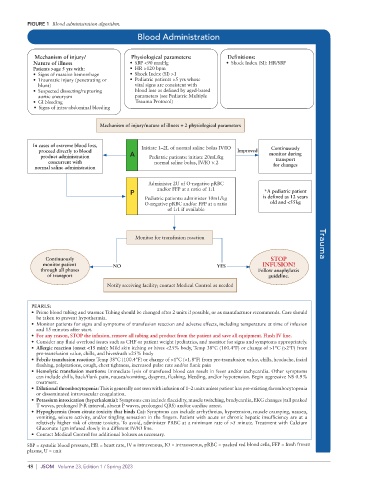
FIGURE 1  Blood administration algorithm.
                                              Blood Administration


            Mechanism of injury/            Physiological parameters:      Definitions:
            Nature of illness              •  SBP <90 mmHg                 •  Shock Index (SI): HR/SBP
            Patients >age 5 yrs with:      •  HR >120 bpm
            •  Signs of massive hemorrhage  •  Shock Index (SI) >1
            •  Traumatic injury (penetrating or   •  Pediatric patients >5 yrs whose
             blunt)                          vital signs are consistent with
            •  Suspected dissecting/rupturing   blood loss as defined by aged-based
             aortic aneurysm                 parameters (see Pediatric Multiple
            •  GI bleeding                   Trauma Protocol)
            •  Signs of intra-abdominal bleeding


                                  Mechanism of injury/nature of illness + 2 physiological parameters


            In cases of extreme blood loss,    Initiate 1–2L of normal saline bolus IV/IO
              proceed directly to blood                                        Improved   Continuously
              product administration       A      Pediatric patients: initiate 20mL/kg    monitor during
                 concurrent with                   normal saline bolus, IV/IO × 2          transport
            normal saline administration                                                  for changes

                                                 Administer 2U of O-negative pRBC
                                            P       and/or FFP at a ratio of 1:1       *A pediatric patient
                                                Pediatric patients: administer 10mL/kg   is defined as 12 years
                                                O-negative pRBC and/or FFP at a ratio    old and <55kg
                                                        of 1:1 if available


                                             Monitor for transfusion reaction                             Trauma


                Continuously                                                              STOP
               monitor patient        NO                                YES            INFUSION!
              through all phases                                                     Follow anaphylaxis
                of transport                                                             guideline.
                                    Notify receiving facility; contact Medical Control as needed


           PEARLS:
           •  Prime blood tubing and warmer. Tubing should be changed after 2 units if possible, or as manufacturer recommends. Care should
             be taken to prevent hypothermia.
           •  Monitor patients for signs and symptoms of transfusion reaction and adverse effects, including temperature at time of infusion
             and 15 minutes after start.
           •  For any reason, STOP the infusion, remove all tubing and product from the patient and save all equipment. Flush IV line.
           •  Consider any fluid overload issues such as CHF or patient weight (pediatrics, and monitor for signs and symptoms appropriately.
           •  Allergic reaction (onset <15 min): Mild skin itching or hives <25% body, Temp 38°C (100.4°F) or change of >1°C (>2°F) from
             pre-transfusion value, chills, and hives/rash >25% body
           •  Febrile transfusion reaction: Temp 38°C (100.4°F) or change of >1°C (<1.8°F) from pre-transfusion value, chills, headache, facial
             flushing, palpitations, cough, chest tightness, increased pulse rate and/or flank pain
           •  Hemolytic transfusion mentions: Immediate lysis of transfused blood can result in fever and/or tachycardia. Other symptoms
             can include chills, back/flank pain, nausea/vomiting, dyspnea, flushing, bleeding, and/or hypotension. Begin aggressive NS 0.9%
             treatment.
           •  Dilutional thrombocytopenia: This is generally not seen with infusion of 1–2 units unless patient has pre-existing thrombocytopenia
             or disseminated intravascular coagulation.
           •  Potassium intoxication (hyperkalemia): Symptoms can include flaccidity, muscle twitching, bradycardia, EKG changes (tall peaked
             T waves, prolonged P-R interval, absent P waves, prolonged QRS) and/or cardiac arrest.
           •  Hypoglycemia (from citrate toxicity that binds Ca): Symptoms can include arrhythmias, hypotension, muscle cramping, nausea,
             vomiting, seizure activity, and/or tingling sensation in the fingers. Patient with acute or chronic hepatic insufficiency are at a
             relatively higher risk of citrate toxicity. To avoid, administer PRBC at a minimum rate of >5 minute. Treatment with Calcium
             Gluconate 1gm infused slowly in a different IV/IO line.
           •  Contact Medical Control for additional boluses as necessary.
          SBP = systolic blood pressure, HR = heart rate, IV = intravenous, IO = intraosseous, pRBC = packed red blood cells, FFP = fresh frozen
          plasms, U = unit

          48  |  JSOM   Volume 23, Edition 1 / Spring 2023

