


Page 54 - JSOM Winter 2022
P. 54
combination as the participant when necessary to record ob-  TABLE 2  Demographics of Consented Subjects
          servations. Time was stopped when the participant inflated the                            n = 32
          cuff of the airway and stated they were finished. The manne-  Years as Corpsman (mean (SD))  3.4 (3.3)
          quin was then checked to ensure proper placement.
                                                              Prior Cricothyrotomy Experience        32
          Between iterations, participants replaced their blackout gog-  With TCK                    19
          gles, and the mannequin was reset, with intact silicone over the   With BA                  3
          cricothyrotomy site. Participants were not given any feedback   Unsure which kit           11
          regarding their performance until completion of all four itera-  Low Light Procedure Experience  17
          tions. After completion of all four iterations, participants com-  Training                15
          pleted a post-event survey in which they rated their confidence   In Field                  3
          and perceived degree of difficulty while using each light source.

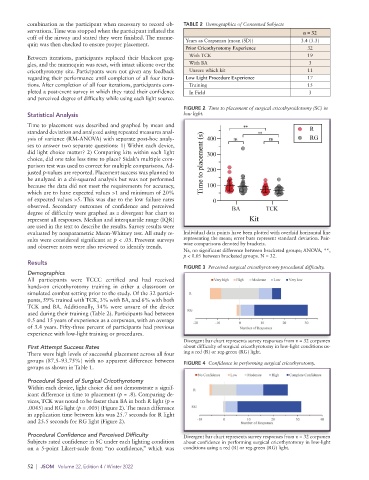
                                                             FIGURE 2  Time to placement of surgical cricothyroidotomy (SC) in
          Statistical Analysis                               low light.
          Time to placement was described and graphed by mean and
          standard deviation and analyzed using repeated measures anal-
          ysis of variance (RM-ANOVA) with separate post-hoc analy-
          ses to answer two separate questions: 1) Within each device,
          did light choice matter? 2) Comparing kits within each light
          choice, did one take less time to place? Sidak’s multiple com-
          parison test was used to correct for multiple comparisons. Ad-
          justed p-values are reported. Placement success was planned to
          be analyzed in a chi-squared analysis but was not performed
          because the data did not meet the requirements for accuracy,
          which are to have expected values >1 and minimum of 20%
          of expected values >5. This was due to the low failure rates
          observed. Secondary outcomes of confidence and perceived
          degree of difficulty were graphed as a divergent bar chart to
          represent all responses. Median and interquartile range (IQR)
          are used in the text to describe the results. Survey results were
          evaluated by nonparametric Mann-Whitney test. All study re-  Individual data points have been plotted with overlaid horizontal line
          sults were considered significant at p < .05. Preevent surveys   representing the mean; error bars represent standard deviation. Pair-
          and observer notes were also reviewed to identify trends.  wise comparisons denoted by brackets.
                                                             Ns, no significant difference between bracketed groups; ANOVA, **,
                                                             p < 0.05 between bracketed groups. N = 32.
          Results
                                                             FIGURE 3  Perceived surgical cricothyrotomy procedural difficulty.
          Demographics
          All participants were  TCCC certified and had received
          hands-on  cricothyrotomy  training in  either  a classroom  or
          simulated combat setting prior to the study. Of the 32 partici-
          pants, 59% trained with TCK, 3% with BA, and 6% with both
          TCK and BA. Additionally, 34% were unsure of the device
          used during their training (Table 2). Participants had between
          0.5 and 15 years of experience as a corpsman, with an average
          of 3.4 years. Fifty-three percent of participants had previous
          experience with low-light training or procedures.
                                                             Divergent bar chart represents survey responses from n = 32 corpsmen
          First Attempt Success Rates                        about difficulty of surgical cricothyrotomy in low-light conditions us-
          There were high levels of successful placement across all four   ing a red (R) or reg-green (RG) light.
          groups (87.5–93.75%) with no apparent difference between   FIGURE 4  Confidence in performing surgical cricothyrotomy.
          groups as shown in Table 1.

          Procedural Speed of Surgical Cricothyrotomy
          Within each device, light choice did not demonstrate a signif-
          icant difference in time to placement (p = .8). Comparing de-
          vices, TCK was noted to be faster than BA in both R light (p =
          .0045) and RG light (p = .005) (Figure 2). The mean difference
          in application time between kits was 25.7 seconds for R light
          and 25.5 seconds for RG light (Figure 2).

          Procedural Confidence and Perceived Difficulty     Divergent bar chart represents survey responses from n = 32 corpsmen
          Subjects rated confidence in SC under each lighting condition   about confidence in performing surgical cricothyrotomy in low-light
          on a 5-point Likert-scale from “no confidence,” which was   conditions using a red (R) or reg-green (RG) light.

          52  |  JSOM   Volume 22, Edition 4 / Winter 2022

