


Page 53 - JSOM Winter 2022
P. 53
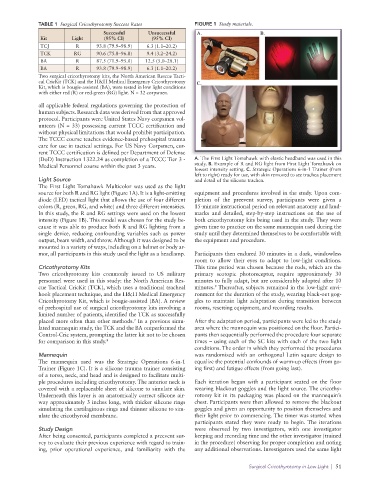
TABLE 1  Surgical Cricothyrotomy Success Rates     FIGURE 1  Study materials.
                                   Successful    Unsuccessful
              Kit        Light     (95% CI)        (95% CI)
              TCJ         R      93.8 (79.9–98.9)  6.3 (1.1–20.2)
              TCK        RG      90.6 (75.8–96.8)  9.4 (3.2–24.2)
              BA          R      87.5 (71.9–95.0)  12.5 (5.0–28.1)
              BA          R      93.8 (79.9–98.9)  6.3 (1.1–20.2)
              Two surgical cricothyrotomy kits, the North American Rescue Tacti-
              cal CricKit (TCK) and the H&H Medical Emergency Cricothyrotomy
              Kit, which is bougie-assisted (BA), were tested in low light conditions
              with either red (R) or red-green (RG) light. N = 32 corpsmen.

              all applicable federal regulations governing the protection of
              human subjects. Research data was derived from that approved
              protocol. Participants were United States Navy corpsmen vol-
              unteers (N = 33) possessing current TCCC certification and
              without physical limitations that would prohibit participation.
              The TCCC course teaches evidence-based prehospital trauma
              care for use in tactical settings. For US Navy Corpsmen, cur-
              rent TCCC certification is defined per Department of Defense
              (DoD) Instruction 1322.24 as completion of a TCCC Tier 3 -   A. The First Light Tomahawk with elastic headband was used in this
              Medical Personnel course within the past 3 years.  study. B. Example of R and RG light from First Light Tomahawk on
                                                                 lowest intensity setting. C. Strategic Operations 6-in-1 Trainer (from
                                                                 left to right) ready for use, with skin removed to see trachea placement
              Light Source                                       and detail of the silicone trachea.
              The First Light Tomahawk Multicolor was used as the light
              source for both R and RG light (Figure 1A). It is a light-emitting   equipment and procedures involved in the study. Upon com-
              diode (LED) tactical light that allows the use of four different   pletion of the preevent survey, participants were given a
              colors (R, green, RG, and white) and three different intensities.   15-minute instructional period on relevant anatomy and land-
              In this study, the R and RG settings were used on the lowest   marks and detailed, step-by-step  instructions  on the  use of
              intensity (Figure 1B). This model was chosen for the study be-  both cricothyrotomy kits being used in the study. They were
              cause it was able to produce both R and RG lighting from a   given time to practice on the same mannequin used during the
              single device, reducing confounding variables such as power   study until they determined themselves to be comfortable with
              output, beam width, and throw. Although it was designed to be   the equipment and procedure.
              mounted in a variety of ways, including on a helmet or body ar-
              mor, all participants in this study used the light as a headlamp.  Participants then endured 30 minutes in a dark, windowless
                                                                 room to allow their eyes to adapt to low-light conditions.
              Cricothyrotomy Kits                                This time period was chosen because the rods, which are the
              Two cricothyrotomy kits commonly issued to US military   primary scotopic photoreceptor, require approximately 30
              personnel were used in this study: the North American Res-  minutes to fully adapt, but are considerably adapted after 10
              cue Tactical CricKit (TCK), which uses a traditional tracheal   minutes.  Thereafter, subjects remained in the low-light envi-
                                                                       9
              hook placement technique, and the H&H Medical Emergency   ronment for the duration of the study, wearing black-out gog-
              Cricothyrotomy Kit, which is bougie-assisted (BA). A review   gles to maintain light adaptation during transition between
              of prehospital use of surgical cricothyrotomy kits involving a   rooms, resetting equipment, and recording results.
              limited number of patients, identified the TCK as successfully
              placed more often than other methods.  In a previous simu-  After the adaptation period, participants were led to the study
                                             7
              lated mannequin study, the TCK and the BA outperformed the   area where the mannequin was positioned on the floor. Partici-
              Control-Cric system, prompting the latter kit not to be chosen   pants then sequentially performed the procedure four separate
              for comparison in this study. 8                    times – using each of the SC kits with each of the two light
                                                                 conditions. The order in which they performed the procedures
              Mannequin                                          was randomized with an orthogonal Latin square design to
              The mannequin used was the Strategic Operations 6-in-1   equalize the potential confounds of warm-up effects (from go-
              Trainer (Figure 1C). It is a silicone trauma trainer consisting   ing first) and fatigue effects (from going last).
              of a torso, neck, and head and is designed to facilitate multi-
              ple procedures including cricothyrotomy. The anterior neck is   Each iteration began with a participant seated on the floor
              covered with a replaceable sheet of silicone to simulate skin.   wearing blackout goggles and the light source. The cricothy-
              Underneath this layer is an anatomically correct silicone air-  rotomy kit in its packaging was placed on the mannequin’s
              way approximately 3 inches long, with thicker silicone rings   chest. Participants were then allowed to remove the blackout
              simulating the cartilaginous rings and thinner silicone to sim-  goggles and given an opportunity to position themselves and
              ulate the cricothyroid membrane.                   their light prior to commencing. The timer was started when
                                                                 participants stated they were ready to begin. The iterations
              Study Design                                       were  observed  by two  investigators,  with one  investigator
              After being consented, participants completed a preevent sur-  keeping and recording time and the other investigator (trained
              vey to evaluate their previous experience with regard to train-  in the procedure) observing for proper completion and noting
              ing, prior operational experience, and familiarity with the   any additional observations. Investigators used the same light

                                                                                  Surgical Cricothyrotomy in Low Light  |  51

