


Page 145 - JSOM Summer 2022
P. 145
Search Strategy and Screening                      issue until they agreed. Both authors (RBO, LS) developed a
              The authors (RBO, LS) performed a three-step search strategy   data extraction form, which was pilot tested before the data-
              recommended by the JBI for all scoping reviews. 15,16  An initial   base search and then revised after each reviewer appraised a
              limited database search was conducted using the Cochrane Li-  minimum of three articles. The final list of research data char-
              brary, PubMed, and the DTIC for studies related to the topic,   acteristics extracted and evaluated from all articles included
              questions, and objectives of this scoping review. For the sec-  (1) author(s) and year, (2) article type, (3) primary aim, (4)
              ond database search, we used the index terms and keywords   method, and (5) key outcomes.
              from the articles we located for inclusion during the initial
              search. Finally, we reviewed additional relevant reference lists
              of the eligible full-text articles.                Results
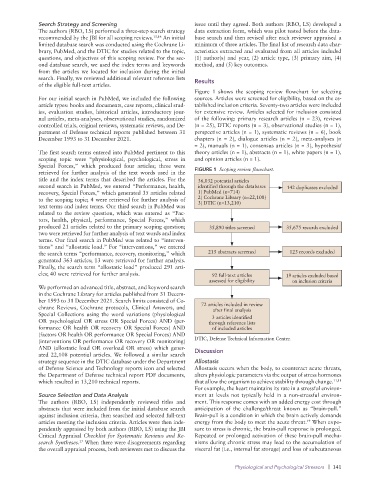
                                                                 Figure 1 shows the scoping review flowchart for selecting
              For our initial search in PubMed, we included the following   sources. Articles were screened for eligibility, based on the es-
              article types: books and documents, case reports, clinical stud-  tablished inclusion criteria. Seventy-two articles were included
              ies, evaluation studies, historical articles, introductory jour-  for extensive review. Articles selected for inclusion consisted
              nal articles, meta-analyses, observational studies, randomized   of the following: primary research articles (n = 23), reviews
              controlled trials, original reviews, systematic reviews, and De-  (n = 25), DTIC reports (n = 3), observational studies (n = 1),
              partment of Defense technical reports published between 31   perspective articles (n = 1), systematic reviews (n = 6), book
              December 1993 to 31 December 2021.                 chapters (n = 2), dialogue articles (n = 2), meta-analyses (n
                                                                 = 2), manuals (n = 1), consensus articles (n = 3), hypothesis/
              The first search terms entered into PubMed pertinent to this   theory articles (n = 1), abstracts (n = 1), white papers (n = 1),
              scoping topic were “physiological, psychological, stress in   and opinion articles (n = 1).
              Special Forces,” which produced four articles; three were
              retrieved for further analysis of the text words used in the   FIGURE 1  Scoping review flowchart.
              title and the index terms that described the articles. For the   36,032 potential articles
              second search in PubMed, we entered “Performance, health,   identified through the databases  142 duplicates excluded
              recovery, Special Forces,” which generated 35 articles related   1) PubMed (n=714)
              to the scoping topic; 4 were retrieved for further analysis of   2) Cochrane Library (n=22,108)
              text terms and index terms. Our third search in PubMed was   3) DTIC (n=13,210)
              related to the review question, which was entered as “Fac-
              tors, health, physical, performance,  Special Forces,” which
              produced 21 articles related to the primary scoping question;   35,890 titles screened  35,675 records excluded
              two were retrieved for further analysis of text words and index
              terms. Our final search in PubMed was related to “interven-
              tions” and “allostatic load.” For “interventions,” we entered
              the search terms “performance, recovery, monitoring,” which   215 abstracts screened  123 records excluded
              generated 363 articles; 13 were retrieved for further analysis.
              Finally, the search term “allostatic load” produced 291 arti-
              cles; 40 were retrieved for further analysis.           92 full-text articles    19 articles excluded based
                                                                     assessed for eligibility    on inclusion criteria
              We performed an advanced title, abstract, and keyword search
              in the Cochrane Library for articles published from 31 Decem-
              ber 1993 to 31 December 2021. Search limits consisted of Co-
              chrane Reviews, Cochrane protocols, Clinical Answers, and   72 articles included in review
                                                                       after final analysis
              Special  Collections  using  the  word  variations  (physiological
                                                                      3 articles identified
              OR psychological OR stress OR Special Forces) AND (per-  through reference lists
              formance OR health OR recovery OR Special Forces) AND   of included articles
              (factors OR health OR performance OR Special Forces) AND
              (interventions OR performance OR recovery OR monitoring)   DTIC, Defense Technical Information Center.
              AND (allostatic  load OR  overload OR stress)  which gener-
              ated 22,108 potential articles. We followed a similar search   Discussion
              strategy sequence in the DTIC database under the Department   Allostasis
              of Defense Science and Technology reports icon and selected   Allostasis occurs when the body, to counteract acute threats,
              the Department of Defense technical report PDF documents,   alters physiologic parameters via the output of stress hormones
              which resulted in 13,210 technical reports.        that allow the organism to achieve stability through change. 11,18
                                                                 For example, the heart maintains its rate in a stressful environ-
              Source Selection and Data Analysis                 ment at levels not typically held in a non-stressful environ-
              The authors (RBO, LS) independently reviewed titles and   ment. This response comes with an added energy cost through
              abstracts that were included from the initial database search   anticipation  of  the  challenge/threat  known  as  “brain-pull.”
              against inclusion criteria, then searched and selected full-text   Brain-pull is a condition in which the brain actively demands
              articles meeting the inclusion criteria. Articles were then inde-  energy from the body to meet the acute threat.  When expo-
                                                                                                     19
              pendently appraised by both authors (RBO, LS) using the JBI   sure to stress is chronic, the brain-pull response is prolonged.
              Critical Appraisal Checklist for Systematic Reviews and Re-  Repeated or prolonged activation of these brain-pull mecha-
              search Syntheses.  When there were disagreements regarding   nisms during chronic stress may lead to the accumulation of
                           17
              the overall appraisal process, both reviewers met to discuss the   visceral fat (i.e., internal fat storage) and loss of subcutaneous
                                                                              Physiological and Psychological Stressors   |  141

