


Page 54 - JSOM Spring 2021
P. 54
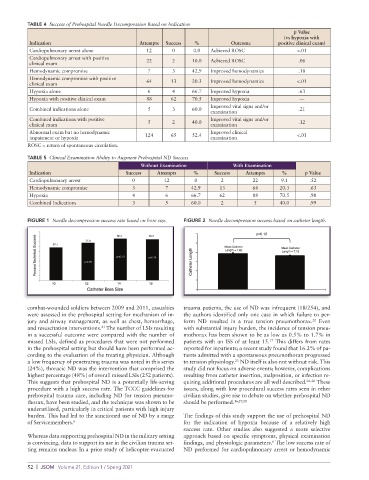
TABLE 4  Success of Prehospital Needle Decompression Based on Indication
                                                                                                 p Value
                                                                                              (vs hypoxia with
           Indication                          Attempts  Success  %          Outcome        positive clinical exam)
           Cardiopulmonary arrest alone          12      0      0.0   Achieved ROSC               <.01
           Cardiopulmonary arrest with positive    22    2      10.0  Achieved ROSC                .06
           clinical exam
           Hemodynamic compromise                7       3      42.9  Improved hemodynamics        .18
           Hemodynamic compromise with positive
           clinical exam                         64      13     20.3  Improved hemodynamics       <.01
           Hypoxia alone                         6       4      66.7  Improved hypoxia             .63
           Hypoxia with positive clinical exam   88      62     70.5  Improved hypoxia             —
                                                                      Improved vital signs and/or
           Combined indications alone            5       3      60.0                               .21
                                                                      examination
           Combined indications with positive    5       2      40.0  Improved vital signs and/or   .12
           clinical exam                                              examination
           Abnormal exam but no hemodynamic     124      65     52.4  Improved clinical           <.01
           impairment or hypoxia                                      examination
          ROSC = return of spontaneous circulation.

          TABLE 5  Clinical Examination Ability to Augment Prehospital ND Success
                                               Without Examination           With Examination
           Indication                     Success   Attempts    %      Success   Attempts    %       p Value
           Cardiopulmonary arrest           0          12        0       2          22       9.1      .52
           Hemodynamic compromise           3          7       42.9      13         64      20.3      .63
           Hypoxia                          4          6       66.7      62         88      70.5      .98
           Combined Indications             3          5       60.0      2          5       40.0      .99

          FIGURE 1  Needle decompression success rate based on bore size.  FIGURE 2  Needle decompression success based on catheter length.


          combat-wounded soldiers between 2009 and 2011, casualties   trauma patients, the use of ND was infrequent (18/254), and
          were assessed in the prehospital setting for mechanism of in-  the authors identified only one case in which failure to per-
          jury and airway management, as well as chest, hemorrhage,   form ND resulted in a true tension pneumothorax.  Even
                                                                                                       22
          and resuscitation interventions.  The number of LSIs resulting   with substantial injury burden, the incidence of tension pneu-
                                  21
          in a successful outcome were compared with the number of   mothorax has been shown to be as low as 0.5% to 1.7% in
          missed LSIs, defined as procedures that were not performed   patients with an ISS of at least 15.  This differs from rates
                                                                                         17
          in the prehospital setting but should have been performed ac-  reported for inpatients; a recent study found that 16.2% of pa-
          cording to the evaluation of the treating physician. Although   tients admitted with a spontaneous pneumothorax progressed
          a low frequency of penetrating trauma was noted in this series   to tension physiology.  ND itself is also not without risk. This
                                                                              23
          (24%), thoracic ND was the intervention that comprised the   study did not focus on adverse events; however, complications
          highest percentage (48%) of overall missed LSIs (252 patients).   resulting from catheter insertion, malposition, or infection re-
          This suggests that prehospital ND is a potentially life-saving   quiring additional procedures are all well described. 24–26  These
          procedure with a high success rate. The TCCC guidelines for   issues, along with low procedural success rates seen in other
          prehospital trauma care, including ND for tension pneumo-  civilian studies, give rise to debate on whether prehospital ND
          thorax, have been studied, and the technique was shown to be   should be performed. 16,27,28
          underutilized, particularly in critical patients with high injury
          burden. This had led to the sanctioned use of ND by a range   The findings of this study support the use of prehospital ND
          of Servicemembers. 8                               for the indication of hypoxia because of a relatively high
                                                             success rate. Other studies also suggested a more selective
          Whereas data supporting prehospital ND in the military setting   approach based on specific symptoms, physical examination
          is convincing, data to support its use in the civilian trauma set-  findings, and physiologic parameters.  The low success rate of
                                                                                          6
          ting remains unclear. In a prior study of helicopter-evacuated   ND performed for cardiopulmonary arrest or hemodynamic

          52  |  JSOM   Volume 21, Edition 1 / Spring 2021

