


Page 28 - JSOM Spring 2020
P. 28
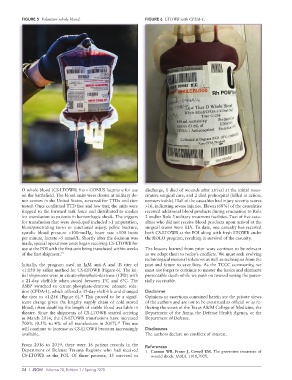
FIGURE 5  Volunteer whole blood.                   FIGURE 6  LTOWB with CPDA-1.


          O whole blood (CS-LTOWB) from CONUS locations for use   discharge, 1 died of wounds after arrival at the initial resus-
          on the battlefield. The blood units were drawn at military do-  citative surgical care, and 2 died prehospital (killed in action;
          nor centers in the United States, screened for TTDs and titer   nonsurvivable). Half of the casualties had injury severity scores
          tested. Once confirmed TTD free and low titer, the units were   >16, indicating severe injuries. Eleven (68%) of the causalities
          shipped to the forward task force and distributed to medics   received additional blood products during evacuation to Role
          for transfusion to patients in hemorrhagic shock. The triggers   2 and/or Role 3 military treatment facilities. Two of five casu-
          for transfusion that were developed included >1 amputation,   alties who did not receive blood products upon arrival at the
          blunt/penetrating torso or junctional injury, pelvic fracture,   surgical teams were KIA. To date, one casualty has received
          systolic blood pressure <100mmHg, heart rate >100 beats   both CS-LTOWB at the POI along with fresh LTOWB under
          per minute, lactate >5 mmol/L. Shortly after the decision was   the ROLO program, resulting in survival of the casualty.
          made, special operations units began receiving CS-LTOWB for
          use at the POI with the first unit being transfused within weeks   The lessons learned from prior wars continue to be relevant
          of the first shipment. 15                          as we adapt them to today’s conflicts. We must seek evolving
                                                             technological material solutions as well as techniques from the
          Initially, the program used an IgM anti-A and -B titer of   past and future to save lives. As the TCCC community, we
          <1:150 by saline method for CS-LTOWB (Figure 6). The ini-  must not forget to continue to master the basics and eliminate
          tial shipments were in citrate-phosphate-dextrose (CPD) with   preventable death while we push on toward saving the poten-
          a 21-day shelf-life when stored between 1°C and 6°C. The   tially survivable.
          ASBP switched to citrate-phosphate-dextrose adenine solu-
          tion (CPDA-1), which offered a 35-day shelf-life and changed   Disclaimer
                                  18
          the titer  to <1:256 (Figure 6).  This proved  to be a signif-  Opinions or assertions contained herein are the private views
          icant change given the lengthy supply chain of cold stored   of the authors and are not to be construed as official or as re-
          blood, often doubling the length of viable blood available in   flecting the views of the Texas A&M College of Medicine, the
          theatre. Since the shipments of CS-LTOWB started arriving   Department of the Army, the Defense Health Agency, or the
          in March 2016, the CS-LTOWB transfusions have increased   Department of Defense.
          700% (0.5% to 4% of all transfusions in 2017).  This use
                                                 19
          will continue to increase as CS-LTOWB becomes increasingly   Disclosures
          available.                                         The authors declare no conflicts of interest.
          From 2016 to 2019, there were 16 patient records in the   References
          Department of Defense Trauma Registry who had received   1.  Cannon WB, Fraser J, Cowell EM. The preventive treatment of
          CS-LTOWB at the POI. Of these patients, 13 survived to   wound shock. JAMA. 1918;70(9).


          24  |  JSOM   Volume 20, Edition 1 / Spring 2020

