


Page 27 - JSOM Spring 2020
P. 27
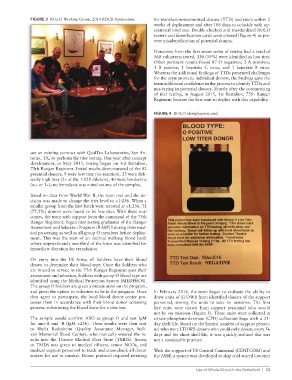
FIGURE 3  ROLO Working Group, 2014 RDCR Symposium.  for transfusion-transmitted disease (TTD) and titers within 2
                                                                 weeks of deployment and after 105 days to coincide with op-
                                                                 erational timelines. Double-checked and standardized ROLO
                                                                 rosters and identification cards were created (Figure 4) to pre-
                                                                 vent misidentification of potential donors.
                                                                 Outcomes from the first seven series of testing had a total of
                                                                 560 volunteers tested, 330 (59%) were identified as low titer.
                                                                 Other pertinent results found 87 O negatives, 3 A positives,
                                                                 1 B positive, 1 hepatitis C virus, and 1 hepatitis B virus.
                                                                 Whereas the additional findings of TTDs presented challenges
                                                                 for the asymptomatic individual donors, the findings gave the
                                                                 team additional confidence in the process to identify TTDs and
                                                                 mis-typing in potential donors. Shortly after the commencing
                                                                 of titer testing, in August 2015, 1st Battalion, 75th Ranger
                                                                 Regiment became the first unit to deploy with this capability.


                                                                 FIGURE 4  ROLO identification card.


              use an existing contract with QualTex Laboratories, San An-
              tonio, TX, to perform the titer testing. One year after concept
              development, in May 2015, testing began on 3rd Battalion,
              75th Ranger Regiment. Initial results demonstrated of the 82
              potential donors, 9 were low titer (no reaction), 33 were defi-
              nitely high titer (2+ at the 1:128 dilution), 40 were borderline
              (w+ or 1+); no hemolysis was noted on any of the samples.

              Based on data from World War II, the team met and the de-
              cision was made to change the titer level to <1:256. When a
              smaller group from the first batch were retested at <1:256, 31
              (77.5%) donors were found to be low titer. With these out-
              comes, the team with support from the command of the 75th
              Ranger Regiment, began titer testing graduates of the Ranger
              Assessment and Selection Program (RASP) I during their med-
              ical processing as well as all group O members before deploy-
              ment. This was the start of an internal walking blood bank
              where approximately one-third of the force was identified for
              immediate donation for transfusion.

              On entry into the US Army, all Soldiers have their blood
              drawn to determine their blood type. Once the Soldiers who
              are bound to service in the 75th Ranger Regiment pass their
              assessment and selection, Soldiers with group O blood type are
              identified using the Medical Protection System (MEDPROS).
              The group O Soldiers are given a presentation on the program,
              and given the option to volunteer to be in the program. Once   In February 2016, the team began to evaluate the ability to
              they agree to participate, the local blood donor center pro-  draw units of LTOWB from identified donors of the support
              cesses them in accordance with their blood donor screening   personnel, storing the units to take on missions. The first
              process, substituting the blood draw for a titer test.  five units were drawn from support personnel who would
                                                                 not be on missions (Figure 5). These units were collected in
              The sample would confirm ABO as group O and test IgM     citrate-phosphate-dextrose (CPD) collection bags with a 21-
              for anti-A and -B (IgM <256). These results were then sent   day shelf-life. Based on the limited number of support person-
              to  Sheila  Rudesheim  (Quality  Assurance  Manager,  Sulli-  nel who were LTOWB donors who could only donate every 56
              van Memorial Blood Center), who manually entered the re-  days and the short shelf-life, it was quickly realized this was
              sults into the Theatre Medical Data Store (TMDS). Access   not a sustainable practice.
              to TMDS was given to medical officers, senior NCOs, and
              medical support personnel to track and cross-check all donor   With the support of US Central Command (CENTCOM) and
              rosters for use in combat. Donor protocol required retesting   the ASBP, a system was developed to ship cold stored low titer

                                                                                  Use of Whole Blood in the Battlefield  |  23

