


Page 96 - Journal of Special Operations Medicine - Summer 2017
P. 96
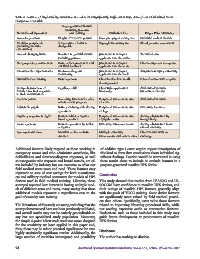
Table 6  Features of High-Fidelity Simulators Scored as Not Significantly Different in Importance from a Calculated Mean
          Comparison Variable
                                      Preprogrammed Sounds
                                        Including Screams
           Nontethered Operation           and Talking            Intubation Use        Finger Pulse Oximetry
           Ease-of-operation        Weight of 130-150 pounds  Nasopharyngeal airway use  End-tidal carbon dioxide
           Modular peripherals      Temperature of skin is   Supraglottic airway use  Blood pressure assessment
           (including modular       changeable
           extremities)
           Ease of changing limbs   Reaction to painful stimuli   Junctional tourniquet   Wound closure
                                    including grimace       application to the axilla
           Nonproprietary connections  Urine catheterization in and   Junctional tourniquet   Chest compression response
                                    out fluid feedback      application to the aorta
           Intramuscular injection sites  Electrocardiogram   Junctional tourniquet   Amputation injury extremity
                                    monitoring              application to the neck
           Humidified air misting   Distal cyanosis         Chest feedback to needle   Pelvic fracture with crepitus
                                                            decompression
           Comprehensiveness of     Capillary refill        Chest tube application   Abdominal wounds
           function for first responder                     bilaterally              (mesenteric bleeds)
           to Role 2 simulations
           Realistic joints         Recording function for after   Peripheral intravenous sites   Abdominal wounds
                                    action review purposes  on arms
           Adjustable pupils        Battery exchangeable during   Peripheral intravenous sites   Extremity fractures
                                    operations              on legs
           Pupillary response to light  Remote tablet computer   Peripheral intravenous sites   Airway obstruction by
                                    based operation         of jugular veins         foreign body
           Facial cyanosis          Remote operation by tablet   Extremity intraosseous site  Airway obstruction from
                                    computer                                         altered anatomy
           Eyes open and close      Manikin evokes realistic   Multiple extremity    Chest wound with air
                                    emotion                 intraosseous and venous sites  exchange


          Additional features likely targeted at those working in   of additive type I error require repeat investigation of
          emergency rooms and who administer anesthesia, like   this kind to draw firm conclusions about individual sig-
          defibrillation and electrocardiogram responses, as well   nificant findings. Caution would be warranted in using
          as nasogastric tube response and bowel sounds, are of-  these results alone to include or exclude features in a
          ten included by industry but are excessive to what our   purpose-generated manikin HPS device.
          field medical users want and need. These features may
          represent an area of cost savings for both manufactur-  Conclusion
          ers and military medical consumers for models of HPS
          devices used in field medical training. Likewise, those   This study showed that medics from USASOC and US-
          surveyed reported low interest in having multiple mod-  SOCOM have confidence in manikin HPS devices, and
          els of different sexes and races, many stating that these   their ratings of manikin HPS features generally align
          additional models represent a superfluous cost to the   with the goals of TCCC training. Some device features
          goal of casualty care training.                    are significantly more valued by field medical provid-
                                                             ers than others. Specifically, users value those features
          The limitations of this study are many, including that the   related to improving lifesaving procedural skills, while
          survey elements used have not been previously validated,   not  needing  expensive  audio  or automation  features.
          and overall results may not be entirely generalizable to   Evaluations such as those included in this study may
          any  but  our  specialized  study  population.  Moreover,   guide  future  development  or  procurement  of manikin
          the simple 5-point Likert scale used was never designed   HPS devices.
          for the sensitivity we have applied in this paper and,
          thus, there may be minor practical significance for even   Disclosure
          highly statistically significant results. Additionally, the
          large number of variables investigated and   possibility   The author has nothing to disclose.


          94                                    Journal of Special Operations Medicine  Volume 17, Edition 2/Summer 2017

