


Page 95 - Journal of Special Operations Medicine - Summer 2017
P. 95
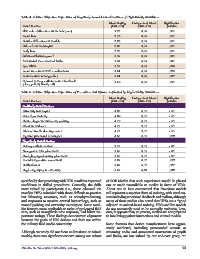
Table 4  Relative Subjective Importance of Negatively Scored General Features of High-Fidelity Simulators
                                                                  Mean Rating    Comparison Mean    Significance
              Rated Feature                                        (Out of 5)       (Out of 5)       p-Value
              Skin color differences in models (race)                 1.95            4.05            .001
              Facial hair                                             2.76            4.05            .001
              Gender differences in models                            2.86            4.05            .001
              Odors from mannequin                                    2.88            4.05            .001
              Body hair                                               2.98            4.05            .001
              Submersible/waterproof                                  3.39            4.05            .001
              Automated movement of limbs                             3.44            4.05            .001
              Eyes Blink                                              3.57            4.05            .002
              Facial movement with vocalizations                      3.61            4.05            .024
              Bowel sounds (changeable)                               3.61            4.05            .037
              Colored urinary catheterization feedback                3.68            4.05            .011
              (clear, yellow, black, red)

              Table 5  Relative Subjective Importance of Procedures and Injuries Replicated by High-Fidelity Simulators
                                                                  Mean Rating    Comparison Mean    Significance
              Rated Factors                                        (Out of 5)       (Out of 5)       p-Value
              Positively Rated Factors
              Extremity tourniquet                                    4.85            4.37            <.01
              Cricothyroidotomy                                       4.82            4.37            <.01
              Hemorrhagic wound cavity packing                        4.79            4.37            <.01
              Chest wound seal                                        4.76            4.37            <.01
              Bilateral needle decompression                          4.75            4.37            <.01
              Inguinal junctional tourniquet                          4.66            4.37            .019
              Negatively Rated Factors
              Urinary catheterization                                 3.78            4.37            <.01
              Nasogastric tube placement                              3.68            4.37            <.01
              Oral pharyngeal airway placement                        3.68            4.37            <.01
              Rectal temperature assessment                           3.87            4.37            .019
              Defibrillation                                          3.87            4.37            .027
              Degloving injury to extremity                           3.67            4.48            .039


              specifically that practicing with HPS manikins improved   of SOF Medics that such experiences would be phased
              confidence in skilled procedures. Generally, the skills   out or made unavailable to medics in favor of HPSs.
              most valued by participants (i.e., those educated via   About one in four commented that live-tissue models
              manikin HPS) coincided with those difficult-to-practice   still represent a superior form of training, with cited rea-
              but lifesaving measures, such as cricothyroidotomy,   sons including emotional feedback and realism, although
              and responses to massive arterial hemorrhage, such as   many of these medics also noted that HPSs are a “good
              wound packing and extremity tourniquets. Some mani-  adjunct” to animal-based training. HPSs and live models
              kin features more applicable to tasks of prolonged field   do not necessarily need to be mutually exclusive; how-
              care, such as nasogastric tube response, had lower im-  ever, it appears that, at present, medics are not prepared
              portance ratings. These findings demonstrate alignment   to lose living-patient interactions and animal models.
              between the goals of HPS devices and their use within
              the military field medic community.                Some features that device manufacturers have aggres-
                                                                 sively marketed, including prerecorded sounds or
              Although our study did not focus on live tissue or animal   streaming audio and automated movements of pupils
              models, there was significant concern among our cohort   and limbs, are less valued by our end-user group. 33,34


              Manikin Human-Patient Simulator Training                                                        93

