


Page 93 - Journal of Special Operations Medicine - Summer 2017
P. 93
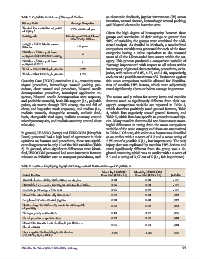
Table 1  Population Factors of Surveyed Medics     as chest-tube feedback, jugular intravenous (IV) access
              Survey Item                   Average Response     insertion, wound closure, hemorrhagic wound packing,
              Treated live casualties at point    77% answered yes  and bilateral chest-tube insertion sites.
              of injury?                                         Given  the  high  degree  of  homogeneity  between  these
              Rank/grade                 E7—Sergeant First Class /   groups and correlation of their ratings on greater than
                                           Chief Petty Officer   90% of variables, the groups were combined for addi-
              Length of SOF Medic career       ~ 6 years         tional analysis. As detailed in Methods, a standardized
              thus far                                           comparison variable was generated for each of the three
              Number of times you have            2              categories having a value equivalent to the summed
              completed SOCMSSC training                         mean of all the Likert-scaled item scores within the cat-
              Number of times you have            1              egory. This process produced a comparison variable of
              completed MPT                                      “average importance” with respect to all others within
              Total combat OIF deployments       0.99            its category of general characteristics, procedures, or in-
              Total combat OEF deployments       1.73            juries, with values of 4.05, 4.37, and 4.48, respectively,
                                                                 each out of a possible maximum of 5. Evaluation against
              Casualty Care (TCCC) curriculum (i.e., extremity tour-  this mean comparison variable allowed for identifica-
              niquet procedure, hemorrhage wound packing pro-    tion of manikin HPS factors, which were subjectively
              cedure, chest wound seal procedure, bilateral needle   rated significantly above or below average importance.
              decompression procedure, tourniquet application re-
              sponse, bilateral needle decompression sites response,   The means and p values for survey items and manikin
              and packable wounds), basic life support (i.e., palpable   features rated as significantly different from their cat-
              pulses, air moves through HPS airway, rise and fall of   egory’s comparison variable are reported in Table 3,
              chest, and bag-valve mask response), and realism (i.e.,   which describes positively rated general features; Table
              realistic wounds, changeable wounds, realistic feed-  4, which lists negatively scored general features; and
              back, changeable vital signs, realistic anatomy around   Table 5, which lists data specific to procedures and inju-
              cricothyrotomy site, and realistic anatomy around chest   ries. Many manikin features did not demonstrate mean-
              tube site).                                        ingful differences in rating from the mean comparison
                                                                 variable of the same category and these are summarized
              In general, USASOC (Army) and USSOCOM (Navy/Air    in Table 6. Of note, skin color as a feature was identified
              Force) personnel had a high level of agreement in their   as an outlier with a z-score of 3.2 and a mean rating of
              opinions on features and procedures; there was signifi-  1.95 out of a possible 5 (i.e., low importance). The only
              cant disagreement in only 10 of the 102 variables (Table   injury that was replicated by manikin HPS devices and
              2). In general, when significant differences were identi-  rated significantly different from the group was a de-
              fied, USSOCOM personnel had more interest in features   gloved extremity, which was an outlier with a z-score of
              relevant to definitive care or transport procedures, such   2.1 and a rating of 3.67 out of 5 (i.e., fair importance).


              Table 2  Features Displaying Significant Disagreement Between Surveyed Populations
                                                              Mean by USASOC      Mean by USSOCOM
              Rated Feature                                   Personnel (Out of 5)   Personnel (Out of 5)  p-Value
              Wound closure ability with sutures or staples         3.70                4.20             <.01
              Humidified air creates misting in endotracheal tubes  3.66                4.08             <.01
              Realistic joint range of motion                       3.95                4.29             <.01
              Chest tube sites bilaterally functional               4.32                4.58             .019
              Peripheral IV site external jugular                   4.20                4.48             .019
              Hemorrhage wound cavity reacts to and capable         4.64                4.82             .023
              of packing
              Non-propriety connections                             4.13                3.77             .025

              Blood pressure responsiveness                         4.29                4.52             .048
              Chest tube insertion site feedback (air flutter or    4.05                4.33             .048
              blood return)
              Uses organic medical diagnostic devices               4.25                4.48             .049
              (BP, Etco , Spo , ECG)
                      2   2


              Manikin Human-Patient Simulator Training                                                        91

