


Page 44 - JSOM Winter 2018
P. 44
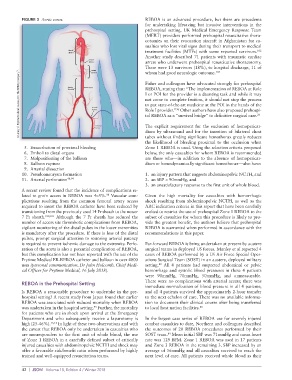
FIGURE 3  Aortic zones.                            REBOA is an advanced procedure, but there are precedents
                                                             for undertaking lifesaving but invasive interventions in the
                                                             prehospital setting. UK Medical Emergency Response Team
                                                             (MERT) providers performed prehospital resuscitative thora-
                                                             cotomies on their evacuation aircraft in Afghanistan for ca-
                                                             sualties who lost vital signs during their transport to medical
                                                             treatment facilities (MTFs) with some reported survivors.
                                                                                                           102
                                                             Another  study described  71  patients  with traumatic  cardiac
                                                             arrest who underwent prehospital resuscitative thoracotomy.
                                                             There were 13 survivors (18%), to hospital discharge, 11 of
         Courtesy of Prytime Medical Devices, Inc. The REBOA Company ™ .  REBOA, stating that: “The implementation of REBOA at Role
                                                             whom had good neurologic outcome.
                                                                                          103
                                                             Fisher and colleagues have advocated strongly for prehospital

                                                             I or POI for the provider is a daunting task and while it may
                                                             not come to complete fruition, it should not stop the process
                                                             to put state-of-the-art medicine at the POI in the hands of the
                                                             Role I provider.”  Other authors have also proposed prehospi-
                                                                          96
                                                             tal REBOA as a “survival bridge” to definitive surgical care.
                                                                                                           26
                                                             The explicit requirement for the exclusion of hemopericar-
                                                             dium by ultrasound and for the insertion of bilateral chest
                                                             tubes without finding significant hemothorax greatly reduces
                                                             the likelihood of bleeding proximal to the occlusion when
           5.  Exacerbation of proximal bleeding             Zone 1 REBOA is used. Using the selection criteria proposed
           6.  Emboli to distal organs                       below, the only casualties for whom REBOA is recommended
           7.  Malpositioning of the balloon                 are those who—in addition to the absence of hemopericar-
           8.  Balloon rupture                               dium or hemodynamically significant hemothorax—also have:
           9.  Arterial dissection
          10.  Pseudoaneurysm formation                      1.  an injury pattern that suggests abdominopelvic NCTH, and
          11.  Arterial perforation 98,99                    2.  an SBP < 90mmHg, and
                                                             3.  an unsatisfactory response to the first unit of whole blood.
          A recent review found that the incidence of complications re-
          lated to groin access in REBOA was 4–5%.  Vascular com-  Given the high mortality for casualties with hemorrhagic
                                             98
          plications resulting from the common femoral artery access   shock resulting from abdominopelvic NCTH, as well as the
          required to insert the REBOA catheter have been reduced by   ARC indication criteria in this report that have been carefully
          transitioning from the previously used 14 Fr sheath to the newer   crafted to restrict the use of prehospital Zone 1 REBOA to the
          7 Fr sheath. 100,101  Although the 7 Fr sheath has reduced the   subset of casualties for whom this procedure is likely to pro-
          number of access site thrombotic complications from REBOA,   vide the greatest benefit, the authors believe that prehospital
          vigilant monitoring of the distal pulses in the lower extremities   REBOA is warranted when performed in accordance with the
          is mandatory after the procedure. If there is loss of the distal   recommendations in this paper.
          pulses, prompt surgical attention to restoring arterial patency
          is required to prevent ischemic damage to the extremity. Perfo-  Far-forward REBOA is being undertaken at present by austere
          ration of the aorta is also a potential complication of REBOA,   surgical teams in deployed US forces. Manley et al reported 4
          but this complication has not been reported with the use of the   cases of REBOA performed by a US Air Force Special Oper-
          Prytime Medical ER-REBOA catheter and balloon in over 4000   ations Surgical Team (SOST) in an austere, deployed military
                                                                   88
          uses (personal communication, Dr John Holcomb, Chief Medi-  setting.  All 4 patients had suspected abdominal or pelvic
          cal Officer for Prytime Medical, 16 July 2018).    hemorrhage and systolic blood pressures in these 4 patients
                                                             were  90mmHg, 70mmHg,  50mmHg,  and unmeasurable.
                                                             There were no complications with arterial access; there was
          REBOA in the Prehospital Setting
                                                             immediate normalization of blood pressure in all 4 patients;
          Is REBOA a reasonable procedure to undertake in the pre-  and all 4 patients survived the approximately 2-hour transfer
          hospital setting? A recent study from Japan found that earlier   to the next echelon of care. There was no available informa-
          REBOA was associated with reduced mortality when REBOA   tion to document their clinical course after being transferred
          was undertaken in the hospital setting.  Further, the mortality   to local host nation facilities. 88
                                        95
          for patients who are in shock upon arrival at the Emergency
          Department and who subsequently receive a laparotomy is   In the largest case series of REBOA use for severely injured
          high (25-46%). 13,14  In light of these two observations and with   combat casualties to date, Northern and colleagues described
          the caveat that REBOA only be undertaken in casualties who   the outcomes of 20 REBOA procedures performed by their
          are nonresponders to the first unit of whole blood, the use   SOST team.  Mean initial SBP was 71mmHg and mean heart
                                                                      84
          of Zone 1 REBOA in a carefully defined subset of critically   rate was 129 BPM. Zone 1 REBOA was used in 17 patients
          injured casualties with abdominopelvic NCTH and shock may   and Zone 3 REBOA in the remaining 3. SBP increased by an
          offer a favorable risk/benefit ratio when performed by highly   average of 56mmHg and all casualties survived to reach the
          trained and well-equipped resuscitation teams.     next level of care. All patients received whole blood as their


          42  |  JSOM   Volume 18, Edition 4 / Winter 2018

