


Page 88 - JSOM Spring 2018
P. 88
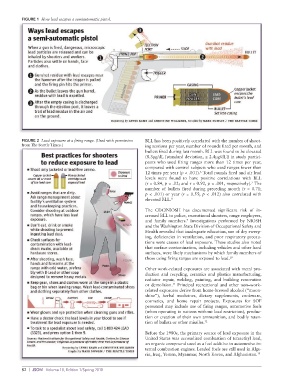
FIGURE 1  How lead escapes a semiautomatic pistol.


          FIGURE 2  Lead exposure at a firing range. (Used with permission   BLL has been positively correlated with the number of shoot-
          from The Seattle Times.)                           ing sessions per year, number of rounds fired per month, and
                                                             bullets fired during last month. BLL was found to be elevated
                                                             (8.3μg/dL [standard deviation, ± 2.4μg/dL]) in study partici-
                                                             pants who used firing ranges more than 12 times per year,
                                                             compared with control subjects who used ranges fewer than
                                                             12 times per year (p < .001).  Total rounds fired and air lead
                                                                                    6
                                                             levels were found to have positive correlations with BLL
                                                             (r = 0.84, p < .02; and r = 0.92, p < .001, respectively).  The
                                                                                                         7
                                                             number of bullets fired during preceding month (r = 0.71;
                                                             p < .001) or year (r = 0.55; p < .012) also correlated with
                                                             elevated BLL. 8
                                                             The CDC/NIOSH has documented significant risk of in-
                                                             creased BLL to police, recreational shooters, range employees,
                                                             and  family  members.   Investigations  performed  by  NIOSH
                                                                              9
                                                             and the Washington State Division of Occupational Safety and
                                                             Health revealed that inadequate education, use of dry sweep-
                                                             ing, deficiencies in ventilation, and poor respiratory precau-
                                                             tions were causes of lead exposure. These studies also noted
                                                             that surface contamination, including vehicles and other hard
                                                             surfaces, were likely mechanisms by which family members of
                                                             those using firing ranges are exposed to lead. 10
                                                             Other work-related exposures are associated with metal pro-
                                                             duction and recycling, ceramics and plastics manufacturing,
                                                             radiator repair, welding, painting, and building renovation
                                                             or demolition.  Principal recreational and other non–work-
                                                                        11
                                                             related exposures derive from home-brewed alcohol (“moon-
                                                             shine”),  herbal medicines,  dietary supplements,  cookware,
                                                             cosmetics, and home repair projects. Exposures for SOF
                                                             personnel may include use of firing ranges, automotive fuels
                                                             (when operating in nations without lead restriction), produc-
                                                             tion or creation of their own ammunition, and bodily reten-
                                                             tion of bullets or other missiles. 12

                                                             Before the 1980s, the primary source of lead exposure in the
                                                             United States was aerosolized combustion of tetraethyl lead,
                                                             an organic compound used as a fuel additive in automotive in-
                                                             ternal combustion engines. Leaded fuels are still used in Alge-
                                                             ria, Iraq, Yemen, Myanmar, North Korea, and Afghanistan. 13


          82  |  JSOM   Volume 18, Edition 1/Spring 2018

