


Page 20 - JSOM Spring 2018
P. 20
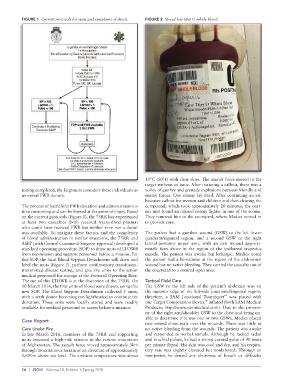
FIGURE 1  Current protocols for signs and symptoms of shock.  FIGURE 2  Stored low titer O whole blood.


                                                             10°C (50°F) with clear skies. The assault force moved to the
                                                             target without an issue. After initiating a callout, there was a
          testing completed, the Regiment considers these individuals as   volley of gunfire and grenade explosions between friendly and
          universal FWB donors.                              enemy forces. One enemy lay dead. After continuing an ex-
                                                             haustive callout for women and children and then clearing the
          The process of battlefield FWB donation and administration is   compound, which took approximately 20 minutes, the part-
          time consuming and can be limited at the point of injury. Based   ner unit found an injured enemy fighter in one of the rooms.
          on the current protocols (Figure 1), the 75RR has experienced   They removed him to the courtyard, where Medics moved in
          at least two casualties (both received freeze-dried plasma)   to provide care.
          who could have received FWB but neither time nor a donor
          was available. To mitigate these factors and the complexity   The patient had a gunshot wound (GSW) to the left lower
          of blood administration in similar situations, the 75RR and   quadrant/inguinal region, and a second GSW in the right
          ASBP (with Central Command Surgeon approval) developed a     lateral-posterior upper arm, with an exit wound approxi-
          standard operating procedure (SOP) to draw units of LTOWB   mately 6cm above in the region of the ipsilateral trapezius
          from nonmission and support personnel before a mission. Per   muscle. The patient was awake but lethargic. Medics noted
          this SOP, the local Blood Support Detachment will draw and   the patient had a hematoma in the region of the abdominal
          label the units (Figure 2), perform confirmatory transfusion-  wound but no active bleeding. They carried the casualty out of
          transmitted disease testing, and give the units to the senior   the courtyard to a secured open area.
          medical personnel for storage at the Forward Operating Base.
          The use of this LTOWB is at the discretion of the 75RR. On   Tactical Field Care
          10 March 2016, the first units of blood were drawn, using this   The GSW to the left side of the patient’s abdomen was on
          new SOP. The Blood Support Detachment collected 5 units,   the superior edge of the left-side junctional/inguinal region;
                                                                                              ™
          with a sixth donor becoming too lightheaded to continue the   therefore, a SAM Junctional Tourniquet  was placed with
                                                                                      ™
          donation. These units were locally stored and were readily   one Target Compression Device  inflated (both SAM Medical
          available for medical personnel to access before a mission.  Products;  http://www.sammedical.com). Due to the proxim-
                                                             ity of the right arm/shoulder GSW to the chest and being un-
                                                             able to determine if it was one or two GSWs, Medics placed
          Case Report
                                                             two vented chest seals over the wounds. There was little to
          Care Under Fire                                    no active bleeding from the wounds. The patient was awake
          In late March 2016, members of the 75RR and supporting   and responded to verbal stimuli. Although he lacked radial
          units  executed  a  high-risk  mission  in  the  remote  mountains   and brachial pulses, he had a strong carotid pulse of 90 beats
          of Afghanistan. The assault force moved approximately 3km   per minute (bpm). His skin was cool and dry, and his respira-
          through mountainous terrain at an elevation of approximately   tory rate was slightly elevated but nonlabored. Through an
          1,690m above sea level. The ambient temperature was about   interpreter, he denied  any shortness  of breath or difficulty


          16  |  JSOM   Volume 18, Edition 1/Spring 2018

