


Page 25 - Journal of Special Operations Medicine - Spring 2017
P. 25
the casualty collection point from the battlefield 10–15   Placement of the ER-REBOA catheter was undertaken
              minutes away by local medics without formal training   for all patients. Two patients underwent aortic balloon
              or capabilities to implement tactical combat casualty   occlusion before rapid sequence induction and intuba-
              care guidelines.                                   tion, and two had REBOA after rapid sequence induc-
                                                                 tion. Ultrasound was used to establish arterial access in
              At presentation, clear vital signs were discernable in   the common femoral artery in three patients (Figure 2).
              three patients, with initial mean heart rate of 131 bpm   For the fourth patient, the casualty with only a weakly
              (range,  120–140  bpm),  initial  systolic  blood  pressure   palpable carotid pulse on arrival, open femoral artery
              (SBP) of 78mmHg (range, 70–90 mmHg), initial mean   cut-down was performed. Access was achieved in the
              respiratory rate of 24 breaths per minute (range, 24–25   common femoral artery in all four patients (Figure 3). A
              breaths per minute), and initial oxygen saturation of   7F sheath was initially placed in each case, followed by
              84% (range, 80% to 88%; Table 1). The fourth casu-  an ER-REBOA catheter. Radiography was not available
              alty had only a weakly palpable carotid pulse and no   in this austere setting; thus, balloon catheter positioning
              palpable femoral pulse, and demonstrated agonal respi-  was performed using external anatomic landmarks and
              ration at presentation.
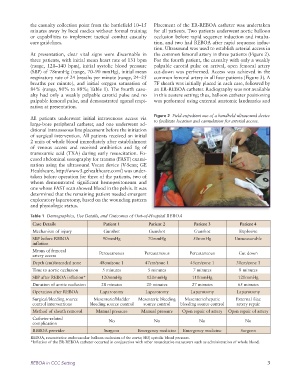
                                                                 Figure 2  Field-expedient use of a handheld ultrasound device
              All patients underwent initial intravenous access via   to facilitate location and cannulation for arterial access.
              large-bore peripheral catheter, and one underwent ad-
              ditional intraosseous line placement before the initiation
              of surgical intervention. All patients received an initial
              2 units of whole blood immediately after establishment
              of venous access and received antibiotics and 1g of
              tranexamic acid (TXA) during early resuscitation. Fo-
              cused abdominal sonography for trauma (FAST) exami-
              nation using the ultrasound Vscan device (V-Scan; GE
              Healthcare, http://www3.gehealthcare.com/) was under-
              taken before operation for three of the patients, two of
              whom demonstrated significant hemoperitoneum and
              one whose FAST scan showed blood in the pelvis. It was
              determined that the remaining patient needed emergent
              exploratory laparotomy, based on the wounding pattern
              and physiologic status.

              Table 1  Demographics, Use Details, and Outcomes of Out-of-Hospital REBOA
              Case Details                  Patient 1         Patient 2          Patient 3          Patient 4
              Mechanism of injury           Gunshot            Gunshot           Gunshot            Explosive
              SBP before REBOA             90mmHg             70mmHg             50mmHg           Unmeasurable
              inflation
              Means of femoral            Percutaneous       Percutaneous      Percutaneous         Cut down
              artery access
              Depth (cm)/intended zone    48cm/zone 1        47cm/zone 1        45cm/zone 1        30cm/zone 3
              Time to aortic occlusion     5 minutes          5 minutes          7 minutes          8 minutes
              SBP after REBOA inflation*   120mmHg            120mmHg           110mmHg            120mmHg
              Duration of aortic occlusion   28 minutes       20 minutes        27 minutes         65 minutes
              Operation after REBOA       Laparotomy         Laparotomy         Laparotomy         Laparotomy
              Surgical/bleeding source    Mesenteric/bladder   Mesenteric bleeding   Mesenteric/hepatic   External iliac
              control interventions   bleeding source control  source control  bleeding source control  artery repair
              Method of sheath removal   Manual pressure   Manual pressure  Open repair of artery  Open repair of artery
              Catheter-related                No                 No                No                 No
              complication
              REBOA provider                Surgeon       Emergency medicine  Emergency medicine    Surgeon
              REBOA, resuscitative endovascular balloon occlusion of the aorta; SBP, systolic blood pressure.
              *Inflation of the ER-REBOA catheter occurred in conjunction with other resuscitative maneuvers such as administration of whole blood.


              REBOA in CCC Setting                                                                             3

