


Page 9 - Journal of Special Operations Medicine - Winter 2016
P. 9
Article of Interest                                Dallas “Stop the Bleed” Classes Aim to Save Lives
              Wartime Lessons—Shaping a National Trauma Action Plan,   Larry Collins reports that the Rees-Jones Trauma Center at
              by Todd E. Rasmussen, MD, and Arthur L. Kellermann, MD,   Parkland Memorial Hospital in Dallas, Texas, is offering free
              MPH. This article, which was published online on October   classes to teach community members how to “Stop the Bleed.”
              19, 2016, in the New England Journal of Medicine, discusses   The classes are intended for everyone, including a recent group
              a June 2016 report by the National Academies of Sciences, En-  of Boy Scouts. Jorie Klein, RN, director of Trauma Services
              gineering, and Medicine that “examined how the U.S. military   explained that the classes could benefit anyone and that “the
              pursued its goal of reducing morbidity and mortality after in-  person that you probably are going to be caring for is your
              jury and the implications that its work might have for improv-  own family.”
              ing care in civilian settings. The report provides a blueprint
              for change in national health policy and calls for a National   •  Instructors encourage having a “Stop the Bleed” bag in
              Trauma Care System aimed at eliminating preventable deaths   your home, office, and car that includes the  following:
              and disabilities caused by accidents, intentional acts of vio-  •  Tourniquets – three in each bag
              lence, and natural disasters.” Copyright ©2016 Massachusetts   •  Hemostatic gauze (QuikClot Combat Gauze) – three in
              Medical Society, doi:10.1056/NEJMp1607636            each bag
                                                                 •  CPR mask, one-way valve, EMT grade – two in each bag
                                                                 •  Blanket
                                                                 •  Bottles of water
                                                                 •  Flashlight/batteries
                                                                 •  Glow sticks

                                                                 The full report is available at:
                                                                 http://www.nbcdfw.com/news/local/Stop-the-Bleed-classes
                                                                 -offered-in-Dallas-could-save-lives-399279681.html


                            Evaluation of Models of Pneumatic Tourniquet

                                      in Simulated Out-of-Hospital Use


                         John J. Kragh Jr, MD; James K. Aden 3d, PhD; Michael A. Dubick, PhD


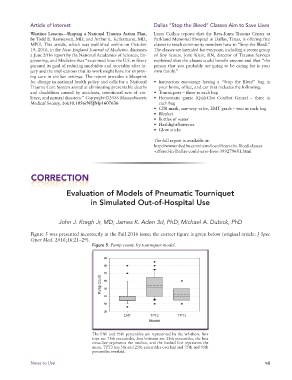
              Figure 5 was presented incorrectly in the Fall 2016 issue; the correct figure is given below (original article: J Spec
              Oper Med. 2016;16:21–29).
                                       Figure 5  Pump count, by tourniquet model.


                                       The fifth and 95th percentiles are represented by the whiskers. Box
                                       tops are 75th percentiles, box bottoms are 25th percentiles, the box
                                       cross-line represents the median, and the hashed line represents the
                                       mean. TPT3 has 5th and 25th percentiles overlaid and 75th and 95th
                                       percentiles overlaid.

              News to Use                                                                                     vii

