


Page 106 - Journal of Special Operations Medicine - Winter 2016
P. 106
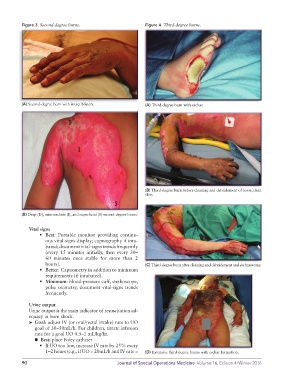
Figure 3  Second-degree burns.                     Figure 4  Third-degree burns.


          (A) Second-degree burn with intact blisters.       (A) Third-degree burn with eschar.


                                                             (B) Third-degree burn before cleaning and debridement of loose, dead
                                                             skin.


          (B) Deep (D), intermediate (I), and superficial (S) second-degree burns.

             Vital signs
                 •  Best: Portable monitor providing continu-
                    ous vital-signs display; capnography if intu-
                    bated; document vital-signs trends frequently
                    (every 15 minutes initially, then every 30–
                    60 minutes once stable for more than 2
                    hours).                                  (C) Third-degree burn after cleaning and debridement and escharotomy.
                 •  Better: Capnometry in addition to minimum
                    requirements (if intubated).
                 •  Minimum: blood-pressure cuff, stethoscope,
                    pulse oximetry, document vital-signs trends
                    frequently.

             Urine output
             Urine output is the main indicator of resuscitation ad-
             equacy in burn shock.
             ➤  Goal: adjust IV (or oral/rectal intake) rate to UO
               goal of 30–50mL/h. For children, titrate infusion
               rate for a goal UO 0.5–1 mL/kg/hr.
               ■  Best: place Foley catheter
                 •  If UO too low, increase IV rate by 25% every
                    1–2 hours (e.g., if UO = 20mL/h and IV rate =    (D) Extensive third-degree burns with eschar formation.

          90                                     Journal of Special Operations Medicine  Volume 16, Edition 4/Winter 2016

