


Page 136 - Journal of Special Operations Medicine - Summer 2016
P. 136
Tourniquets Reconsidered: 1992                     Tactical Combat Casualty Care
                                                                     (TCCC) :  A Different Approach
             •  ATLS 1992:  NO tourniquets
             •  Fear of ischemic damage to limbs               •  Battlefield trauma care research effort – Special
                 But                                             Operations and USUHS:    1993-1996
             •  Exsanguination from extremity hemorrhage was the #1   •  Combat environment and mission considered
              cause of preventable death among US casualties in   •  Combat medic training and equipment
              Vietnam (estimated 3,421 deaths)                   considered
             •  Tourniquets can control extremity hemorrhage   •  Project included input from combat medics,
             •  Tourniquets are used routinely during orthopedic surgery   corpsmen, and pararescuemen (PJs)
             •  Limbs are not lost there as a result           •  Evidence-Based – INCLUDING requiring
             •  Also - if you had to choose between death and losing a
              leg….                                              evidence for prevailing practice at that time
             •  “No TQ” rule: NOT evidence-based; NOT logic based   10   •  Goal – To Prevent Preventable Deaths   11


                   Combat Fatalities: Two Types                      The acceptable number of preventable
                                                                                deaths is – ZERO.


            •  Non-Preventable:
              •  Helicopter hit by a rocket
                  and explodes in mid-air

            •  Potentially Preventable:
              •  Special Forces Soldier
              •  Shot in the knee
              •  No other major wounds
              •  Bled to death - 2003               12                                                  13


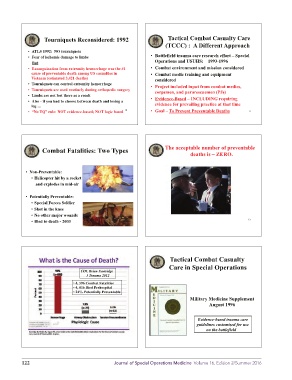
                                                                        Tactical Combat Casualty
                                                                       Care in Special Operations
                                  COL Brian Eastridge
                                        J Trauma 2012
                               •  4, 596 Combat Fatalities
                               •  4, 016 Died Prehospital
                               •  24% Potentially Preventable
                                                                               Military Medicine Supplement
                                                                                       August 1996


                                                                                    Evidence-based trauma care
                                                                                   guidelines customized for use
                                                                                            on the battlefield


          122                                   Journal of Special Operations Medicine  Volume 16, Edition 2/Summer 2016

