


Page 127 - Journal of Special Operations Medicine - Summer 2016
P. 127
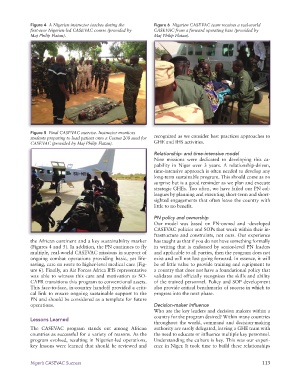
Figure 4  A Nigerien instructor teaches during the    Figure 6  Nigerien CASEVAC team receives a real-world
              first-ever Nigerien-led CASEVAC course (provided by    CASEVAC from a forward operating base (provided by
              Maj Philip Flatau).                                Maj Philip Flatau).


              Figure 5  Final CASEVAC exercise. Instructor monitors
              students preparing to load patient onto a Cessna 208 used for   recognized as we consider best practices approaches to
              CASEVAC (provided by Maj Philip Flatau).           GHE and IHS activities.

                                                                 Relationship- and time-intensive model
                                                                 Nine missions were dedicated to developing this ca-
                                                                 pability in Niger over 3 years. A relationship-driven,
                                                                 time-intensive approach is often needed to develop any
                                                                 long-term sustainable program. This should come as no
                                                                 surprise but is a good reminder as we plan and execute
                                                                 strategic GHEs. Too often, we have failed our PN col-
                                                                 leagues by planning and executing short-term and short-
                                                                 sighted engagements that often leave the country with
                                                                 little to no benefit.

                                                                 PN policy and ownership
                                                                 Our model  was based on PN-owned  and -developed
                                                                   CASEVAC policies and SOPs that work within their in-
                                                                 frastructure and constraints, not ours. Our experience
              the African continent and a key sustainability marker   has taught us that if you do not have something formally
              (Figures 4 and 5). In addition, the PN continues to fly   in writing that is endorsed by senior-level PN leaders
              multiple, real-world CASEVAC missions in support of   and applicable to all parties, then the program does not
              ongoing combat operations providing basic, yet life-  exist and will not last going forward. In essence, it will
              saving, care en route to higher-level medical care (Fig-  be of little value to provide training and equipment to
              ure 6). Finally, an Air Forces Africa IHS representative   a country that does not have a foundational policy that
              was able to witness this care and motivation as SO-  validates and officially recognizes the skills and ability
              CAFR transitions this program to conventional assets.   of the trained personnel. Policy and SOP development
              This face-to-face, in-country handoff provided a criti-  also provide critical benchmarks of success in which to
              cal link to ensure ongoing sustainable support to the   progress into the next phase.
              PN and should be considered as a template for future
              operations.                                        Decision-maker influence
                                                                 Who are the key leaders and decision makers within a
                                                                 country for the program desired? Within many countries
              Lessons Learned
                                                                 throughout the world, command and decision-making
              The CASEVAC program stands out among African       authority are rarely delegated, leaving a GHE team with
              countries as successful for a variety of reasons. As the   the need to educate or influence multiple key personnel.
              program evolved, resulting in Nigerien-led operations,   Understanding the culture is key. This was our experi-
              key lessons were learned that should be reviewed and   ence in Niger. It took time to build these relationships


              Niger’s CASEVAC Success                                                                        113

