


Page 70 - Journal of Special Operations Medicine - Spring 2016
P. 70
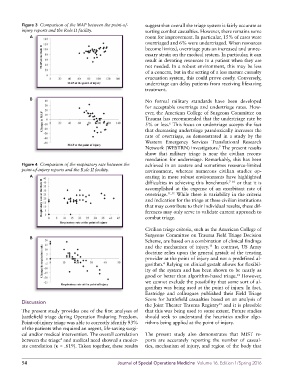
Figure 3  Comparison of the MAP between the point-of-  suggest that overall the triage system is fairly accurate at
          injury reports and the Role II facility.           sorting combat casualties. However, there remains some
             A                                               room for improvement. In particular, 15% of cases were
                                                             overtriaged and 6% were undertriaged. When resources
                                                             become limited, overtriage puts an increased and unnec-
                                                             essary strain on the medical system. In particular, it can
                                                             result in devoting resources to a patient when they are
                                                             not needed. In a robust environment, this may be less
                                                             of a concern, but in the setting of a less mature casualty
                                                             evacuation system, this could prove costly. Conversely,
                                                             undertriage can delay patients from receiving lifesaving
                                                             treatment.

             B                                               No formal military standards have been developed
                                                             for acceptable overtriage and undertriage rates. How-
                                                             ever, the American College of Surgeons Committee on
                                                             Trauma has recommended that the undertriage rate be
                                                             5% or less.  This focus on undertriage accepts the fact
                                                                       6
                                                             that decreasing undertriage paradoxically increases the
                                                             rate  of  overtriage,  as  demonstrated  in  a  study  by  the
                                                             Western Emergency Services Translational Research
                                                             Network (WESTRN) investigators.  The present results
                                                                                           7
                                                             show that military triage is near the civilian recom-
                                                             mendation for undertriage. Remarkably, this has been
          Figure 4  Comparison of the respiratory rate between the   achieved in an austere and sometimes resource-limited
          point-of-injury reports and the Role II facility.  environment, whereas numerous civilian studies op-
             A                                               erating in more robust environments have highlighted
                                                             difficulties in achieving this benchmark 7–10  or that it is
                                                             accomplished at the expense of an exorbitant rate of
                                                             overtriage. 11,12  While there is variability in the criteria
                                                             and indication for the triage at these civilian institutions
                                                             that may contribute to their individual results, these dif-
                                                             ferences may only serve to validate current approach to
                                                             combat triage.

                                                             Civilian triage criteria, such as the American College of
                                                             Surgeons Committee on Trauma Field Triage Decision
             B
                                                             Scheme, are based on a combination of clinical findings
                                                             and the mechanism of injury.  In contrast, US Army
                                                                                       13
                                                             doctrine relies upon the general gestalt of the treating
                                                             provider at the point of injury and not a predefined al-
                                                             gorithm.  Relying on clinical gestalt allows for flexibil-
                                                                    4
                                                             ity of the system and has been shown to be nearly as
                                                             good or better than algorithm-based triage.  However,
                                                                                                   14
                                                             we cannot exclude the possibility that some sort of al-
                                                             gorithm was being used at the point of injury. In fact,
                                                             Eastridge and colleagues published their Field Triage
                                                             Score for battlefield casualties based on an analysis of
          Discussion
                                                             the Joint Theater Trauma Registry  and it is plausible
                                                                                           15
          The present study provides one of the first analyses of   that this was being used to some extent. Future studies
          battlefield triage during Operation Enduring Freedom.   should seek to understand  the heuristics  and/or algo-
          Point-of-injury triage was able to correctly identify 93%   rithms being applied at the point of injury.
          of the patients who required an urgent, life-saving surgi-
          cal and/or medical intervention. The overall correlation   The present study also demonstrates that MIST re-
          between the triage  and medical need showed a moder-  ports are accurately reporting the number of casual-
                          4
          ate correlation (k = .619). Taken together, these results   ties, mechanism of injury, and region of the body that


          54                                      Journal of Special Operations Medicine  Volume 16, Edition 1/Spring 2016

