


Page 91 - Journal of Special Operations Medicine - Fall 2014
P. 91
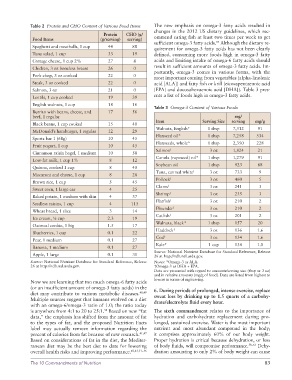
Table 2  Protein and CHO Content of Various Food Items  The new emphasis on omega-3 fatty acids resulted in
                                                                 changes in the 2012 US dietary guidelines, which rec-
                                            Protein   CHO (g/
              Food Items                   (g/serving)  serving)  ommend eating fish at least two times per week to get
                                                                                          57
              Spaghetti and meatballs, 1 cup  44        88       sufficient omega-3 fatty acids.  Although the dietary re-
                                                                 quirement for omega-3 fatty acids has not been clearly
              Tuna salad, 1 cup               33        19       defined, consuming more foods high in omega-3 fatty
              Cottage cheese, 1 cup 2%        27        8        acids and limiting intake of omega-6 fatty acids should
              Chicken, 3 oz boneless breast   26        0        result in sufficient amounts of omega-3 fatty acids. Im-
              Pork chop, 3 oz cooked          22        0        portantly, omega-3 comes in various forms, with the
                                                                 most important coming from vegetables (alpha-linolenic
              Steak, 3 oz cooked              22        0        acid [ALA]) and fatty fish or krill (eicosapentaenoic acid
              Salmon, 3 oz                    21        0        [EPA] and docosahexaenoic acid [DHA]). Table 3 pres-
              Lentils, 1 cup cooked           19        39       ents a list of foods high in omega-3 fatty acids.
              English walnuts, 1 cup          18        16
                                                                 Table 3  Omega-3 Content of Various Foods
              Burrito with beans, cheese, and   17      56
              beef, 1 regular                                                                     mg/
                                                                 Item                Serving Size  serving  mg/g
              Black beans, 1 cup cooked       15        40
                                                                 Walnuts, English*     1 tbsp    7,312     91
              McDonald’s hamburger, 1 regular  12       29
                                                                 Flaxseed oil*         1 tbsp    7,258     534
              Sports bar 1 (68g)              10        45
                                                                 Flaxseeds, whole*     1 tbsp    2,350     228
              Fruit yogurt, 1 cup             10        45
                                                                 Salmon †               3 oz     1,824     21
              Cinnamon raisin bagel, 1 medium  10       58
                                                                 Canola (rapeseed) oil*  1 tbsp  1,279     91
              Low-fat milk, 1 cup 1%          8         12
                                                                 Soybean oil           1 tbsp     923      68
              Quinoa, cooked 1 cup            8         40
                                                                 Tuna, canned white †   3 oz      733       9
              Macaroni and cheese, 1 cup      8         28
                                                                 Pollock †              3 oz      460       5
              Brown rice, 1 cup               5         45
                                                                 Clams †                3 oz      241       3
              Sweet corn, 1 large ear         4         25
                                                                 Shrimp †               3 oz      235       3
              Baked potato, 1 medium with skin  4       37
                                                                 Flatfish †             3 oz      210       2
              Seedless raisins, 1 cup         4        115
                                                                 Flounder †             3 oz      210       2
              Wheat bread, 1 slice            3         14
                                                                 Catfish †              3 oz      201       2
              Ice cream, ½ cup               2.3        19
                                                                 Walnuts, black*       1 tbsp     157      20
              Oatmeal cookie, 1 big          1.5        17
                                                                 Haddock †              3 oz      136      1.6
              Blueberries, 1 cup             0.1        22
                                                                 Cod †                  3 oz      134      1.6
              Pear, 1 medium                 0.1        27
                                                                 Kale*                 1 cup      134      1.0
              Banana, 1 medium               0.1        27
                                                                 Source: National Nutrient Database for Standard Reference, Release
               Apple, 1 large                0.1        31       26 at http://ndb.nal.usda.gov.
              Source: National Nutrient Database for Standard Reference, Release   Notes: *Omega-3 as ALA.
              26 at http://ndb.nal.usda.gov.                     †Omega-3 as DHA + EPA.
                                                                 Data are presented with regard to amounts/serving size (tbsp or 3 oz)
                                                                 and in relative amounts (mg/g of food). Data are listed from highest to
                                                                 lowest in terms of mg/serving.
              Now we are learning that too much omega-6 fatty acids
              (or an insufficient amount of omega-3 fatty acids) in the   6. During periods of prolonged, intense exercise, replace
              diet may contribute to various metabolic diseases. 48,49    sweat loss by drinking up to 1.5 quarts of a carbohy-
              Multiple sources suggest that humans evolved on a diet   drate/electrolyte fluid every hour.
              with an omega-6/omega-3 ratio of 1.0; the ratio today
              is anywhere from 4:1 to 20 to 25:1.  Based on new “fat   The  sixth commandment relates to the importance of
                                            50
              data,” the emphasis has shifted from the amount of fat   hydration and carbohydrate replacement during pro-
              to the types of fat, and the proposed Nutrition Facts   longed, sustained exercise. Water is the most  important
              label may actually remove information regarding the   nutrient and most abundant compound in the body;
              percent of calories from fat because of new research. 41,47    it comprises approximately 60% of our body weight.
              Based on considerations of fat in the diet, the Mediter-  Proper hydration is critical because dehydration, or loss
              ranean diet may be the best diet to date for lowering   of body fluids, will compromise performance. 58−61  Dehy-
              overall health risks and improving performance. 40,43,51−56    dration amounting to only 2% of body weight can cause

              The 10 Commandments of Nutrition                                                                83

