


Page 103 - Journal of Special Operations Medicine - Spring 2014
P. 103
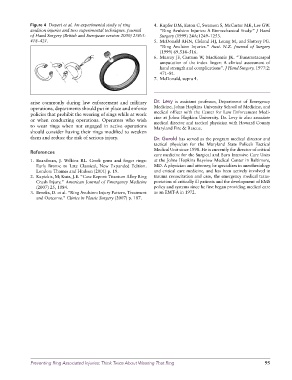
Figure 4  Dupert et al. An experimental study of ring   4.  Kupfer DM, Eaton C, Swanson S, McCarter MK, Lee GW.
              avulsion injuries and two experimental techniques. Journal   “Ring Avulsion Injuries: A Biomechanical Study.” J Hand
              of Hand Surgery (British and European version 2000) 25B:5:   Surgery (1999) 24A:1249–1253.
              418–421.                                           5.  McDonald AHN, Cleland HJ, Leung M, and Slattery PG.
                                                                   “Ring  Avulsion  Injuries.”  Aust.  N.Z.  Journal  of  Surgery
                                                                   (1999) 69.514–516.
                                                                 6.  Murray JF, Carman W, MacKenzie JK. “Transmetacarpal
                                                                   amputation  of the index  finger: A  clinical assessment of
                                                                   hand strength and complications”. J Hand Surgery. 1977:2:
                                                                   471–81.
                                                                 7.  McDonald, supra 4.


              arise commonly during law enforcement and military   Dr. Levy is assistant professor, Department of Emergency
              operations, departments should put in place and enforce   Medicine, Johns Hopkins Univer sity School of Medicine, and
              policies that prohibit the wearing of rings while at work   medical officer with the Center for Law Enforcement Medi-
                                                                 cine at Johns Hopkins University. Dr. Levy is also associate
              or when conducting operations. Operators who wish   medical director and tactical physician with Howard County
              to wear rings when not engaged in active operations   Maryland Fire & Rescue.
              should consider having their rings modified to weaken
              them and reduce the risk of serious injury.        Dr. Gerold has served as the program medical director and
                                                                 tactical  physician  for  the Maryland  State  Police’s Tactical
                                                                 Medical Unit since 1998. He is currently the director of critical
              References
                                                                 care medicine for the Surgical and Burn Intensive Care Units
              1.  Boardman, J. Wilkins RL. Greek gems and finger rings:   at the Johns Hopkins Bayview Medical Center in Baltimore,
                Early Bronze to Late Classical, New Expanded Edition.   MD. A physician and attorney, he specializes in anesthesiology
                London: Thames and Hudson (2001) p. 19.          and critical care medicine, and has been actively involved in
              2.  Kapickis, M; Kutz, J.E. “Case Report: Titanium Alloy Ring   trauma resuscitation and care, the emergency medical trans-
                Crush Injury.” American Journal of Emergency Medicine   portation of critically ill patients and the development of EMS
                (2007) 25, 1084.                                 policy and systems since he first began providing medical care
              3.  Brooks, D. et al. “Ring Avulsion: Injury Pattern, Treatment   as an EMT-A in 1972.
                and Outcome.” Clinics in Plastic Surgery (2007) p. 187.


              Preventing Ring Associated Injuries: Think Twice About Wearing That Ring                        95

