


Page 88 - 2026 SMOG
P. 88
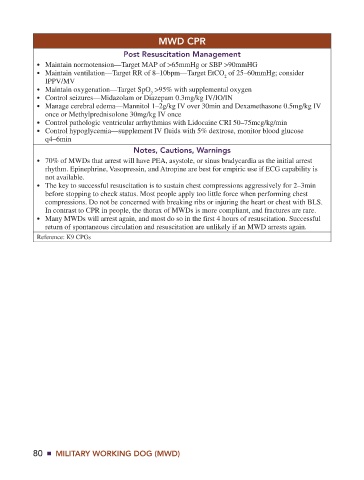
MWD CPR
                            Post Resuscitation Management
         •  Maintain normotension—Target MAP of >65mmHg or SBP >90mmHG
         •  Maintain ventilation—Target RR of 8–10bpm—Target EtCO  of 25–60mmHg; consider
                                                  2
           IPPV/MV
         •  Maintain oxygenation—Target SpO  >95% with supplemental oxygen
                                  2
         •  Control seizures—Midazolam or Diazepam 0.3mg/kg IV/IO/IN
         •  Manage cerebral edema—Mannitol 1–2g/kg IV over 30min and Dexamethasone 0.5mg/kg IV
           once or Methylprednisolone 30mg/kg IV once
         •  Control pathologic ventricular arrhythmias with Lidocaine CRI 50–75mcg/kg/min
         •  Control hypoglycemia—supplement IV fluids with 5% dextrose, monitor blood glucose
           q4–6min
                              Notes, Cautions, Warnings
         •  70% of MWDs that arrest will have PEA, asystole, or sinus bradycardia as the initial arrest
           rhythm. Epinephrine, Vasopressin, and Atropine are best for empiric use if ECG capability is
           not available.
         •  The key to successful resuscitation is to sustain chest compressions aggressively for 2–3min
           before stopping to check status. Most people apply too little force when performing chest
           compressions. Do not be concerned with breaking ribs or injuring the heart or chest with BLS.
           In contrast to CPR in people, the thorax of MWDs is more compliant, and fractures are rare.
         •  Many MWDs will arrest again, and most do so in the first 4 hours of resuscitation. Successful
           return of spontaneous circulation and resuscitation are unlikely if an MWD arrests again.
         Reference: K9 CPGs


        80  •   MILITARY WORKING DOG (MWD)

