


Page 230 - 2025 Ranger Medic Handbook
P. 230
present dramatically in pediatric patients, where chest asymmetry may be significant. The limited intercostal space of the
         pediatric thorax makes finger thoracostomies difficult; therefore, forceps-assisted thoracostomy and/or needle decom-
         pression devices should be the first approach. The fourth intercostal space, mid-axillary line, to a depth of 1–1.5 inches is
         preferred over the second intercostal space, mid-clavicular line, because of the thymus. Fourteen- or 16-gauge, 1.5-inch
         needles are of adequate length to access the pleural cavity for all pediatric casualties weighing 36kg or less. The NDC
         catheter may act as a tube thoracostomy and may not require an additional chest tube in infants.
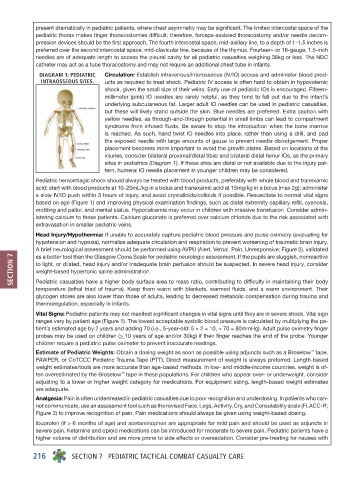
          DIAGRAM 1: PEDIATRIC   Circulation: Establish intravenous/interosseous (IV/IO) access and administer blood prod-
          INTRAOSSEOUS SITES.  ucts as required to treat shock. Pediatric IV access is often hard to obtain in hypovolemic
                        shock, given the small size of their veins. Early use of pediatric IOs is encouraged. Fifteen-
                        millimeter (pink) IO needles are rarely helpful, as they tend to fall out due to the infant’s
                        underlying subcutaneous fat. Larger adult IO needles can be used in pediatric casualties,
                        but these will likely stand outside the skin. Blue needles are preferred. Extra caution with
                        yellow needles, as through-and-through potential in small limbs can lead to compartment
                        syndrome from infused fluids. Be aware to stop the introduction when the bone marrow
                        is reached. As such, hand twist IO needles into place, rather than using a drill, and pad
                        the exposed needle with large amounts of gauze to prevent needle dislodgement. Proper
                        placement becomes more important to avoid the growth plates. Based on locations of the
                        injuries, consider bilateral proximal/distal tibial and bilateral distal femur IOs, as the primary
                        sites in pediatrics (Diagram 1). If these sites are distal or not available due to the injury pat-
                        tern, humeral IO needle placement in younger children may be considered.
         Pediatric hemorrhagic shock should always be treated with blood products, preferably with whole blood and tranexamic
         acid: start with blood products at 10–20mL/kg in a bolus and tranexamic acid at 15mg/kg in a bolus (max 2g); administer
         a slow IV/IO push within 3 hours of injury, and avoid crystalloids/colloids if possible. Resuscitate to normal vital signs
         based on age (Figure 1) and improving physical examination findings, such as distal extremity capillary refill, cyanosis,
         mottling and pallor, and mental status. Hypocalcemia may occur in children with massive transfusion. Consider admin-
         istering calcium to these patients. Calcium gluconate is preferred over calcium chloride due to the risk associated with
         extravasation in smaller pediatric veins.
         Head Injury/Hypothermia: If unable to accurately capture pediatric blood pressure and pulse oximetry (evaluating for
         hypotension and hypoxia), normalize adequate circulation and respiration to prevent worsening of traumatic brain injury.
         A brief neurological assessment should be performed using AVPU (Alert, Verbal, Pain, Unresponsive; Figure 2), validated
         as a better tool than the Glasgow Coma Scale for pediatric neurologic assessment. If the pupils are sluggish, nonreactive
    SECTION 7  to light, or dilated, head injury and/or inadequate brain perfusion should be suspected. In severe head injury, consider
         weight-based hypertonic saline administration.
         Pediatric casualties have a higher body surface area to mass ratio, contributing to difficulty in maintaining their body
         temperature (lethal triad of trauma). Keep them warm with blankets, warmed fluids, and a warm environment. Their
         glycogen stores are also lower than those of adults, leading to decreased metabolic compensation during trauma and
         thermoregulation, especially in infants.
         Vital Signs: Pediatric patients may not manifest significant changes in vital signs until they are in severe shock. Vital sign
         ranges vary by patient age (Figure 1). The lowest acceptable systolic blood pressure is calculated by multiplying the pa-
         tient’s estimated age by 2 years and adding 70 (i.e., 5-year-old: 5 × 2 = 10, + 70 = 80mmHg). Adult pulse oximetry finger
         probes may be used on children (> 10 years of age and/or 30kg) if their finger reaches the end of the probe. Younger
         children require a pediatric pulse oximeter to prevent inaccurate readings.
         Estimate of Pediatric Weights: Obtain a dosing weight as soon as possible using adjuncts such as a Broselow ™  tape,
         PAWPER, or CoTCCC Pediatric Trauma Tape (PTT). Direct measurement of weight is always preferred. Length-based
         weight estimates/tools are more accurate than age-based methods. In low- and middle-income countries, weight is of-
         ten overestimated by the Broselow ™  tape in these populations. For children who appear over- or underweight, consider
         adjusting to a lower or higher weight category for medications. For equipment sizing, length-based weight estimates
         are adequate.
         Analgesia: Pain is often undertreated in pediatric casualties due to poor recognition and underdosing. In patients who can-
         not communicate, use an assessment tool such as the revised Face, Legs, Activity, Cry, and Consolability scale (FLACC-R;
         Figure 3) to improve recognition of pain. Pain medications should always be given using weight-based dosing.
         Ibuprofen (if > 6 months of age) and acetaminophen are appropriate for mild pain and should be used as adjuncts in
         severe pain. Ketamine and opioid medications can be introduced for moderate to severe pain. Pediatric patients have a
         higher volume of distribution and are more prone to side effects or oversedation. Consider pre-treating for nausea with
        216      SECTION 7   PEDIATRIC TACTICAL COMBAT CASUALTY CARE

