


Page 63 - JSOM Spring 2026
P. 63
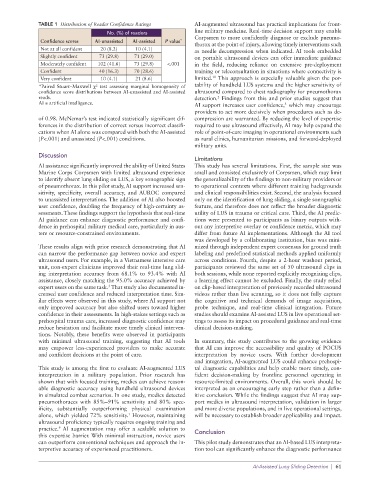
TABLE 1  Distribution of Reader Confidence Ratings  AI-augmented ultrasound has practical implications for front-
                                    No. (%) of readers           line military medicine. Real-time decision support may enable
                                                                 Corpsmen to more confidently diagnose or exclude pneumo-
              Confidence scores  AI-unassisted  AI-assisted  P value *  thorax at the point of injury, allowing timely interventions such
              Not at all confident  20 (8.2)  10 (4.1)           as needle decompression when indicated. AI tools embedded
              Slightly confident  73 (29.8)  71 (29.0)           on portable ultrasound devices can offer immediate guidance
              Moderately confident  102 (41.6)  73 (29.8)  <.001  in the field, reducing reliance on extensive pre-deployment
              Confident          40 (16.3)   70 (28.6)           training or teleconsultation in situations where connectivity is
                                                                      10
              Very confident      10 (4.1)   21 (8.6)            limited.  This approach is especially valuable given the por-
                                2
              *Paired Stuart–Maxwell  χ  test assessing marginal homogeneity of   tability of handheld LUS systems and the higher sensitivity of
              confidence score distributions between AI-unassisted and AI-assisted   ultrasound compared to chest radiography for pneumothorax
              reads.                                             detection.  Findings from this and prior studies suggest that
                                                                        2
              AI = artificial intelligence.                      AI support increases user confidence,  which may encourage
                                                                                              3
                                                                 providers to act more decisively when procedures such as de-
              of 0.98. McNemar’s test indicated statistically significant dif-  compression are warranted. By reducing the level of expertise
              ferences in the distribution of correct versus incorrect classifi-  required to use ultrasound effectively, AI may help expand the
              cations when AI alone was compared with both the AI-assisted   role of point-of-care imaging in operational environments such
              (P<.001) and unassisted (P<.001) conditions.       as rural clinics, humanitarian missions, and forward-deployed
                                                                 military units.
              Discussion
                                                                 Limitations
              AI assistance significantly improved the ability of United States   This study has several limitations. First, the sample size was
              Marine Corps Corpsmen with limited ultrasound experience   small and consisted exclusively of Corpsmen, which may limit
              to identify absent lung sliding on LUS, a key sonographic sign   the generalizability of the findings to non-military providers or
              of pneumothorax. In this pilot study, AI support increased sen-  to operational contexts where different training backgrounds
              sitivity, specificity, overall accuracy, and  AUROC compared   and clinical responsibilities exist. Second, the analysis focused
              to unassisted interpretations. The addition of AI also boosted   only on the identification of lung sliding, a single sonographic
              user confidence, doubling the frequency of high-certainty as-  feature, and therefore does not reflect the broader diagnostic
              sessments. These findings support the hypothesis that  real-time   utility of LUS in trauma or critical care. Third, the AI predic-
              AI guidance can enhance diagnostic performance and confi-  tions were presented to participants as binary outputs with-
              dence in prehospital military medical care, particularly in aus-  out any interpretive overlay or confidence metric, which may
              tere or resource-constrained environments.         differ from future AI implementations. Although the AI tool
                                                                 was developed by a collaborating institution, bias was mini-
              These results align with prior research demonstrating that AI   mized through independent expert consensus for ground truth
              can narrow the performance gap between novice and expert   labeling and predefined statistical methods applied uniformly
              ultrasound users. For example, in a Vietnamese intensive care   across conditions. Fourth, despite a 2-hour washout period,
              unit, non-expert clinicians improved their real-time lung slid-  participants reviewed the same set of 50 ultrasound clips in
              ing interpretation accuracy from 68.1% to 93.4% with  AI   both sessions, while none reported explicitly recognizing clips,
              assistance, closely matching the 95.0% accuracy achieved by   a learning effect cannot be excluded. Finally, the study relied
              expert users on the same task.  That study also documented in-  on clip-based interpretation of previously recorded ultrasound
                                    3
              creased user confidence and reduced interpretation time. Sim-  videos rather than live scanning, so it does not fully capture
              ilar effects were observed in this study, where AI support not   the cognitive and technical demands of image acquisition,
              only improved accuracy but also shifted users toward higher   probe technique, and real-time clinical integration. Future
              confidence in their assessments. In high-stakes settings such as   studies should examine AI-assisted LUS in live operational set-
              prehospital trauma care, increased diagnostic confidence may   tings to assess its impact on procedural guidance and real-time
              reduce hesitation and facilitate more timely clinical interven-  clinical decision-making.
              tions. Notably, these benefits were observed in participants
              with minimal ultrasound training, suggesting that  AI tools   In summary, this study contributes to the growing evidence
              may empower less-experienced providers to make accurate   that AI can improve the accessibility and quality of POCUS
              and confident decisions at the point of care.      interpretation by novice users.  With further development
                                                                 and integration, AI-augmented LUS could enhance prehospi-
              This study is among the first to evaluate AI-augmented LUS   tal diagnostic capabilities and help enable more timely, con-
              interpretation in a military population. Prior research has   fident decision-making by frontline personnel operating in
              shown that with focused training, medics can achieve reason-  resource-limited environments. Overall, this work should be
              able diagnostic accuracy using handheld ultrasound devices   interpreted as an encouraging early step rather than a defin-
              in simulated combat scenarios. In one study, medics detected   itive conclusion. While the findings suggest that AI may sup-
              pneumothoraces with 85%–91% sensitivity and 80% spec-  port medics in ultrasound interpretation, validation in larger
              ificity, substantially outperforming physical examination   and more diverse populations, and in live operational settings,
              alone, which yielded 72% sensitivity.  However, maintaining   will be necessary to establish broader applicability and impact.
                                           1
              ultrasound proficiency typically requires ongoing training and
              practice.  AI augmentation may offer a scalable solution to   Conclusion
                    9
              this expertise barrier. With minimal instruction, novice users
              can outperform conventional techniques and approach the in-  This pilot study demonstrates that an AI-based LUS interpreta-
              terpretive accuracy of experienced practitioners.  tion tool can significantly enhance the diagnostic performance

                                                                                    AI-Assisted Lung Sliding Detection  |  61

