


Page 48 - JSOM Spring 2026
P. 48
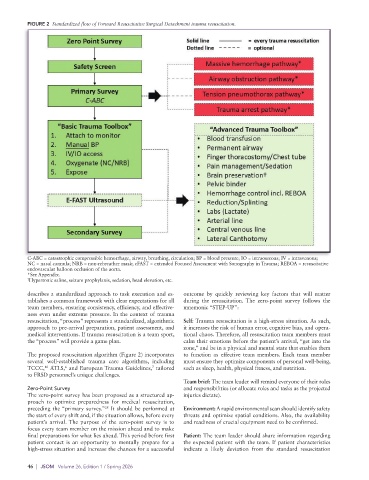
FIGURE 2  Standardized flow of Forward Resuscitative Surgical Detachment trauma resuscitation.


          C-ABC = catastrophic compressible hemorrhage, airway, breathing, circulation; BP = blood pressure; IO = intraosseous; IV = intravenous;
          NC = nasal cannula; NRB = non-rebreather mask; eFAST = extended Focused Assessment with Sonography in Trauma; REBOA = resuscitative
          endovascular balloon occlusion of the aorta.
          *See Appendix.
          † Hypertonic saline, seizure prophylaxis, sedation, head elevation, etc.
          describes a standardized approach to task execution and es-  outcome by quickly reviewing key factors that will matter
          tablishes a common framework with clear expectations for all   during the resuscitation.  The zero-point survey follows the
          team members, ensuring consistency, efficiency, and effective-  mnemonic “STEP-UP”:
          ness even under extreme pressure. In the context of trauma
          resuscitation, “process” represents a standardized, algorithmic   Self: Trauma resuscitation is a high-stress situation. As such,
          approach to pre-arrival preparation, patient assessment, and   it increases the risk of human error, cognitive bias, and opera-
          medical interventions. If trauma resuscitation is a team sport,   tional chaos. Therefore, all resuscitation team members must
          the “process” will provide a game plan.            calm their emotions before the patient’s arrival, “get into the
                                                             zone,” and be in a physical and mental state that enables them
          The proposed resuscitation algorithm (Figure 2) incorporates   to function as effective team members. Each team member
          several  well-established  trauma care  algorithms,  including   must ensure they optimize components of personal well-being,
                      6
                16
          TCCC,  ATLS,  and European Trauma Guidelines,  tailored   such as sleep, health, physical fitness, and nutrition.
                                                   7
          to FRSD personnel’s unique challenges.
                                                             Team brief: The team leader will remind everyone of their roles
          Zero-Point Survey                                  and responsibilities (or allocate roles and tasks as the projected
          The zero-point survey has been proposed as a structured ap-  injuries dictate).
          proach to optimize preparedness for medical resuscitation,
          preceding the “primary survey.”  It should be performed at   Environment: A rapid environmental scan should identify safety
                                   28
          the start of every shift and, if the situation allows, before every   threats and optimize spatial conditions. Also, the availability
          patient’s arrival. The purpose of the zero-point survey is to   and readiness of crucial equipment need to be confirmed.
          focus every team member on the mission ahead and to make
          final preparations for what lies ahead. This period before first   Patient: The team leader should share information regarding
          patient contact is an opportunity to mentally prepare for a   the expected patient with the team. If patient characteristics
          high-stress situation and increase the chances for a successful   indicate a likely deviation from the standard resuscitation

          46  |  JSOM   Volume 26, Edition 1 / Spring 2026

