


Page 89 - Journal of Special Operations Medicine - Winter 2014
P. 89
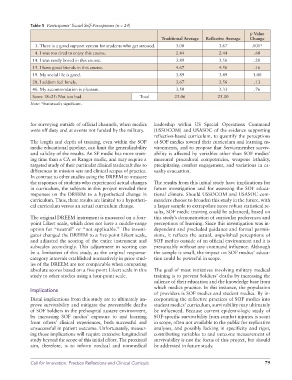
Table 5  Participants’ Social Self-Perceptions (n = 24)
                                                                                                        p Value
                                                                    Traditional Average  Reflective Average  Change
               3. There is a good support system for students who get stressed.  3.00      3.67          .001*
               4. I was too tired to enjoy this course.                   2.44             2.44           .60
              14. I was rarely bored in this course.                      3.89             3.56           .28
              15. I have good friends in this course.                     4.67             4.56           .16
              19. My social life is good.                                 3.89             3.89          1.00
              28. I seldom feel lonely.                                   3.67             3.56           .13
              46. My accommodation is pleasant.                           3.50             3.33           .76
              Score 18–25: Not too bad                     Total         25.06             25.00
              Note: *Statistically significant.


              for  surveying outside of official channels, when medics   leadership within US Special Operations Command
              were off duty and at events not funded by the military.  (USSOCOM) and USASOC of the evidence supporting
                                                                 reflection-based curriculum, to quantify the perceptions
              The length and depth of training, even within the SOF   of SOF medics toward their curriculum and learning en-
              medic educational pipeline, can limit the generalizability   vironments, and to propose that Servicemember surviv-
              and validity of the results. An SF medic has more train-  ability is affected by variables other than SOF medics’
              ing time than a CA or Ranger medic, and may require a   measured procedural competencies, weapons lethality,
              targeted study of their particular clinical tradecraft due to   precipitating combat engagement, and variations in ca-
              differences in mission sets and clinical scopes of practice.   sualty evacuation.
              In contrast to other studies using the DREEM to measure
              the responses of students who experienced actual changes   The results from this initial study have implications for
              in curriculum, the subjects in this project revealed their   future investigation and for assessing the SOF educa-
              responses on the DREEM to a hypothetical change in   tional climate. Should USSOCOM and USASOC com-
              curriculum. Thus, these results are limited to a hypotheti-  manders choose to broaden this study in the future, with
              cal curriculum versus an actual curriculum change.  a larger sample to extrapolate more robust statistical re-
                                                                 sults, SOF medic training could be advanced, based on
              The original DREEM instrument is measured on a four-  this study’s demonstration of curricular preferences and
              point Likert scale, which does not have a middle-range   perceptions of learning. Since this investigation was in-
              option for “neutral” or “not applicable.” The investi-  dependent and precluded guidance and formal permis-
              gator changed the DREEM to a five-point Likert scale,   sions, it reflects the actual, unpolished perceptions of
              and adjusted the scoring of the entire instrument and   SOF medics outside of an official environment and it is
              subscales accordingly. This adjustment in scoring can   presumably without any command influence. Although
              be a limitation of this study, as the original response-  the sample is small, the impact on SOF medics’ educa-
              category intervals established normatively in prior stud-  tion could be powerful in scope.
              ies of the DREEM are not comparable when comparing
              absolute scores based on a five-point Likert scale in this   The goal of most initiatives involving military medical
              study to other studies using a four-point scale.   training is to prevent Soldiers’ deaths by increasing the
                                                                 salience of their education and the knowledge base from
                                                                 which medics practice. In this instance, the population
              Implications
                                                                 of providers is SOF medics and student medics. By in-
              Distal implications from this study are to ultimately im-  corporating the reflective practices of SOF medics into
              prove survivability and mitigate the preventable deaths   student medics’ curriculum, survivability may ultimately
              of SOF Soldiers in the prehospital austere environment,   be influenced. Because current epidemiologic study of
              by increasing SOF medics’ exposure to and learning   SOF-specific survivability from combat injuries is scant
              from others’ clinical experiences, both successful and   in scope, often not available to the public for replicative
              un successful in patient outcome. Unfortunately, measur-  analyses, and possibly lacking in specificity and rigor,
              ing those implications will require extensive longitudinal   contributing variables to and outcome measurement of
              study beyond the scope of this initial effort. The proximal    survivability is not the focus of this project, but should
              aim, therefore, is to inform medical and nonmedical   be addressed in future study.


              Call for Innovation: Practice Reflections and Clinical Curricula                                79

