


Page 219 - 2022 Ranger Medic Handbook
P. 219
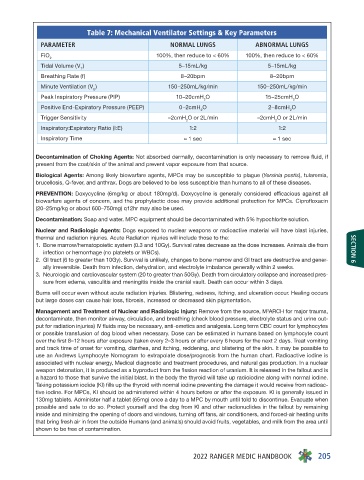
Table 7: Mechanical Ventilator Settings & Key Parameters
          PARAMETER                   NORMAL LUNGS       ABNORMAL LUNGS
                                   100%, then reduce to < 60%  100%, then reduce to < 60%
          FiO 2
          Tidal Volume (V T )           5–15mL/kg          5–15mL/kg
          Breathing Rate (f)            8–20bpm             8–20bpm
          Minute Ventilation (V E )   150–250mL/kg/min   150–250mL/kg/min
          Peak Inspiratory Pressure (PIP)  10–20cmH 2 O    15–25cmH 2 O
          Positive End-Expiratory Pressure (PEEP)  0–2cmH 2 O  2–8cmH 2 O
          Trigger Sensitivity         –2cmH 2 O or 2L/min  –2cmH 2 O or 2L/min
          Inspiratory:Expiratory Ratio (I:E)  1:2             1:2
          Inspiratory Time               ≈ 1 sec            ≈ 1 sec

         Decontamination of Choking Agents: Not absorbed dermally, decontamination is only necessary to remove fluid, if
         present from the coat/skin of the animal and prevent vapor exposure from that source.
         Biological Agents: Among likely biowarfare agents, MPCs may be susceptible to plague (Yersinia pestis), tularemia,
         brucellosis, Q-fever, and anthrax. Dogs are believed to be less susceptible than humans to all of these diseases.
         PREVENTION: Doxycycline (6mg/kg or about 180mg/d). Doxycycline is generally considered efficacious against all
         biowarfare agents of concern, and the prophylactic dose may provide additional protection for MPCs. Ciprofloxacin
         (20–25mg/kg or about 600–750mg) q12hr may also be used.
         Decontamination: Soap and water. MPC equipment should be decontaminated with 5% hypochlorite solution.
         Nuclear and Radiologic Agents: Dogs exposed to nuclear weapons or radioactive material will have blast injuries,
         thermal and radiation injuries. Acute Radiation injuries will include those to the:
         1.  Bone marrow/hematopoietic system (0.3 and 10Gy). Survival rates decrease as the dose increases. Animals die from   SECTION 6
          infection or hemorrhage (no platelets or WBCs).
         2.  GI tract (6 to greater than 10Gy). Survival is unlikely, changes to bone marrow and GI tract are destructive and gener-
          ally irreversible. Death from infection, dehydration, and electrolyte imbalance generally within 2 weeks.
         3.  Neurologic and cardiovascular system (20 to greater than 50Gy). Death from circulatory collapse and increased pres-
          sure from edema, vasculitis and meningitis inside the cranial vault. Death can occur within 3 days.
         Burns will occur even without acute radiation injuries. Blistering, redness, itching, and ulceration occur. Healing occurs
         but large doses can cause hair loss, fibrosis, increased or decreased skin pigmentation.
         Management and Treatment of Nuclear and Radiologic Injury: Remove from the source, M 3 ARCH for major trauma,
         decontaminate, then monitor airway, circulation, and breathing (check blood pressure, electrolyte status and urine out-
         put for radiation injuries) IV fluids may be necessary, anti-emetics and analgesia. Long term CBC count for lymphocytes
         or possible transfusion of dog blood when necessary. Dose can be estimated in humans based on lymphocyte count
         over the first 8–12 hours after exposure (taken every 2–3 hours or after every 6 hours for the next 2 days. Treat vomiting
         and track time of onset for vomiting, diarrhea, and itching, reddening, and blistering of the skin. It may be possible to
         use an Andrews Lymphocyte Nomogram to extrapolate dose/prognosis from the human chart. Radioactive iodine is
         associated with nuclear energy, Medical diagnostic and treatment procedures, and natural gas production. In a nuclear
         weapon detonation, it is produced as a byproduct from the fission reaction of uranium. It is released in the fallout and is
         a hazard to those that survive the initial blast. In the body the thyroid will take up radioiodine along with normal iodine.
         Taking potassium iodide (KI) fills up the thyroid with normal iodine preventing the damage it would receive from radioac-
         tive iodine. For MPCs, KI should be administered within 4 hours before or after the exposure. KI is generally issued in
         130mg tablets. Administer half a tablet (65mg) once a day to a MPC by mouth until told to discontinue. Evacuate when
         possible and safe to do so. Protect yourself and the dog from KI and other radionuclides in the fallout by remaining
         inside and minimizing the opening of doors and windows, turning off fans, air conditioners, and forced-air heating units
         that bring fresh air in from the outside Humans (and animals) should avoid fruits, vegetables, and milk from the area until
         shown to be free of contamination.


                                           2022 RANGER MEDIC HANDBOOK  205

