


Page 156 - 2022 Ranger Medic Handbook
P. 156
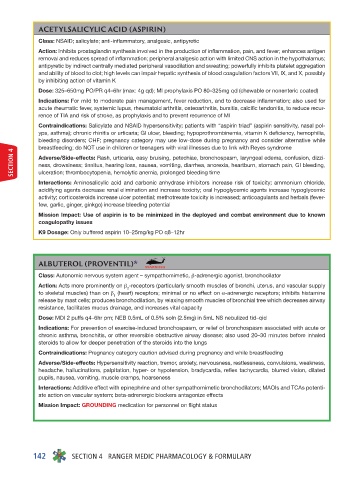
ACETYLSALICYLIC ACID (ASPIRIN)
         Class: NSAID; salicylate; anti-inflammatory, analgesic, antipyretic
         Action: Inhibits prostaglandin synthesis involved in the production of inflammation, pain, and fever; enhances antigen
         removal and reduces spread of inflammation; peripheral analgesic action with limited CNS action in the hypothalamus;
         antipyretic by indirect centrally mediated peripheral vasodilation and sweating; powerfully inhibits platelet aggregation
         and ability of blood to clot; high levels can impair hepatic synthesis of blood coagulation factors VII, IX, and X, possibly
         by inhibiting action of vitamin K
         Dose: 325–650mg PO/PR q4–6hr (max: 4g qd); MI prophylaxis PO 80–325mg qd (chewable or nonenteric coated)
         Indications: For mild to moderate pain management, fever reduction, and to decrease inflammation; also used for
         acute rheumatic fever, systemic lupus, rheumatoid arthritis, osteoarthritis, bursitis, calcific tendonitis, to reduce recur-
         rence of TIA and risk of stroke, as prophylaxis and to prevent recurrence of MI
         Contraindications: Salicylate and NSAID hypersensitivity; patients with “aspirin triad” (aspirin sensitivity, nasal pol-
         yps, asthma); chronic rhinitis or urticaria; GI ulcer, bleeding; hypo prothrombinemia, vitamin K deficiency, hemophilia,
         bleeding disorders; CHF; pregnancy category may use low-dose during pregnancy and consider alternative while
         breastfeeding; do NOT use in children or teenagers with viral illnesses due to link with Reyes syndrome
    SECTION 4  Adverse/Side-effects: Rash, urticaria, easy bruising, petechiae, bronchospasm, laryngeal edema, confusion, dizzi-
         ness, drowsiness; tinnitus, hearing loss, nausea, vomiting, diarrhea, anorexia, heartburn, stomach pain, GI bleeding,
         ulceration; thrombocytopenia, hemolytic anemia, prolonged bleeding time
         Interactions: Aminosalicylic acid and carbonic anhydrase inhibitors increase risk of toxicity; ammonium chloride,
         acidifying agents decrease renal elimination and increase toxicity; oral hypoglycemic agents increase hypoglycemic
         activity; corticosteroids increase ulcer potential; methotrexate toxicity is increased; anticoagulants and herbals (fever-
         few, garlic, ginger, ginkgo) increase bleeding potential
         Mission Impact: Use of aspirin is to be minimized in the deployed and combat environment due to known
         coagulopathy issues
         K9 Dosage: Only buffered aspirin 10–25mg/kg PO q8–12hr


         ALBUTEROL (PROVENTIL) *
         Class: Autonomic nervous system agent – sympathomimetic, β-adrenergic agonist, bronchodilator
         Action: Acts more prominently on β 2 -receptors (particularly smooth muscles of bronchi, uterus, and vascular supply
         to skeletal muscles) than on β 1  (heart) receptors; minimal or no effect on α-adrenergic receptors; inhibits histamine
         release by mast cells; produces bronchodilation, by relaxing smooth muscles of bronchial tree which decreases airway
         resistance, facilitates mucus drainage, and increases vital capacity
         Dose: MDI 2 puffs q4–6hr prn; NEB 0.5mL of 0.5% soln (2.5mg) in 5mL NS nebulized tid–qid
         Indications: For prevention of exercise-induced bronchospasm, or relief of bronchospasm associated with acute or
         chronic asthma, bronchitis, or other reversible obstructive airway disease; also used 20–30 minutes before inhaled
         steroids to allow for deeper penetration of the steroids into the lungs
         Contraindications: Pregnancy category caution advised during pregnancy and while breastfeeding
         Adverse/Side-effects: Hypersensitivity reaction, tremor, anxiety, nervousness, restlessness, convulsions, weakness,
         headache, hallucinations, palpitation, hyper- or hypotension, bradycardia, reflex tachycardia, blurred vision, dilated
         pupils, nausea, vomiting, muscle cramps, hoarseness
         Interactions: Additive effect with epinephrine and other sympathomimetic bronchodilators; MAOIs and TCAs potenti-
         ate action on vascular system; beta-adrenergic blockers antagonize effects
         Mission Impact: GROUNDING medication for personnel on flight status


        142      SECTION 4   RANGER MEDIC PHARMACOLOGY & FORMULARY

