


Page 155 - 2022 Ranger Medic Handbook
P. 155
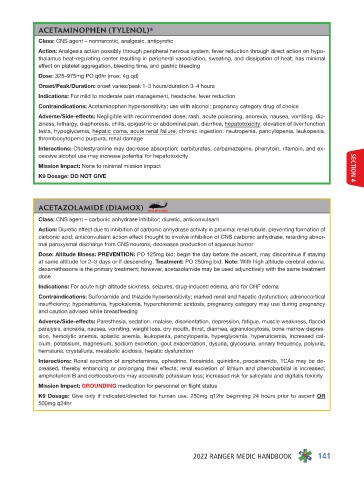
ACETAMINOPHEN (TYLENOL)  *
         Class: CNS agent – nonnarcotic, analgesic, antipyretic
         Action: Analgesia action possibly through peripheral nervous system; fever reduction through direct action on hypo-
         thalamus heat-regulating center resulting in peripheral vasodilation, sweating, and dissipation of heat; has minimal
         effect on platelet aggregation, bleeding time, and gastric bleeding
         Dose: 325–975mg PO q6hr (max: 4g qd)
         Onset/Peak/Duration: onset varies/peak 1–3 hours/duration 3–4 hours
         Indications: For mild to moderate pain management, headache, fever reduction
         Contraindications: Acetaminophen hypersensitivity; use with alcohol; pregnancy category drug of choice
         Adverse/Side-effects: Negligible with recommended dose; rash, acute poisoning, anorexia, nausea, vomiting, diz-
         ziness, lethargy, diaphoresis, chills, epigastric or abdominal pain, diarrhea, hepatotoxicity: elevation of liver function
         tests, hypoglycemia, hepatic coma, acute renal failure; chronic ingestion: neutropenia, pancytopenia, leukopenia,
         thrombocytopenic purpura, renal damage
         Interactions: Cholestyramine may decrease absorption; barbiturates, carbamazepine, phenytoin, rifampin, and ex-
         cessive alcohol use may increase potential for hepatotoxicity
         Mission Impact: None to minimal mission impact                      SECTION 4
         K9 Dosage: DO NOT GIVE


         ACETAZOLAMIDE (DIAMOX)
         Class: CNS agent – carbonic anhydrase inhibitor; diuretic, anticonvulsant
         Action: Diuretic effect due to inhibition of carbonic anhydrase activity in proximal renal tubule, preventing formation of
         carbonic acid; anticonvulsant action effect thought to involve inhibition of CNS carbonic anhydrase, retarding abnor-
         mal paroxysmal discharge from CNS neurons, decreases production of aqueous humor
         Dose: Altitude Illness: PREVENTION: PO 125mg bid; begin the day before the ascent, may discontinue if staying
         at same altitude for 2–3 days or if descending. Treatment: PO 250mg bid; Note: With high altitude cerebral edema,
         dexamethasone is the primary treatment; however, acetazolamide may be used adjunctively with the same treatment
         dose
         Indications: For acute high-altitude sickness, seizures, drug-induced edema, and for CHF edema
         Contraindications: Sulfonamide and thiazide hypersensitivity; marked renal and hepatic dysfunction; adrenocortical
         insufficiency; hyponatremia, hypokalemia, hyperchloremic acidosis; pregnancy category may use during pregnancy
         and caution advised while breastfeeding
         Adverse/Side-effects: Paresthesia, sedation, malaise, disorientation, depression, fatigue, muscle weakness, flaccid
         paralysis, anorexia, nausea, vomiting, weight loss, dry mouth, thirst, diarrhea, agranulocytosis, bone marrow depres-
         sion, hemolytic anemia, aplastic anemia, leukopenia, pancytopenia, hyperglycemia, hyperuricemia, increased cal-
         cium, potassium, magnesium, sodium excretion, gout exacerbation, dysuria, glycosuria, urinary frequency, polyuria,
         hematuria, crystalluria, metabolic acidosis, hepatic dysfunction
         Interactions: Renal excretion of amphetamines, ephedrine, flecainide, quinidine, procainamide, TCAs may be de-
         creased, thereby enhancing or prolonging their effects; renal excretion of lithium and phenobarbital is increased;
         amphotericin B and corticosteroids may accelerate potassium loss; increased risk for salicylate and digitalis toxicity
         Mission Impact: GROUNDING medication for personnel on flight status
         K9 Dosage: Give only if indicated/directed for human use. 250mg q12hr beginning 24 hours prior to ascent OR
         500mg q24hr


                                           2022 RANGER MEDIC HANDBOOK  141

