


Page 50 - JSOM Winter 2024
P. 50
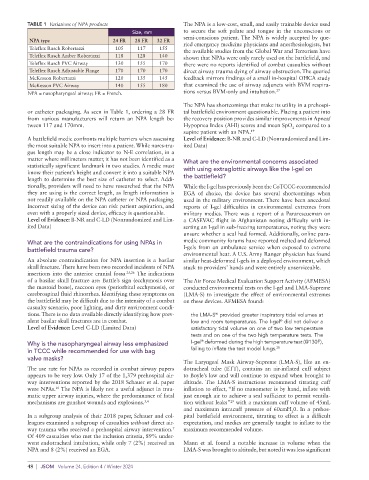
TABLE 1 Variations of NPA products The NPA is a low-cost, small, and easily trainable device used
Size, mm to secure the soft palate and tongue in the unconscious or
semi-conscious patient. The NPA is widely accepted by que-
NPA type 24 FR 28 FR 32 FR ried emergency medicine physicians and anesthesiologists, but
Teleflex Rusch Robertazzi 105 117 155 the available studies from the Global War and Terrorism have
Teleflex Rusch Amber Robertazzi 118 128 140 shown that NPAs were only rarely used on the battlefield, and
Teleflex Rusch PVC Airway 130 155 170 there were no reports identified of combat casualties without
Teleflex Rusch Adjustable Flange 170 170 170 direct airway trauma dying of airway obstruction. The queried
McKesson Robertazzi 120 135 145 feedback mirrors findings of a small in-hospital OHCA study
McKesson PVC Airway 140 155 180 that examined the use of airway adjuncts with BVM respira-
NPA = nasopharyngeal airway; FR = French. tions versus BVM-only and intubation. 27
The NPA has shortcomings that make its utility in a prehospi-
or catheter packaging. As seen in Table 1, ordering a 28 FR tal battlefield environment questionable. Placing a patient into
from various manufacturers will return an NPA length be- the recovery position provides similar improvements in Apnea/
tween 117 and 170mm. Hypopnea Index (AHI) scores and mean SpO compared to a
2
supine patient with an NPA. 19
A battlefield medic confronts multiple barriers when assessing Level of Evidence: B-NR and C-LD (Nonrandomized and Lim-
the most suitable NPA to insert into a patient. While nares-tra- ited Data)
gus length may be a close indicator to N-E correlation, in a
matter where millimeters matter, it has not been identified as a What are the environmental concerns associated
statistically significant landmark in two studies. A medic must with using extraglottic airways like the Igel on
know their patient’s height and convert it into a suitable NPA
length to determine the best size of catheter to select. Addi- the battlefield?
tionally, providers will need to have researched that the NPA While the I-gel has previously been the CoTCCC- recommended
they are using is the correct length, as length information is EGA of choice, the device has several shortcomings when
not readily available on the NPA catheter or NPA packaging. used in the military environment. There have been anecdotal
Incorrect sizing of the device can risk patient aspiration, and reports of I-gel difficulties in environmental extremes from
even with a properly sized device, efficacy is questionable. military medics. There was a report of a Pararescueman on
Level of Evidence: B-NR and C-LD (Nonrandomized and Lim- a CASEVAC flight in Afghanistan noting difficulty with in-
ited Data) serting an I-gel in sub-freezing temperatures, noting they were
unsure whether a seal had formed. Additionally, online para-
What are the contraindications for using NPAs in medic community forums have reported melted and deformed
battlefield trauma care? I-gels from an ambulance service when exposed to extreme
environmental heat. A U.S. Army Ranger physician has found
An absolute contraindication for NPA insertion is a basilar similar heat-deformed I-gels in a deployed environment, which
skull fracture. There have been two recorded incidents of NPA stuck to providers’ hands and were entirely unserviceable.
insertions into the anterior cranial fossa . 25,26 The indications
of a basilar skull fracture are: Battle’s sign (ecchymosis over The Air Force Medical Evaluation Support Activity (AFMESA)
the mastoid bone), raccoon eyes (periorbital ecchymosis), or conducted environmental tests on the I-gel and LMA-Supreme
cerebrospinal fluid rhinorrhea. Identifying these symptoms on (LMA-S) to investigate the effect of environmental extremes
the battlefield may be difficult due to the intensity of a combat on these devices. AFMESA found:
casualty scenario, poor lighting, and dirty environment condi-
tions. There is no data available directly identifying how prev- the LMA-S provided greater inspiratory tidal volumes at
®
alent basilar skull fractures are in combat. low and room temperatures. The I-gel did not deliver a
®
Level of Evidence: Level C-LD (Limited Data) satisfactory tidal volume on one of two low temperature
tests and on one of the two high temperature tests. The
®
Why is the nasopharyngeal airway less emphasized I-gel deformed during the high temperature test (@130F),
in TCCC while recommended for use with bag failing to inflate the test model lungs. 28
valve masks?
The Laryngeal Mask Airway-Supreme (LMA-S), like an en-
The use rate for NPAs as recorded in combat airway papers dotracheal tube (ETT), contains an air-inflated cuff subject
appears to be very low. Only 17 of the 1,379 prehospital air- to Boyle’s law and will continue to expand when brought to
way interventions reported by the 2018 Schauer et al. paper altitude. The LMA-S instructions recommend titrating cuff
10
were NPAs. The NPA is likely not a useful adjunct in trau- inflation to effect, “If no manometer is by hand, inflate with
matic upper airway injuries, where the predominance of fatal just enough air to achieve a seal sufficient to permit ventila-
mechanisms are gunshot wounds and explosions. 5,4 tion without leaks” with a maximum cuff volume of 45mL
29
and maximum intracuff pressure of 60cmH 0. In a prehos-
2
In a subgroup analysis of their 2018 paper, Schauer and col- pital battlefield environment, titrating to effect is a difficult
leagues examined a subgroup of casualties without direct air- expectation, and medics are generally taught to inflate to the
7
way trauma who received a prehospital airway intervention. maximum recommended volume.
Of 409 casualties who met the inclusion criteria, 89% under-
went endotracheal intubation, while only 7 (2%) received an Mann et al. found a notable increase in volume when the
NPA and 8 (2%) received an EGA. LMA-S was brought to altitude, but noted it was less significant
48 | JSOM Volume 24, Edition 4 / Winter 2024

