


Page 108 - JSOM Winter 2022
P. 108
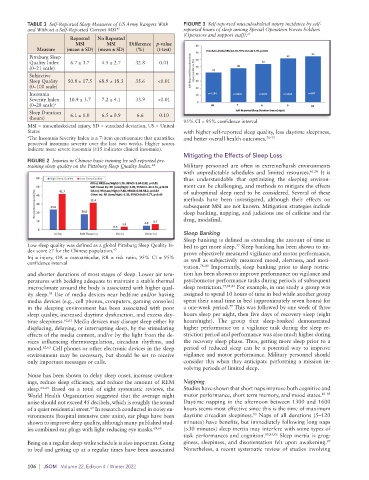
TABLE 3  Self-Reported Sleep Measures of US Army Rangers With   FIGURE 3  Self-reported musculoskeletal injury incidence by self-
          and Without a Self-Reported Current MSI 45         reported hours of sleep among Special Operation Forces Soldiers
                                                             (Operators and support staff). 13
                        Reported   No Reported
                          MSI       MSI    Difference  p-value
             Measure   (mean ± SD) (mean ± SD)  (%)  (t-test)
           Pittsburg Sleep
           Quality Index   6.7 ± 3.7  4.5 ± 2.7  32.8  0.01
           (0–21 scale)
           Subjective
           Sleep Quality   50.8 ± 17.5  68.9 ± 18.3  35.6  <0.01
           (0–100 scale)
           Insomnia
           Severity Index   10.9 ± 3.7  7.2 ± 4.1  33.9  <0.01
           (0–28 scale) a
           Sleep Duration  6.1 ± 1.0  6.5 ± 0.9  6.6  0.10
           (hours)                                           95% CI = 95% confidence interval
          MSI = musculoskeletal injury, SD = standard deviation, US = United
          States                                             with higher self-reported sleep quality, less daytime sleepiness,
          a The Insomnia Severity Index is a 7-item questionnaire that quantifies   and better overall health outcomes. 70–75
          perceived insomnia severity over the last two weeks. Higher scores
          indicate more severe insomnia (≥15 indicates clinical insomnia).
                                                             Mitigating the Effects of Sleep Loss
          FIGURE 2  Injuries in Chinese basic training by self-reported pre-
          training sleep quality on the Pittsburg Sleep Quality Index. 44  Military personnel are often in extreme/harsh environments
                                                             with unpredictable schedules and limited resources. 61,76  It is
                                                             thus understandable that optimizing the sleeping environ-
                                                             ment can be challenging, and methods to mitigate the effects
                                                             of suboptimal sleep need to be considered. Several of these
                                                             methods have been investigated, although their effects on
                                                             subsequent MSI are not known. Mitigation strategies include
                                                             sleep banking, napping, and judicious use of caffeine and the
                                                             drug, modafinil.

                                                             Sleep Banking
                                                             Sleep banking is defined as extending the amount of time in
          Low sleep quality was defined as a global Pittsburg Sleep Quality In-  bed to get more sleep.  Sleep banking has been shown to im-
                                                                              77
          dex score ≥7 for the Chinese population. 47        prove objectively measured vigilance and motor performance,
          Inj = injury, OA = osteoarticular, RR = risk ratio, 95% CI = 95%   as well as subjectively measured mood, alertness, and moti-
          confidence interval
                                                             vation. 78–80  Importantly, sleep banking prior to sleep restric-
          and shorter durations of most stages of sleep. Lower air tem-  tion has been shown to improve performance on vigilance and
          peratures with bedding adequate to maintain a stable thermal   psychomotor performance tasks during periods of subsequent
          microclimate around the body is associated with higher qual-  sleep restriction. 77,81,82  For example, in one study a group was
                 38
          ity sleep.  Use of media devices near bedtime and/or having   assigned to spend 10 hours of time in bed while another group
          media devices (e.g., cell phones, computers, gaming consoles)   spent their usual time in bed (approximately seven hours) for
                                                                            77
          in the sleeping environment has been associated with poor   a one-week period.  This was followed by one week of three
          sleep quality, increased daytime dysfunction, and excess day-  hours sleep per night, then five days of recovery sleep (eight
          time sleepiness. 62,63  Media devices may disrupt sleep either by   hours/night).  The  group that  sleep-banked  demonstrated
          displacing, delaying, or interrupting sleep, by the stimulating   higher performance on a vigilance task during the sleep re-
          effects of the media content, and/or by the light from the de-  striction period and performance was also much higher during
          vices influencing thermoregulation, circadian rhythms, and   the recovery sleep phase. Thus, getting more sleep prior to a
          mood. 62,63  Cell phones or other electronic devices in the sleep   period of reduced sleep can be a potential way to improve
          environment may be necessary, but should be set to receive   vigilance and motor performance. Military personnel should
          only important messages or calls.                  consider this when they anticipate performing a mission in-
                                                             volving periods of limited sleep.
          Noise has been shown to delay sleep onset, increase awaken-
          ings, reduce sleep efficiency, and reduce the amount of REM   Napping
          sleep. 64–66  Based on a total of eight systematic reviews, the   Studies have shown that short naps improve both cognitive and
          World Health Organization suggested that the average night   motor performance, short term memory, and mood states. 83–85
          noise should not exceed 45 decibels, which is roughly the sound   Daytime napping in the afternoon between 1300 and 1600
          of a quiet residential street.  In research conducted in noisy en-  hours seems most effective since this is the time of maximum
                               67
                                                                                    83
          vironments (hospital intensive care units), ear plugs have been   daytime circadian sleepiness.  Naps of all durations (5–120
          shown to improve sleep quality, although many published stud-  minutes) have benefits, but immediately following long naps
          ies combined ear plugs with light-reducing eye masks. 68,69  (>30 minutes) sleep inertia may interfere with some types of
                                                             task performances and cognition. 83,85,86  Sleep inertia is grog-
                                                                                                            87
          Being on a regular sleep-wake schedule is also important. Going   giness, sleepiness, and disorientation felt upon awakening.
          to bed and getting up at a regular times have been associated   Nonetheless, a recent systematic review of studies involving
          106  |  JSOM   Volume 22, Edition 4 / Winter 2022

