


Page 15 - JSOM Spring 2020
P. 15
Bed Bugs – Importance, Biology, and Control        Servicemembers Who Fly With Their Support Animals
              Strategies
                                                                 The Transportation Department is expected to revise its reg-
              Foreword. The common bed bug, Cimex lectularius L., the   ulations this year to clarify the definition of a service animal,
              tropical bed bug, C. hemipterus (Fabricius), and a few closely   aimed at reducing the use of support animals on planes. Since
              related species of blood-feeding true bugs (Hemiptera: Cimi-  2016, the number of behavior-related service animal problems,
              cidae) have been persistent pests of humans throughout re-  “including urinating, defecating or biting,” has increased 84
              corded history. They may have evolved as cave-dwelling nest   percent.
              ectoparasites of mammals (probably bats), with at least one
              species later switching to feed mainly on cave-dwelling hu-  Current Service Animal Requirements
              mans. As humans moved from caves to tents and, ultimately,   DOT considers a service animal to be any animal that is indi-
              houses, bed bugs, especially the common bed bug, were prob-  vidually trained to assist to a qualified person with a disability
              ably brought along. Bed bugs appear in the literature and   or any animal necessary for the emotional well-being of a pas-

              folklore of many cultures and countries, from the Egyptians,   senger.US airlines must transport all service animals regardless

              Greeks and Romans to early Jewish and Christian writings,   of species with a few narrow exceptions.US airlines are not re-
              and in the records of colonial Americans (Usinger 1966). After   quired to accommodate certain unusual service animals, such
              World War II, widespread use of synthetic insecticides led to   as snakes, reptiles, ferrets, rodents, and spiders. Under DOT’s

              sharp declines in bed bug populations in most industrialized   current rule, airlines may also refuse to carry other animals
              countries. By 1997, they were so scarce in the US, Canada and   if the airline determines: (1) There are factors precluding the
              Europe that it was difficult to find fresh specimens to use in   animal from traveling in the cabin of the aircraft, such as the
              teaching college entomology classes (Snetsinger 1997). Some   size or weight of the animal; (2) the animal would pose a direct
              contemporary Pest Management Professionals (PMPs) with   threat to the health or safety of others; (3) it would cause a
              years of experience have still never seen an active bed bug in-  significant disruption of cabin service; or (4) the law of a for-
              festation. By the early 2000’s, a resurgence of bed bugs began   eign country that is the destination of the flight would prohibit
              in the US, Canada, European countries, Australia and parts   entry of the animal.
              of Africa. Infestations have occurred in homes, hotels,  hos-
              tels, cruise ships, submarines, airplanes, trains, schools, and   Regarding emotional support animals (ESA) and psychiatric
              long-term care facilities (Cooper and Harlan 2004, Doggett et   service animals (PSA), DOT requires airlines to recognize these
              al. 2004, Hwang et al. 2005, Johnson 2005). This Technical   animals as service animals, but allows airlines to require that
              Guide was developed to meet the need for current information   ESA and PSA users provide a letter from a licensed mental

              and guidance regarding bed bugs and their control.  health professional of the passenger’s need for the animal. To
                                                                 enable airlines sufficient time to assess the passenger’s docu-
                                                                 mentation, DOT permits airlines to require 48 hours’ advance
                                                                 notice of a passenger’s wish to travel with an ESA or PSA. [8]
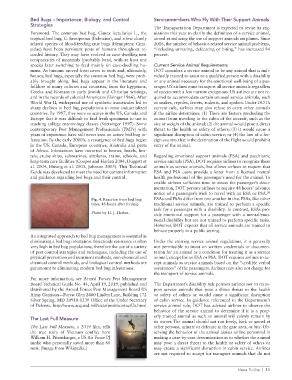
                                       Fig. 4. Reaction from bed bug   ESAs and PSAs differ from one another in that PSAs, like other
                                       bites, 48 hours after feeding.   traditional service animals, are trained to perform a specific
                                                                 task for a passenger with a disability. In contrast, ESAs pro-
                                       Photo by H. J. Harlan.    vide emotional support for a passenger  with a mental/emo-
                                                                 tional disability but are not trained to perform specific tasks.
                                                                 However, DOT expects that all service animals are trained to
                                                                 behave properly in a public setting.
              An integrated approach to bed bug management is essential in
              eliminating a bed bug infestation. Insecticide resistance is often   Under the existing service animal regulations, it is generally
              very high in bed bug populations, therefore the use of a variety   not permissible to insist on written credentials or documen-
              of pest control strategies and techniques, including the use of   tation for an animal as a condition for treating it as a service
              physical prevention and treatment methods, non-chemical and   animal, except for an ESA or PSA. DOT requires airlines to ac-
              chemical control methods, and biological control methods are   cept animals as service animals based on the “credible verbal

              paramount to eliminating modern bed bug infestations.  assurances” of the passengers.Airlines may also not charge for
                                                                 the transport of service animals.
              For more information, see Armed Forces Pest Management
              Board Technical Guide No. 44, April 19, 2019, published and   The Department’s disability rule permits airlines not to trans-
              distributed by the Armed Forces Pest Management Board US   port service animals that pose a direct threat to the health
              Army Garrison—Forest Glen 2460 Linden Lane, Building 172   or safety of others or would cause a significant disruption
              Silver Spring, MD 20910-1230 Office of the Under Secretary   of cabin service. In guidance referenced in the Department’s
              of Defense. http://www.acq.osd.mil/eie/afpmb/contactUs.html  service animal rule, DOT has advised airlines to observe the
                                                                 behavior  of  the  service  animal  to  determine  if  it  is a  prop-
              The Last Full Measure                              erly trained animal as such an animal will calmly remain by

                                                                 its owner. The animal should not run freely, bark or growl at
              The Last Full Measure, a 2019 film, tells          other persons, urinate or defecate in the gate area, or bite. Ob-

              the true story of Vietnam conflict hero            serving the behavior of the animal assists airline personnel in
              William H. Pitsenbarger, a US Air Force PJ         making a case-by-case determination as to whether the animal
              medic who personally saved more than 60            may pose a direct threat to the health or safety of others or
              men. (Image from Wikipedia.)                       may create a significant disruption in cabin service. Airlines
                                                                 are not required to accept for transport animals that do not


                                                                                                   News To Use  |  11

