


Page 71 - JSOM Winter 2017
P. 71
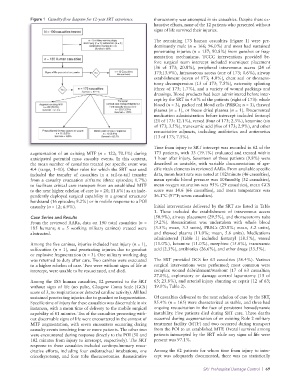
Figure 1  Casualty flow diagram for 12-year SRT experience.  thoracotomy was attempted in six casualties. Despite these ex-
                                                                 haustive efforts, none of the 12 patients who presented without
                                                                 signs of life survived their injuries.

                                                                 The remaining 173 human casualties (Figure 1) were pre-
                                                                 dominantly male (n = 166; 96.0%) and most had sustained
                                                                 penetrating injuries (n = 157; 90.8%) from gunshot or frag-
                                                                 mentation mechanisms. TCCC interventions provided be-
                                                                 fore surgical team intercept included tourniquet placement
                                                                 (36 of 173; 20.8%), peripheral intravenous access (24 of
                                                                 173;13.9%), Intraosseous access (one of 173; 0.6%), airway
                                                                 establishment (seven of 173; 4.0%), chest seal or thoracos-
                                                                 tomy decompression (13 of 173; 7.5%), extremity splinting
                                                                 (three of 173; 1.7%), and a variety of wound packings and
                                                                 dressings. Blood products had been administered before inter-
                                                                 cept by the SRT in 4.6% of the patients (eight of 173): whole
                                                                 blood (n = 3), packed red blood cells (PRBCs; n = 3), thawed
                                                                 plasma (n = 1), or freeze dried plasma (n = 1). Documented
                                                                 medication administration before intercept included fentanyl
                                                                 (21 of 173: 12.1%), versed (four of 173; 2.3%), ketamine (six
                                                                 of 173; 3.5%), tranexamic acid (five of 173; 2.9%), and other
                                                                 resuscitative adjuncts, including antibiotics and antiemetics
                                                                 (13 of 173; 7.5%).

                                                                 Time from injury to SRT intercept was recorded in 62 of the
              augmentation of an existing MTF (n = 122; 70.5%) during   173 patients, with 33 (19.1%) evaluated and treated within
              anticipated potential mass casualty events. In this context,   1 hour after injury. Seventeen of these patients (9.8%) were
              the mean number of casualties treated per specific event was   described as unstable, with variable documentation of spe-
              4.4 (range, 1–10). Other roles for which the SRT was used   cific vitals elements in reviewed AARs. From available specific
              included the transfer  of casualties in a tail-to-tail transfer   data, mean heart rate was noted at 102/minute (46 casualties),
              from a casualty evacuation airframe (three episodes; 1.7%)   mean systolic blood pressure was 108mmHg (32 casualties),
              to facilitate critical care transport from an established MTF   mean oxygen saturation was 95% (29 casualties), mean GCS
              to the next higher echelon of care (n = 20; 11.6%) as an inde-  score was 14.6 (66 casualties), and mean temperature was
              pendently deployed surgical capability in a ground structure/  36.1°C (97°F; seven casualties).
              hardstand (16 episodes; 9.2%) or in mobile response to a POI
              casualty (n = 12; 6.9%).                           Initial interventions delivered by the SRT are listed in Table
                                                                 1. These  included  the establishment  of intravenous  access
              Case Series and Results                            (50.9%), airway placement (29.5%), and thoracostomy tube
              From the reviewed AARs, data on 190 total casualties (n =   (9.2%).  Resuscitation  was  undertaken  with  whole  blood
              185  humans;  n  = 5  working military canines)  treated  were   (3.5%; mean, 3.3 units), PRBCs (20.8%; mean, 5.2 units),
              abstracted.                                        and thawed plasma (11.0%; mean, 5.6 units). Medications
                                                                 administered (Table 1) included fentanyl (18.5%), versed
              Among the five canines, injuries included heat injury (n = 1),   (11.0%), ketamine (11.0%), morphine (15.6%), tranexamic
              suffocation (n = 1), and penetrating injuries due to gunshot   acid (2.3%), antibiotics (26.6%), and other drugs (33.5%).
              or explosive fragmentation (n = 3). One military working dog
              was returned to duty after care. Two canines were evacuated   The SRT provided DCS for 63 casualties (36.4%). Various
              to a higher echelon of care. Two were without signs of life at   surgical interventions were performed; most common were
              intercept, were unable to be resuscitated, and died.  complex wound debridement/washout (17 of 63 casualties;
                                                                 27.0%), exploratory or damage control laparotomy (15 of
              Among the 185 human casualties, 12 presented to the SRT   63; 23.8%), and arterial injury shunting or repair (12 of 63;
              without signs of life (no pulse, Glasgow Coma Scale [GCS]   19.0%; Table 2).
              score of 3, no respirations or detected cardiac activity). All had
              sustained penetrating injuries due to gunshot or fragmentation.   Of casualties delivered to the next echelon of care by the SRT,
              Specific time of injury for these casualties was discernable in six   95.4% (n = 165) were characterized as stable, and three had
              instances, with a mean time of delivery to the mobile surgical   ongoing resuscitation in the face of persistent hemodynamic
              capability of 61 minutes. Ten of the casualties presenting with-  instability. Five patients died during SRT care. Three deaths
              out discernable signs of life were encountered in the context of   occurred during augmentation of an existing Role 2 military
              MTF augmentation, with seven encounters occurring during   treatment facility (MTF) and two occurred during transport
              casualty events involving four or more patients. The other two   from the POI to an established MTF. Overall survival among
              were encountered during response directly to the POI (50 and   patients intercepted by the SRT while any signs of life were
              102 minutes from injury to intercept, respectively). The SRT   present was 97.1%.
              response to these casualties included cardiopulmonary resus-
              citative efforts, including four endotracheal intubations, one   Among the 62 patients for whom time from injury to inter-
              cricothyrotomy, and four tube thoracostomies. Resuscitative   cept was adequately documented, there was no statistically

                                                                                     SRT Prehospital Damage Control  |  69

