


Page 179 - Journal of Special Operations Medicine - Spring 2017
P. 179
(photo left) Working the anchor
 station. Controlling the belay
 line in a double main-line system
 lowering the attendant and
 victim. He is managing the belay.
 He is managing one-half of a
 two-rope system. The other rope
 was set up as a haul system to
 raise for the litter patient scoop
 vertical to horizontal.


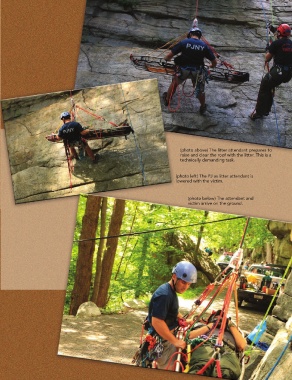
                                                                           (photo above) The litter attendant prepares to
                                                                           raise and clear the roof with the litter. This is a
                                                                           technically demanding task.

 (photo above) The PJ is hauling on a 3:1 system raising the
 rescuer to the patient hanging in free space with suspected              (photo left) The PJ as litter attendant is
 traumatic injuries. The rescuer will execute a litter scoop to           lowered with the victim.
 gently immobilize the patient and transfer the load onto the
 two-tensioned ropes system. The haul now becomes part of the
 lowering system.                                                              (photo below) The attendant and
                                                                               victim arrive on the ground.


 PJ training on the Gunks
 PJs train with the climbing rangers of the
 Shawangunk Ridge in New Paltz, NY, at the
 cliffs of the Shawangunks. The Gunks are one
 of the premier rock-climbing sites in the United
 States. The rangers perform dozens of rescues
 each year; some of the typical high-angle injuries
 include traumatic brain injury and open fractures.


 Photos compliments of
 Dylan Bimka-Wintrob


 (photo above left) A “victim” hangs
 stranded waiting for rescue.


 (photo left) The litter attendant prepares
 to raise and clear the roof with the litter.
 This is a technically demanding task.

