


Page 135 - Journal of Special Operations Medicine - Spring 2017
P. 135
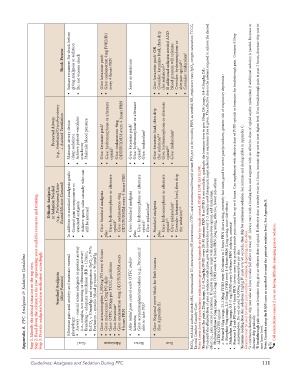
Initiate treatment for shock before  giving analgesia or sedation  Do not worsen shock  Give: ketamine push 1 Give: ondansetron 4mg IV/IO/IM   every 4 hours PRN  Same as minimum  Give: ketamine push 1  OR Consider: ketamine load, then drip   (for sedation) 3,4  blood pressure will tolerate: Consider: hydromorphone or   alternate opioid 2,5  Consider: midazolam 2


                           Shock Present                               If additional sedation needed AND


                              •   •         •   •      •         •   •   •   •   •


                       Protected Airway  (e.g., Intubated/Cricothyrotomy    + Assisted Ventilation  Maintain airway device    (deep sedation) Achieve patient-ventilator   Maintain blood pressure  Give: ketamine push 1 Give: hydromorphone or alternate   Give: ondansetron 4mg   ODT/IV/IO/IM every 4 hours PRN  Give: ketamine push 1 Give: hydromorphone or alternate   Give: midazolam 2  Give: ketamine load, then drip    (for sedation) 3,4 Give: hydromorphone or alternate   Give: m


                              •   •   synchrony  •   •   •   opioid 2  •   •   •   opioid 2  •   •   •   opioid 2,5  •


                      Difficult Analgesia    or Sedation Needed (e.g., Polytrauma/Litter   Bound/Mission Demand) In addition to standard analgesia goals: Control pain unresponsive to   •   standard analgesia Achieve quiet, calm casualty who can   •   still be aroused  Give: Standard analgesia   •   plus Give: hydromorphone or alternate   •   opioid 2 Give: ondansetron 4mg    •  ODT/IV/IO/IM every 4 hours PRN  Give: Standard analgesia  •   plus Give: hydromorphone or alternate
                Step 2. Read down the column to the row representing your available resources and training.


                  Step 3. Provide analgesia/sedation medication accordingly.
                              Minimize pain and anxiety and maintain normal   physiology:  Give: meloxicam 15mg PO daily Give: OTFC 800μg per TCCC guidelines  Give: ketamine 1  4 hours PRN After initial pain control with OTFC and/or   ketamine,  able to take PO) 2 Give: Regional nerve block for limb trauma    (See Appendix E)  Tactical Combat Casualty Care.  ALTERNATIVE opioid:   acetaminophen. Do not exceed 4,000mg acetaminophen per day.
           Appendix A  PFC Analgesia & Sedation Guideline
               Step 1. Identify the clinical situation on the top row.
                         Standard Analgesia  (Most Patients)  Airway – mental status adequate to protect airway  (i.e., coughs, not snoring or obstructing airway) Breathing – adequate ventilation (RR > 12/min,  EtCO 2  < 50mmHg) and oxygenation (SpO 2  > 94% Perfusion – systolic blood pressure > 90mmHg Give: acetaminophen 1,000mg PO every 6 hours  Give: ondansetron 4mg ODT/IV/IO/IM every    Give: acetaminophen/oxycodone (e.g., Percocet;   if   Note: Lower doses of pain/sedati


                                                                                                             next lower level.
                                               •
                                             •
                                                   •
                                                 •
                                            •
                                 •
                                     •
                                         •
                                                   Minimum
                                    Goal
              Guidelines: Analgesia and Sedation During PFC   •   •   Better  •   Best    •   •      o     o  •   •   decrease drip gradually.   111

