


Page 46 - Journal of Special Operations Medicine - Spring 2016
P. 46
same model replaced the damaged device; the present     tensioned to compress the underlying tissue. Further spi-
          testing  intended  that  each  device  tested  was  structur-  ral wrapping distally, down the limb, with the running end
          ally and functionally normal. Devices were examined   allowed 1.5–3 inches of tissue width to be compressed.
          throughout testing for structural and functional integ-  After compression was complete, a cleat allowed tension
          rity Data were collected February to August, 2014.  of the running end to be held by the tourniquet itself so
                                                             the user’s hands were freed. At the time of assessment,
          The RATS is a commercially developed tactical tourni-  the RATS was not in the US Food and Drug Administra-
          quet. It has a wrap design with a long, flexible, cloth-   tion (FDA) registry of medical devices, but subsequently
          covered, rubber-like band; it is oval in cross-section   it was registered after our suggestion to the maker.
          (4mm × 12.5mm) (Figure 1). The running end is routed
          through the other end’s loop, and the running end is   The TMT is a tactical tourniquet initially developed by
                                                             the US Army. It has a strap-and-windlass design, with a
          Figure 1  The Rapid Application Tourniquet System images   buckle that permits slack removal from the strap (Figure
          from its Instructions for Use (IFU). The IFU are the stepwise   2). The TMT strap is 50mm wide. The strap is looped
          techniques the user is to follow in placing the RATS on the   around the limb circumferentially, and the running end
          limb. An IFU is also known as a product insert, which the   of the strap is pulled to remove slack from the loop.
          US Food and Drug Administration reviews upon registration   Any excess length of the running end strap beyond the
          of the medical device. This image is used with permission of   buckle can be secured down onto the looped strap with
          RATS Tourniquet.                                   its self-adhering hook-and-loop fabric (Omnitape ; Vel-
                                                                                                        ®
                                                             cro Industries BV; http://www.velcro.com). After the
                                                             strap  was  secured,  the  windlass  was turned  to  twist
                                                             the strap tighter. To maintain tension, the windlass was
                                                             placed into a retainer so it did not unwind. The intent
                                                             behind the medic-designed TMT was to increase the
                                                             circumferential surface area that would be compressed
                                                             to occlude underlying arteries at a lower pressure. The
                                                             TMT has a secondary locking mechanism if the Velcro
                                                             fails. These latter two are design differences not seen in
                                                             the control tourniquet. At the time of assessment, the
                                                             TMT was not in the FDA registry of medical devices,
                                                             but if the development by the military moves further
                                                             along, such registration may be made.

                                                             The control group used the C-A-T in its 6th genera-
                                                             tion. The C-A-T has a strap-and-windlass design with a

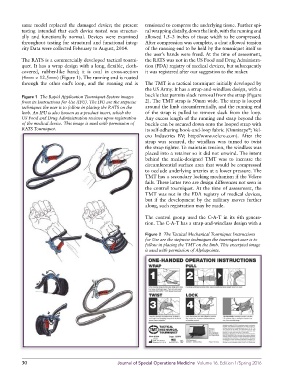
                                                             Figure 2  The Tactical Mechanical Tourniquet Instructions
                                                             for Use are the stepwise techniques the tourniquet user is to
                                                             follow in placing the TMT on the limb. This excerpted image
                                                             is used with permission of Alphapointe.


          30                                      Journal of Special Operations Medicine  Volume 16, Edition 1/Spring 2016

